


Critical thinking in parenting has become a daily necessity, because the advice aimed at parents now travels faster than the evidence behind it. Gentle parenting and ecology sometimes brush shoulders with beliefs that can do more harm than good, and no one is entirely immune to that pull.
Two things make this worth tackling. A growing readership deserves rigour, and it is genuinely puzzling to watch so many people around us turn to dubious sources on subjects that matter for children. The useful move is not to chase every false claim, but to teach the method that lets anyone check a claim for themselves.

Quick takeaways
- Teach the checking method instead of only correcting false claims
- Search a doubtful topic with the word "skeptical" as a first filter
- Treat one study as a clue, not a conclusion, and look for meta-analyses
- Beware cherry picking, even from scientists with a hypothesis to defend
- Check sources such as PubMed and ask sceptic communities for help
- Model changing your mind in front of your children
Why Parenting Advice Needs Critical Thinking
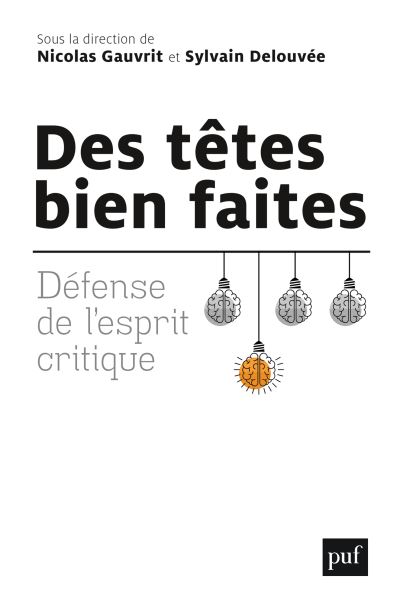
Béatrice Kammerer's book on truly positive education prompted a closer look at this question, because it documents a real pattern. Some figures treated as references in the gentle-education world have extrapolated from scientific data incorrectly, or quietly left aside studies that softened their claims. False statements also turn up in books and blog articles that many parents trust.
Take the triune brain theory, which describes a reptilian, a limbic and a neocortex brain. It is inaccurate, since these three are not fully independent: neuroscientists describe brain areas as interacting sets that keep relative autonomy. As Kammerer warns, a child's brain cannot be reduced to a simple right/left or emotional/rational split.
Three Common Neuromyths
A poster opposing "oxytocin education" and "cortisol education" treats cortisol as a bad hormone, which is clumsy: cortisol is notably the morning waking hormone, and a moderate dose gives energy. A widely shared photo supposedly showing the brain areas of love was also doctored, a real MRI image simply colourised and relabelled.
Teach the Method Rather Than Debunking
Online, countering a false claim takes far more time than creating one. That is why teaching the critical thinking method matters more than chasing every correction, even though debunking still has its place. This blog has removed several articles after later reading revealed errors, on Brain Gym, Steiner pedagogy and Bach flowers, and others were kept with warnings about missing evidence.
Critical thinking is hard work because it needs time and skills. A first step when in doubt is to search the topic with the word "skeptical" added, which works well for Brain Gym or for VAKOG, the visual, auditory, kinaesthetic, olfactory and gustatory learning styles. If nothing comes up, either sceptics have not looked yet or the subject is genuinely settled.
You can also ask groups devoted to scientific scepticism, several of which exist on social media, or dig into the sources cited in an article or book, for instance on PubMed, the main bibliographic database in biology and medicine. If a topic touches your child's health, it also helps to read up on common conditions such as lice life cycle so you can judge alarming claims calmly.
| Claim or practice | Common problem | What to check |
|---|---|---|
| Triune brain theory | Presents three independent brains | Whether brain areas are described as interacting |
| "Cortisol education" poster | Treats cortisol as a bad hormone | The hormone's normal daily role |
| Viral MRI "love" image | Colourised and relabelled | The original source and its caption |
| Brain Gym, Bach flowers | Weak or absent evidence | Sceptical reviews and cited studies |
| A single new study | Not yet reproduced | Replication, protocol, meta-analyses |
How to Read a Single Study
Checking sources is difficult: they are often in English, and judging a study's solidity requires scientific culture, including sample quality, reproducibility and publication in peer-reviewed journals. A single study often means little on its own, so ask whether it has been reproduced under the same conditions with the same result, whether the protocol is reliable, whether other studies contradict it, and whether a meta-analysis exists.
Watch too for cherry picking, where only studies confirming a hypothesis are highlighted while those that nuance the results are neglected. The same caution applies to product recommendations: a confident review of toys under $20 or of toys for 4 month old is worth more when it explains how the conclusions were reached.
Practical Habits for Everyday Judgement
Build small habits rather than grand resolutions. When a claim about child development surprises you, note where it came from, who benefits from it being shared, and whether the original source is reachable. Keep a short list of trusted references you have actually checked, and revisit it when a new trend appears.
Parenting advice also arrives through everyday channels, from nursery newsletters to family conversations, so the same filters apply to practical matters. A piece on a sick son or on childhood strabismus deserves the same question: does this come from a named source with evidence, or from repetition? Even light subjects, like toys for 1 year old or toys for 5 year olds, benefit from a reviewer who shows their reasoning rather than asserting a verdict.
Passing Scepticism On to Children
Children learn the method by watching it. Thinking aloud in front of them, wondering where a claim comes from and admitting when you were wrong, models intellectual honesty far better than any lecture. It also normalises changing your mind, which is the heart of the exercise.
Keep the tone curious rather than contemptuous, since scepticism is a tool for understanding, not a weapon for winning arguments. A child who sees a parent check a source before repeating a claim is already learning media literacy, and that habit travels with them into school and beyond, whether the topic is screen time, sibling bonds or the latest toy craze.

My hands-on take
I came to this slowly, and mostly by being wrong in public. I have repeated ideas I had read in good faith, then found later that the original study said something narrower or that the striking image going around had been altered. What changed my habits was not becoming more suspicious of everything, but becoming more specific: I now ask who made the claim, what they based it on, and whether I can reach that source myself. When I cannot, I say so out loud rather than filling the gap. In practice, that means fewer confident statements at the dinner table and more "let me check that". My children have started doing the same, and the occasional correction from them is the best evidence I have that the method is worth teaching.Frequently asked questions
What is the quickest way to check a parenting claim?
Search the topic together with the word "skeptical" and see what comes up. If nothing does, either sceptics have not examined it yet or the subject is genuinely settled, so look for the sources cited.
Why is one study not enough?
A single study may not have been reproduced, may use a fragile protocol, or may be contradicted by others. Look for replication and for a meta-analysis before changing what you do.
What is cherry picking?
It means highlighting only the studies that confirm a hypothesis while ignoring those that nuance the results. It can happen even with qualified scientists, so check what was left out.
Should I still read parenting books and blogs?
Yes, but read them as starting points. Check the sources they cite, be wary of confident claims without references, and accept that authors, including bloggers, sometimes get things wrong.
Product Reviews
 Best Toys for Dogs With High Prey Drive |
Best Outdoor Toys for 3-4 Year Olds |
Best Outdoor Toys for 6 Year Olds |
Best Harness for Poodle |
Best LEGO Sets for Adults |
Best Travel Toys for 4 Year Olds on Airplane |
Best Toy Stores in Washington DC |
Best Potty Training Toys |
Best Toys for Tripod Dogs |
Maillot equipe de france







