


Wellbeing activities for parents and children are an easy way to bring more calm and connection to family holidays. When the routine loosens and everyone is together for long stretches, a few gentle games can turn a tense afternoon into a shared moment of rest.
The ten ideas below are simple, playful and suitable from around three years old. They draw on soft techniques such as yoga, laughter yoga, massage and relaxation, and they need nothing more than a bit of floor space and a willing mood.

None of them requires special equipment or a long attention span. The point is not to perform perfectly but to breathe, laugh and touch together, which supports the emotional, physical and mental balance of every member of the family.
Quick takeaways
- Bee and OM sounds release tension through chest vibration
- Back-to-back laughter and vowel laughter build complicity fast
- Always ask permission before giving a massage
- The rain massage helps children explore rhythm and pressure
- The eraser massage wipes away tiredness towards the lower body
- Keep sessions short and adapt to the child's mood
Breathing Games to Start Calmly
Feeling the vibration of sound in the chest has a genuinely releasing effect on physical and emotional tension. The bee sound is a playful way to explore this. Sit face to face, cross-legged or in lotus, with relaxed arms and hands resting in the lap, and make a steady ZZZZZZZZZZZ on the out-breath.
Repeat it a few times and invite the children to cover their ears, then open them, so they notice how the sound and vibration change. Ask what they hear and feel. Then let them take a turn: breathe in normally and hum ZZZZZZZZZZZ until the air runs out, usually just a few seconds. If your child is drawn to calm, focused play, these quiet moments pair well with the ideas in quiet toys for younger children.
The OOOMMMM sound
The same exercise works with OOOOOOMMMMMM. Ask children to place their hands on their heart to feel the vibration more clearly in the chest. Doing it yourself before offering it makes a real difference: the relaxation that follows can be surprisingly deep.
Laughter Yoga for the Whole Family
Laughter yoga games let adults and children let go together in a spirit of mutual complicity. Start with back-to-back, bottom-to-bottom laughter: pairs sit against each other and simply laugh for a few seconds or minutes. It feels silly at first, which is exactly the point.
Then try heart-and-sky laughter, where children raise their arms, tilt their heads back and laugh while looking up at the sky. A good laugh together is one of the simplest ways to lift the mood of a household, and it works alongside other everyday pleasures such as music for children or a favourite bedtime story. For more shared fun, enjoy this chirigota together, and pick up some learning toys for playful afternoons.
Vowel laughter and gradual laughter
Invite children to laugh on vowel sounds: ha ha ha, hé hé hé, hi hi hi, ho ho ho, hu hu hu, hou hou hou. The adult launches one type and everyone repeats in chorus. For gradual laughter, stand in a circle and start slowly and quietly, intensify both speed and volume up to a big collective laugh, then calm it down again. Repeat it, moving closer each time, even holding hands.
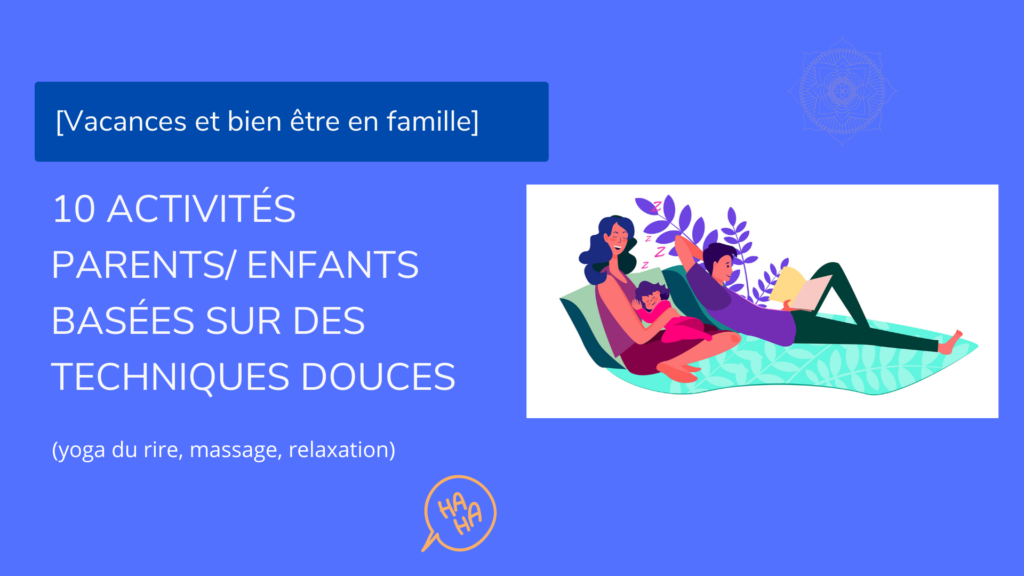
| Activity | Best moment | What it supports |
|---|---|---|
| Bee and OM sounds | Quiet afternoon | Breathing and calm |
| Back-to-back laughter | High energy | Complicity and letting go |
| Vowel and gradual laughter | Group play | Collective joy |
| Rain massage | Wind-down time | Rhythm and sensory awareness |
| Eraser massage | After activity | Relaxation and self-massage |
Stretching, Yawning and Laughing
Children stretch their arms and mime a yawn, then are invited to laugh while yawning with their arms in the air. It sounds odd, but the combination of stretching and laughter loosens the body and shifts the mood after a long car journey or a busy morning.
Yawning is contagious in the best way, and children often find the pretend version funnier than the real thing. Keep it short and follow the child's energy rather than pushing for a set number of rounds. If you are travelling with several bags and need to keep the mood light, a little planning helps too, as these tips on transporting luggage suggest.
Consent Comes First in Family Massage
Before any massage, the "masseur" always asks the "massé": "May I give you a massage on your back?" If the answer is no, the masseur can ask what the person would prefer instead: a different position, sitting or lying down, a different surface such as a chair, mat or mattress, or a different order, massaging first. This habit of asking teaches children about boundaries and respect, a theme that runs through many aspects of family life, from teacher and families to friendships.
At the end of the session, family members thank each other: thank you for the massage and thank you for the time spent together. Saying "thank you for letting me massage you" matters just as much as receiving the thanks.

Comforting Hand Massage and Back Massage
The masseur places both palms on the partner's shoulders with light pressure and leaves them there for at least three to five breaths. Then the hands move across the back, pressing each spot slowly and taking time over the whole surface. This kind of touch can calm, comfort and bring warmth to the other person.
For the rain massage, an adult or child imitates falling rain on the recipient's back with the fingertips. It is ideal for working on rhythm: small and large drops need different pressure, and the rain can fall faster or slower, harder or softer. A rain sound in the background can add to the effect. Children who enjoy sensory play often respond well to this, much like they do to licking toys for dogs that offer calming textures.
The eraser
The eraser uses the palm of the hand to wipe away tired energy towards the lower body. The hand rubs the back from top to bottom, then the shoulders, moving from the top of the arms down to the hands. Repeat this dynamic massage five times per body area. Children can also use it as a self-massage on their arms.
Making These Activities Part of Holiday Life
You do not need to do all ten in one day. Pick one breathing game for a quiet moment and one laughter game for when energy runs high, and let the massages become a bedtime ritual. Rotating them keeps them fresh and gives children something to look forward to.
Watch for cues: a child who is overwhelmed may need the calmer options, while a restless one may prefer the louder laughter games. Adapting to the mood of the moment is more useful than following a strict programme, and it mirrors the flexible approach recommended in guides such as learning with children. The phrases you use can reinforce this calm, encouraging tone.
Finally, keep sessions short and stop while everyone is still enjoying themselves. A few minutes of genuine connection repeated often beats one long, forced session, and it leaves the whole family with a store of shared, happy memories. For active days, the best outdoor toys can complement these games.
My hands-on take
I tried the bee sound with my daughter on a rainy holiday afternoon when everyone was a bit frayed. She covered her ears, then uncovered them, and was fascinated by the difference in vibration. We ended up doing it three times, and she asked for it again at bedtime.
The back-to-back laughter was harder to start, because we both felt silly. Once we got going, though, it was genuinely funny, and the tension from the morning simply disappeared. What I learned is that these activities work best when I join in fully rather than directing from the sidelines. The massage permission ritual also changed something: my daughter started asking me if she could massage my shoulders, and hearing her say "thank you for letting me" felt like a small but real shift in how we treat each other.
Frequently asked questions
What age are these activities suitable for?
Most of them work from around three years old, with adult guidance. Massages and breathing games can be adapted for younger children by keeping them very short.
Do we need any equipment?
No. A bit of floor space is enough, though a mat or cushion makes the massages more comfortable. A rain sound is optional.
How long should a session last?
A few minutes is plenty, especially for laughter games. Stop while everyone is still enjoying it rather than pushing to a set time.
What if a child refuses a massage?
That is a normal and healthy response. Offer a different position, surface or order, and respect the no without pressure.
Product Reviews
 Best Toys for Dogs With High Prey Drive |
Best Outdoor Toys for 3-4 Year Olds |
Best Outdoor Toys for 6 Year Olds |
Best Harness for Poodle |
Best LEGO Sets for Adults |
Best Travel Toys for 4 Year Olds on Airplane |
Best Toy Stores in Washington DC |
Best Potty Training Toys |
Best Toys for Tripod Dogs |
Maillot equipe de france







