


The traumatic effects of violence on children are far-reaching, and specialists in trauma and victimology have long warned that violence is traumatizing no matter how ordinary or well-intentioned it seems. This includes spanking, slaps, ear-pulling, screaming, and psychological violence such as threats, humiliation, or forced isolation.
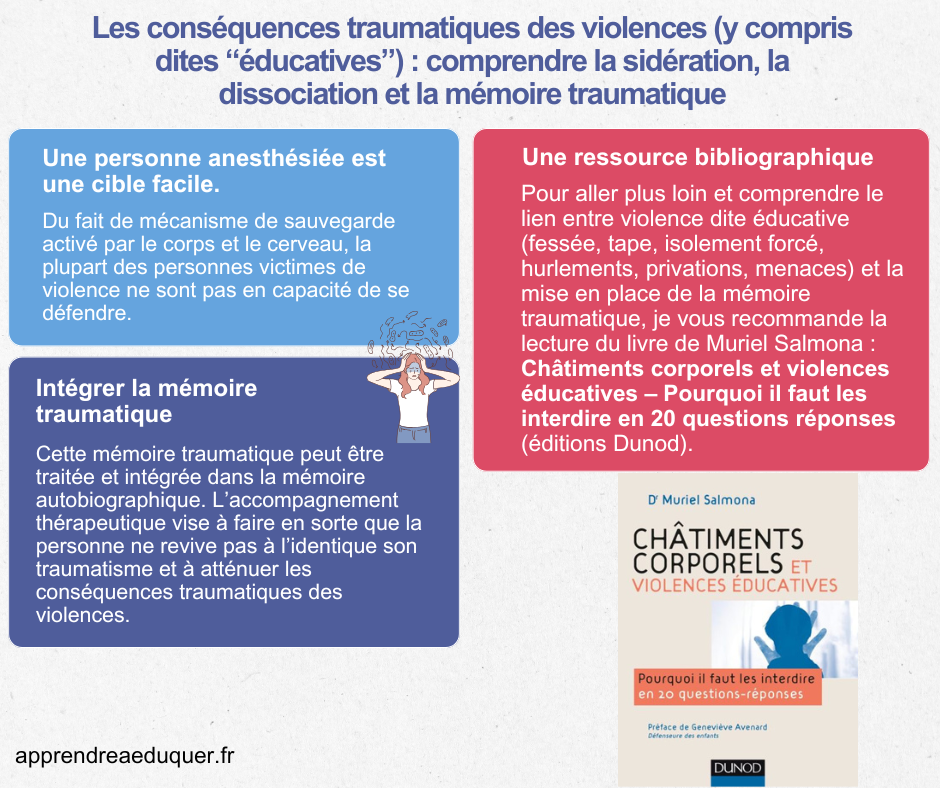
Because the body and brain activate protective mechanisms, most victims of violence are not in a position to defend themselves. Understanding these mechanisms — startle, dissociation, and traumatic memory — helps parents see why so-called "educational" violence does lasting harm.

Quick takeaways
- Violence is traumatizing even when called "educational" or "ordinary."
- Spanking, slaps, screaming, threats, and humiliation all activate survival mechanisms.
- Startle and dissociation are automatic reflexes, not signs of weakness.
- Traumatic memory keeps the body on alert long after the event.
- Gentle, consistent discipline protects the child's brain and the parent-child bond.
Why Violence Is Always Traumatizing
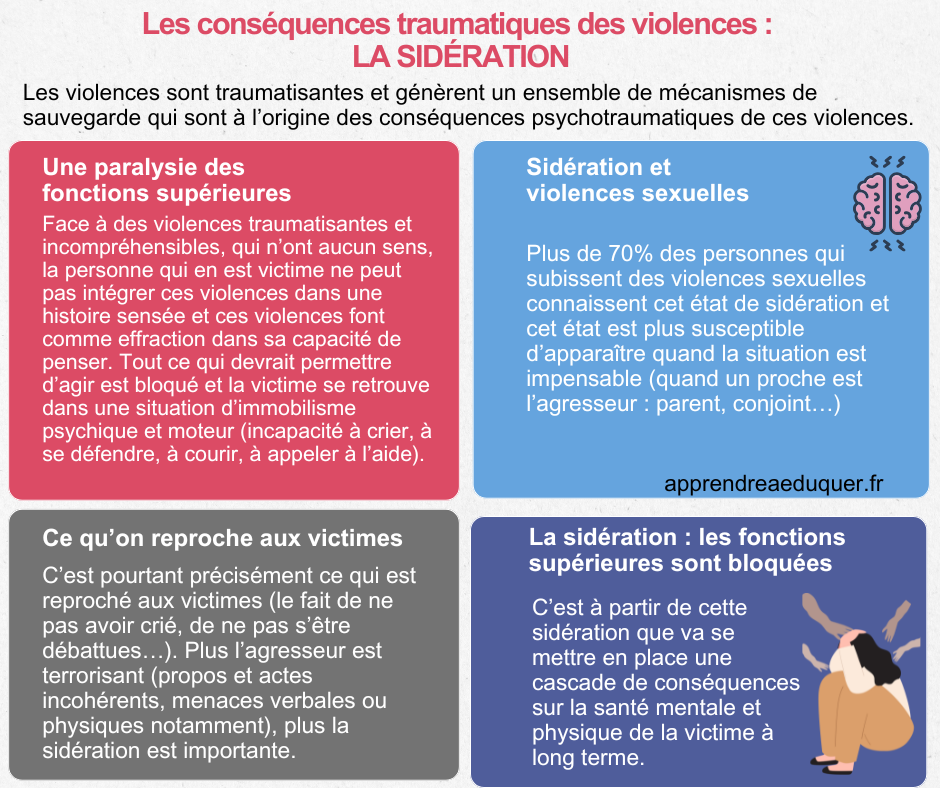
Specialists in trauma and victimology remind us that violence is traumatizing by nature. It triggers a set of survival mechanisms in the body and brain, and these mechanisms are behind almost all the psychotraumatic consequences of violence.
This applies to violence described as "educational" or "ordinary" just as much as to severe abuse. A spanking, a slap, an ear-pull, a scream, or a threat are not harmless gestures: they activate the same protective responses. When parents learn to read their child's child behaviors, they can spot the early signs of distress.
Protective mechanisms take over
When the brain detects danger, the body reacts automatically. Because of this protective mechanism, most victims of violence are simply unable to defend themselves — the response is not a choice but a reflex.
Startle and Dissociation: How the Brain Protects Itself
The first response to violence is often startle — a kind of freeze where the mind goes blank and the body becomes rigid. This is a protective reaction, not weakness, and it explains why a child cannot "just react" when hit or shouted at.
Dissociation is the next layer of protection. The brain disconnects from what is happening to limit the pain, which can leave a child feeling detached, numb, or absent. These mechanisms are part of the children need gaze dynamic: a child who is not seen safely learns to disappear. Just as sleep routines depend on calm, predictable care, a child's sense of safety depends on steady, responsive attention.
Why a child cannot simply "snap out of it"
These reactions are involuntary and automatic. They are the body's way of surviving an overwhelming situation, and they cannot be switched off by willpower or discipline. Much like planning daycare milk amounts, supporting a dysregulated child requires preparation and patience rather than force.

| Behavior | What the child's brain does | What helps instead |
|---|---|---|
| Spanking or slapping | Startle, freeze, fear response | Calm words and clear limits |
| Screaming or shouting | Dissociation, numbing | Lower voice, explain the rule |
| Threats and humiliation | Traumatic memory activation | Reassurance and repair |
| Forced isolation | Withdrawal, detachment | Connection and safe routines |
| Ear-pulling or rough handling | Physical alarm, tension | Gentle touch and patience |
Traumatic Memory: When the Past Stays Present
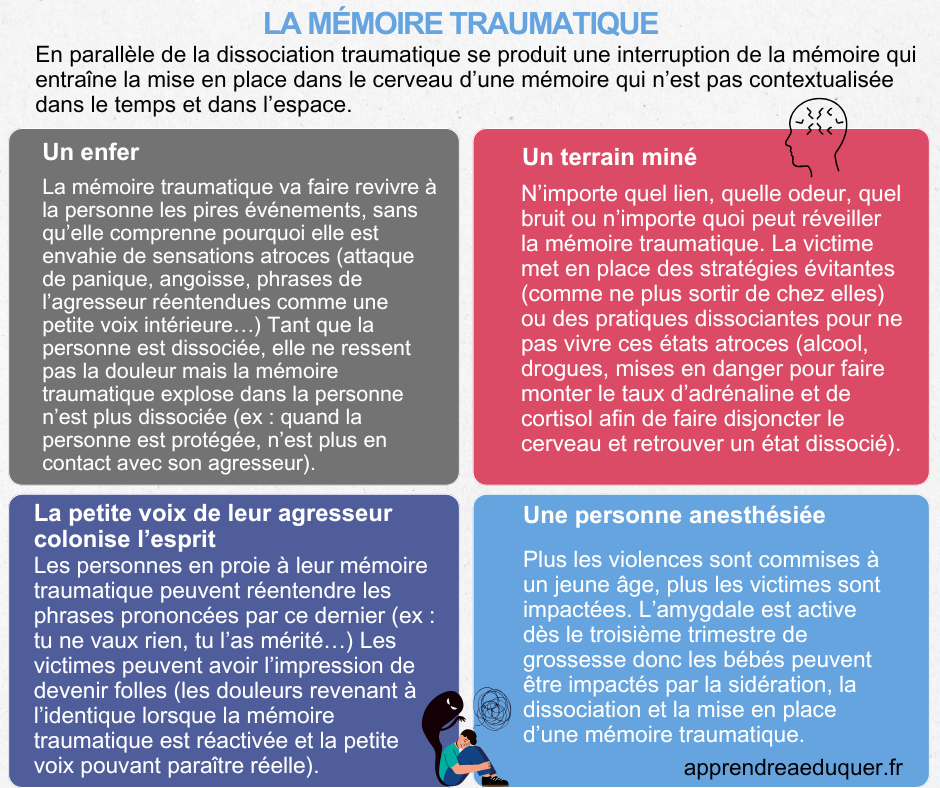
Traumatic memory is the way the brain stores an overwhelming event. Instead of filing it away as a past experience, it keeps it active, so the body can react as if the danger were still happening.
This is why a child who has experienced violence may overreact to a raised voice, a sudden movement, or a similar situation. The memory is not just a recollection — it is a live alarm. Parents who understand neurological problems early on are better equipped to protect a developing brain.
Everyday moments can reactivate it
A loud noise, a crowded room, or a stressful bedtime can trigger the traumatic memory. This is why calm, predictable routines and a safe environment matter so much.
Recognizing the Signs in Daily Life
Children do not always say they are hurting. Signs can show up as sleep problems, sudden fears, aggression, withdrawal, or difficulty concentrating. Some children become unusually compliant, while others become explosive.
Fear of water, fear of the dark, or new anxieties can all be connected to a nervous system on alert. If your child is afraid of water, for example, patience and reassurance matter far more than pressure. Creating calm routines, such as a predictable bedtime, supports recovery.
What parents can do
Observe without judgment, name feelings gently, and offer physical and emotional safety. If difficulties persist, seek guidance from a health professional who understands childhood trauma.
Moving Toward Gentle, Non-Violent Discipline
Understanding the traumatic effects of violence changes how we discipline. The goal is not to control a child through fear but to guide them with clear limits, calm words, and consistent routines.
This is why so many parents now choose open-ended, calming play and gentle routines over punishments. Choosing open ended toys and predictable rituals helps a child feel secure. Even small moments — like a calm afternoon with Three Kings afternoon activities — build trust. Gentle routines can also guide decisions about unused toys and bunk bed safety.
Small daily choices that protect
Lower your voice instead of raising it, explain the limit instead of threatening, and repair after a difficult moment. These habits protect the parent-child bond and the child's developing brain.

My hands-on take
I remember the first time I raised my voice at my child and saw that blank, frozen look. I had always assumed a child would argue back or cry, but instead there was silence — a kind of shutdown I did not understand at the time. Reading about startle and dissociation changed how I saw that moment.
Since then, I have tried to lower my voice, explain limits instead of threatening, and repair quickly after a hard moment. It is not always easy, and I still slip up. But watching my child relax again once calm returns has convinced me that gentle discipline is not permissive — it is protective.
Frequently asked questions
Is a spanking really traumatizing?
Specialists explain that violence is traumatizing by nature, including so-called ordinary violence like spanking. The body activates protective mechanisms regardless of the parent's intention.
Why doesn't my child defend themselves?
Because of protective mechanisms activated by the body and brain, most victims of violence are not able to defend themselves. Startle and dissociation are automatic, not chosen.
What is traumatic memory?
Traumatic memory is how the brain stores an overwhelming event so it stays active. The body can then react as if the danger were still present.
Can gentle discipline really make a difference?
Yes. Calm limits, consistent routines, and repair after difficult moments help a child feel safe and support healthy brain development.
Product Reviews
 Best Toys for Dogs With High Prey Drive |
Best Outdoor Toys for 3-4 Year Olds |
Best Outdoor Toys for 6 Year Olds |
Best Harness for Poodle |
Best LEGO Sets for Adults |
Best Travel Toys for 4 Year Olds on Airplane |
Best Toy Stores in Washington DC |
Best Potty Training Toys |
Best Toys for Tripod Dogs |
Maillot equipe de france







