


Helping children overcome fear starts with one simple idea: a frightened child has the right to feel afraid, and that fear deserves to be respected, heard and welcomed rather than dismissed. Many parents instinctively rush to fix the problem, but the first step is to slow down and truly listen.
Listening here has two dimensions. It means lending a genuinely attentive ear, and it also means helping the child put their own truth into words. This guide walks through that approach step by step, with practical language you can use at home.

Quick takeaways
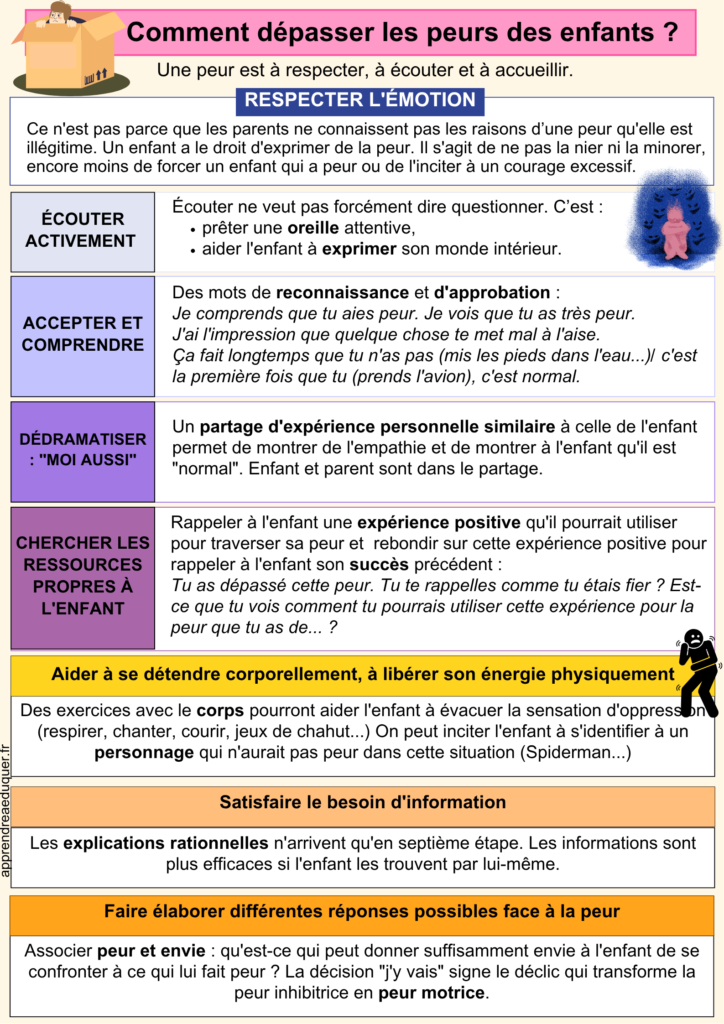
- A fear should be respected, heard and welcomed, not argued away.
- Listening means paying attention and helping the child express their truth.
- Avoid turning listening into an interrogation with rapid questions.
- Use simple “yes” statements to recognise and validate the feeling.
- Offer empathy rather than trying to fix the problem for the child.
- Seek professional advice if a fear disrupts sleep, school or daily life.
Giving children permission to feel afraid
Fear is not misbehaviour, and it is not something to be scolded or shamed. When a child is scared, the healthiest starting point is to treat that fear as legitimate. A fear is something to respect, to listen to and to welcome, not to argue away.
This matters because children often sense that adults want the fear to disappear quickly. That pressure can teach them to hide what they feel. Instead, let them know that expressing fear is allowed, and that you are not disappointed or annoyed by it.
If you want to build this emotional vocabulary early, a few ideas on self-improvement in children can complement what you do in anxious moments. The goal is not to eliminate fear overnight but to make it safe to talk about.
Listening without turning it into an interrogation
Listening does not necessarily mean questioning. Firing off “Why are you scared?” or “What happened exactly?” can make a child clam up. Often the most useful thing you can offer is quiet attention and short, warm responses that invite them to keep going at their own pace.
Give them space to finish a thought before you respond. Silence from you is not a failure of the conversation; it is often what lets the child find the words. When they do speak, reflect back what you heard rather than correcting it. Knowing how to talk calmly about sensitive topics helps here too.
Some children find it easier to talk while doing something else, such as drawing or playing. Sensory play can loosen that pressure, and these sensory toys for toddlers are a gentle way to create a calm opening for conversation. It also matters to keep your authority steady while you listen.
| Situation | Helpful response | Less helpful response |
|---|---|---|
| Child says “I’m scared” | “Yes, I see that you are afraid.” | “There’s nothing to be scared of.” |
| Child goes quiet | Sit calmly and wait for words | Fire off many questions |
| Child describes the fear | Reflect back what you heard | Correct or minimise the feeling |
| Child faces the fear | Praise the effort, stay nearby | Take over and solve it for them |
| Fear persists over weeks | Talk to a professional | Ignore it and hope it passes |
The power of the word “yes”
Recognition before solutions
Words of recognition and approval encourage a child to try to overcome the fear. These words pass through the word YES: “Yes, I see that you are afraid.” “Yes, you have the right to be afraid.” Simple affirmations like these tell the child their experience is real and accepted.
Notice what this does not include. It is not about trying to “cure” the problem or solve it in the child’s place. It is about empathy: the child is allowed to feel what they feel, and you are standing beside them rather than steering them.
Once a child feels acknowledged, they can usually describe their own experience, reveal their own feelings and uncover their own emotions. That is the moment when real progress becomes possible.
Staying alongside instead of fixing
Parents naturally want to remove the source of distress, but rescuing too quickly can rob a child of the chance to build confidence. Your role is to be a steady presence, not a problem-solver who takes over. Offer reassurance, then let the child take the next small step themselves.
This is the same patience that pays off in other areas of growing up. If your child is preoccupied with friendships, these thoughts on popularity at school show how steady support beats pressure. And when family life gets busy, a few tricks to control visits can keep routines calm and predictable.

Everyday moments that build courage
Fear often surfaces in ordinary situations: bedtime, the dark, new places, loud noises or separating from a parent. Preparing children in advance, keeping routines predictable and praising effort rather than outcome all help them face these moments with more confidence.
Outings are a good example. A little planning before a restaurant trip, as in these tips for eating out with a baby, reduces surprises and keeps everyone calmer. Choosing gifts and toys that match a child’s stage, like these Christmas gifts, also avoids overwhelming them. Understanding the parent child relationship can make these everyday moments feel more manageable.
And when a child is unwell, fear and worry often rise. Knowing the signs in this guide to childhood flu complications helps you stay calm and reassuring rather than anxious yourself.
When to seek more support
Most childhood fears ease with time, empathy and consistent reassurance. But if a fear is intense, persistent or starts to interfere with sleep, school or daily life, it is worth talking to a paediatrician or a child mental health professional. Asking for help is not overreacting.
In the meantime, keep the foundations strong: predictable routines, honest conversations and plenty of warmth. A child who knows their feelings are welcome is a child better equipped to face what frightens them.

My hands-on take
In my own home, the biggest shift came when I stopped trying to talk my child out of a fear and started simply agreeing with it. Saying “yes, you’re scared, and that’s allowed” felt almost too simple, but it changed the tone of the whole conversation. Instead of defending the fear, my child began describing it.
I also learned to bite my tongue when the questions piled up. Now I sit nearby, offer a short reassuring phrase and wait. Sometimes nothing comes out that evening, and that is fine. The next day, the words often arrive on their own, usually while we are doing something else together.
Frequently asked questions
Should I tell my child there is nothing to be afraid of?
It is usually better to acknowledge the fear first. Saying “Yes, I see that you are afraid” validates the feeling, while dismissing it can teach a child to hide what they feel.
Does listening mean I have to ask lots of questions?
No. Listening does not necessarily mean questioning. Warm, short responses and quiet attention often help a child express more than a series of direct questions would.
Am I supposed to solve the problem for my child?
The aim is empathy rather than fixing the problem in the child’s place. Once a child feels heard, they are usually better able to describe their experience and take their own small steps forward.
When should I worry about a persistent fear?
If a fear is intense, lasts a long time or interferes with sleep, school or daily life, it is sensible to speak with a paediatrician or child mental health professional.
Product Reviews
 Best Toys for Dogs With High Prey Drive |
Best Outdoor Toys for 3-4 Year Olds |
Best Outdoor Toys for 6 Year Olds |
Best Harness for Poodle |
Best LEGO Sets for Adults |
Best Travel Toys for 4 Year Olds on Airplane |
Best Toy Stores in Washington DC |
Best Potty Training Toys |
Best Toys for Tripod Dogs |
Maillot equipe de france







