


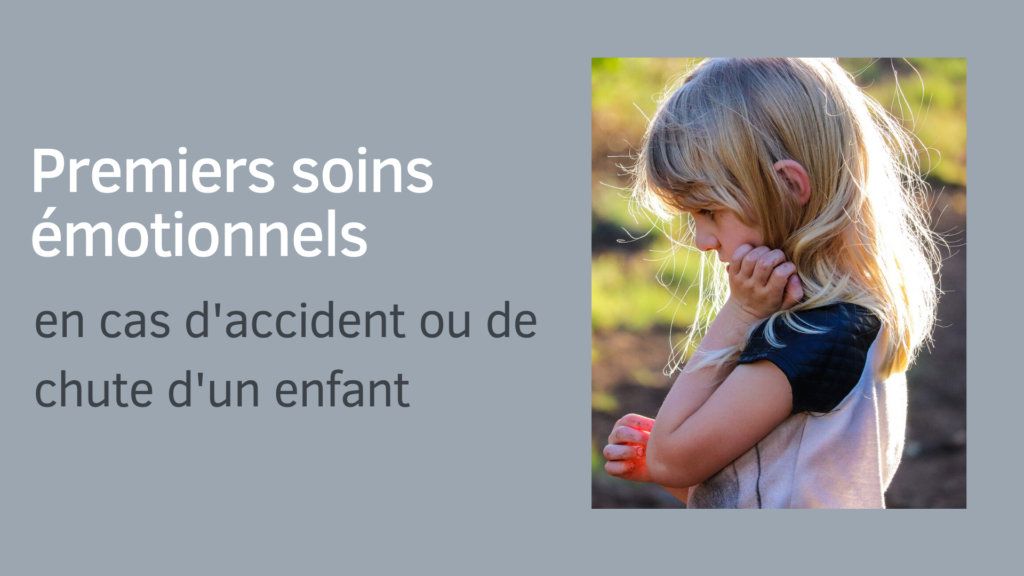
Emotional first aid after a child's fall or small accident is a skill every parent can learn, and it matters even when there is no visible injury. A bump, a tumble from a bike or a fright in the playground can look trivial from the outside while leaving a child shaken inside.
Peter Levine, a doctor in psychology and a specialist in post-traumatic stress, offers simple guidelines for these everyday incidents. He reminds us that not every childhood accident produces a traumatic reaction: some leave no trace, while others, even those adults see as harmless, can have serious consequences.

This guide walks through that approach step by step, from managing your own panic to helping a child tell the story later, so you can respond with steadiness instead of urgency.
Quick takeaways
- Calm yourself first: panic is contagious, and long exhales help.
- Keep the child still and warm, even if they seem able to walk.
- Let crying and trembling run their course without interruption.
- Ask about body sensations gently, with pauses between questions.
- Delay the retelling; play and drawing can carry the story later.
- Seek medical advice for head injury signs before emotional support.
Start with your own reaction
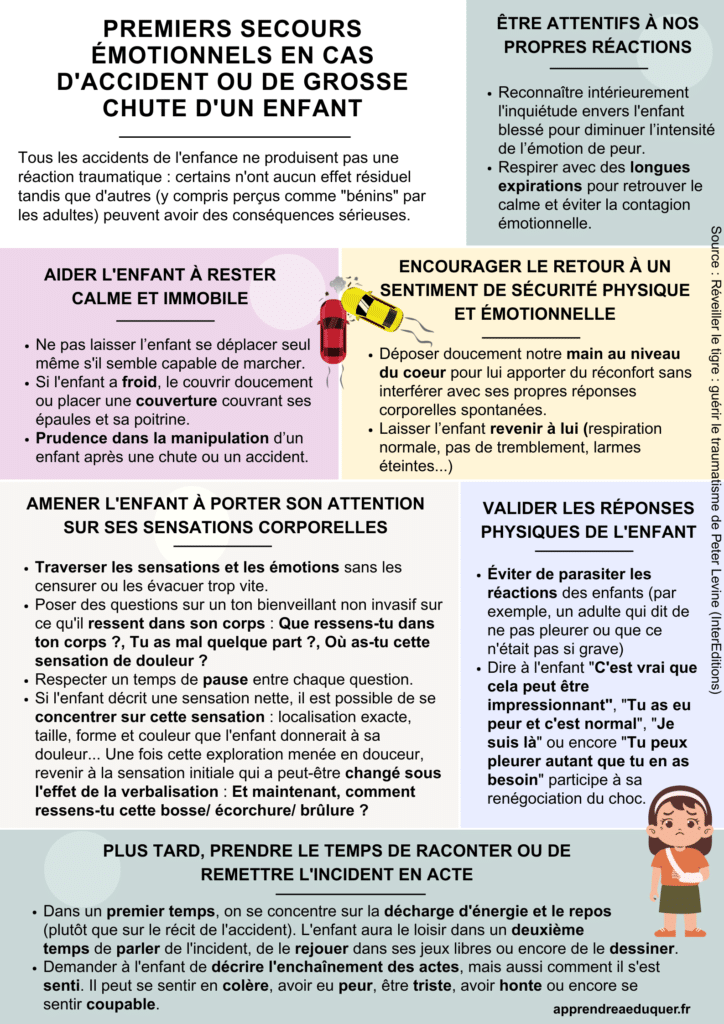
Panic is contagious, so the first task for any adult present at an accident is to settle themselves before attending to the child. Take a moment to acknowledge your own worry inwardly, putting words on the physical sensations you feel, and breathe with long exhales to return to calm.
That calm is not a luxury; it is what allows you to notice what the child actually needs rather than what your fear is shouting. If you struggle to stay steady under pressure, some positive discipline principles for staying grounded are worth revisiting before the next emergency.
Children read adult faces closely, so a composed presence does more than any reassuring sentence. Settle your breathing first, then approach.
Help the child stay calm and still
Levine advises against letting children move around on their own, even if they seem able to walk. Some children start moving again to deny their fear, which is a bit like clenching your teeth to feel nothing.
If the child is cold, gently place a sweater or blanket over the shoulders and chest. Keep the setting quiet and familiar where possible, and avoid crowding the child with questions or onlookers while the shock is still fresh.
Simple comfort items can help a younger child settle, and knowing which quiet toys work for your own child makes it easier to offer one without adding stimulation. If you have a toddler in tow, these airplane toys can double as familiar comfort objects, and older siblings may respond well to a few calming STEM toys kept on hand.
| Stage | Do this | Avoid this |
|---|---|---|
| Your reaction | Breathe out slowly, name your worry | Rushing in while panicking |
| First minutes | Keep the child still and warm | Letting them walk it off alone |
| Rest | Hand on back or heart, quiet space | Tight hugging or moving them |
| Sensations | Gentle questions with pauses | Rapid-fire questioning |
| Release | Allow tears and trembling | “Don't cry, it wasn't serious” |
| Later | Retell, draw, replay in play | Forcing the story immediately |
Encourage rest in a safe place
Levine stresses that rest is especially important when a child is upset or, conversely, excessively calm. You can gently rest your adult hand in the middle of the child's back or over the heart to offer comfort, without interfering with the body's spontaneous responses.
He also urges caution when handling children after a fall or accident: move them as little as possible and let them choose a comfortable position. A familiar object within reach, such as a soft toy from your sensory toys collection, can make the resting place feel safer.
Watch for warning signs
If the child seems dazed, vomits, complains of neck or head pain, or cannot be roused properly, seek medical advice rather than continuing with emotional support alone. First aid for the body always comes before first aid for the emotions.
Bring attention back to bodily sensations
Once the child seems fully back, with normal breathing and no shivering from shock, you can ask gentle, non-invasive questions about what they feel in their body: “What do you feel in your body?”, “Does anything hurt?”, “Where is that feeling?” Leave a pause between each question rather than firing them off.
If the child describes a clear sensation, explore it together: its exact location, size, shape and even the colour they would give the pain. Then return to the original sensation, which may have shifted through being put into words: “And now, how does that bump or scrape feel?”
Levine insists on silence between questions so the child can live through the sensations and verbalise them. Focus on discharging energy and resting rather than on retelling the accident; the story can come later, through talk, free play or drawing.
Validate the child's physical responses
Children often start to cry or tremble as they come out of shock, and adults must resist the urge to make this stop. The body may need that particular movement, and if these reactions are interrupted, for example by an adult saying “don't cry” or “it wasn't that bad”, they cannot do their work of discharging the energy built up during the shock.
The physical expression of distress should continue until it stops on its own, which usually takes a few minutes. Levine notes that studies show children who were allowed this recover with fewer problems, and that your essential role is to create a safe environment so the child can complete their natural responses.
Saying “That can be frightening”, “You were scared and that's normal”, “I'm here” or “You can cry as much as you need” supports this process. Avoid moving the child, hugging too tightly or distracting them; once they have lived through what they need to, they will turn outward again, a sign the healing process has completed.
Later, take time to tell or replay the incident
When the child is calm, either straight away or some time later, Levine suggests starting by asking what happened, describing the sequence of events, and then how they felt. The child may feel angry, ashamed or sad, and naming these feelings without judgement helps the experience settle.
Free play and drawing are natural ways for children to replay a shock, and a story about a character who falls can open the conversation sideways. Books that build emotional vocabulary, including titles from this selection of stories and books for children, can support that work over the following days. Understanding stages like being in love can also help parents read their child's emotions with more patience.
If fear lingers around a specific activity, such as water, a careful look at water safety elements can rebuild confidence gradually. For parents carrying their own anxiety after a scare, fear of hurting a child is a common and manageable feeling worth naming aloud, and these blogs about motherhood offer further reassurance.


My hands-on take
I learned this the hard way when my daughter tripped on a curb and I gasped louder than she cried. She looked at my face, burst into tears and then kept glancing at me to check how scared she should be. The next time, I crouched down, breathed out slowly and said nothing for a few seconds, and the whole episode was over far faster.
What surprised me most was how hard it is to stay quiet while a child trembles. My instinct is to scoop them up and distract, but sitting nearby with a hand on the back, saying only “I'm here”, worked better than any joke or snack. I now keep a blanket near the door and remind myself that a few minutes of crying is not something to fix.
Frequently asked questions
Should I stop my child from crying after a fall?
No. Crying and trembling are natural ways for the body to discharge the energy of a shock, and interrupting them can prevent that process from completing. Stay close, validate the fear and let the reaction end on its own, which usually takes a few minutes.
My child seems fine but very quiet after a fall. Is that normal?
An excessively calm or withdrawn child also needs rest and gentle attention, according to Levine. Offer a safe, quiet place and your calm presence, and watch for any physical warning signs that call for medical advice.
When can we talk about what happened?
Wait until the child is calm, either shortly after or some time later. Start with what happened and then how they felt, and let play or drawing carry part of the story if words are hard.
Does every small accident traumatise a child?
No. Many accidents leave no residual effect, while others that adults see as benign can have serious consequences. Responding calmly and letting the body complete its reactions reduces the risk either way.
Product Reviews
 Best Toys for Dogs With High Prey Drive |
Best Outdoor Toys for 3-4 Year Olds |
Best Outdoor Toys for 6 Year Olds |
Best Harness for Poodle |
Best LEGO Sets for Adults |
Best Travel Toys for 4 Year Olds on Airplane |
Best Toy Stores in Washington DC |
Best Potty Training Toys |
Best Toys for Tripod Dogs |
Maillot equipe de france







