


These books for middle schoolers were written to help children move into secondary school with more confidence. The transition from primary to secondary is a real jump: new codes, more teachers, a heavier workload and the feeling of being lost in a system nobody has explained.
This guide covers three complementary books. One revises the essential CM2 notions before entry, one teaches organisation and learning techniques, and one rebuilds spelling basics. Each one targets a specific need, and together they cover the first two years of secondary school.

Quick takeaways
- One workbook revises CM2 essentials in French, maths, history, geography and English before Year 7.
- Method sheets cover organising, revising, autonomy and stress management.
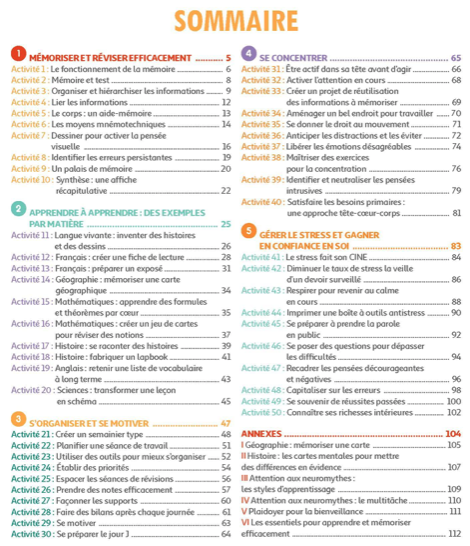
- The organisation guide is built on five parts, from memory to concentration and confidence.
- The spelling book has four parts: grammar rules, spelling progress, conjugation and games.
- Mental maps, tips and playful exercises make spelling practice less discouraging.
- Choose the book that matches the actual difficulty, and use it in short regular sessions.
Revising CM2 basics before the move to secondary school
The first book is a workbook combining lessons, exercises and method sheets for CM2 pupils. Its aim is to revise the essential notions to master on arrival at secondary school and to anticipate the changes linked to entering Year 7. It includes theory in the main subjects — French, maths, history, geography and English — plus exercises to practise.
The fundamental French and maths notions are described progressively, with a reminder of the key elements, practice exercises and answers available online. Exercises revisit grammar rules such as the nature and function of words, conjugation endings, calculation techniques and measurement conversions.
Method sheets for good habits
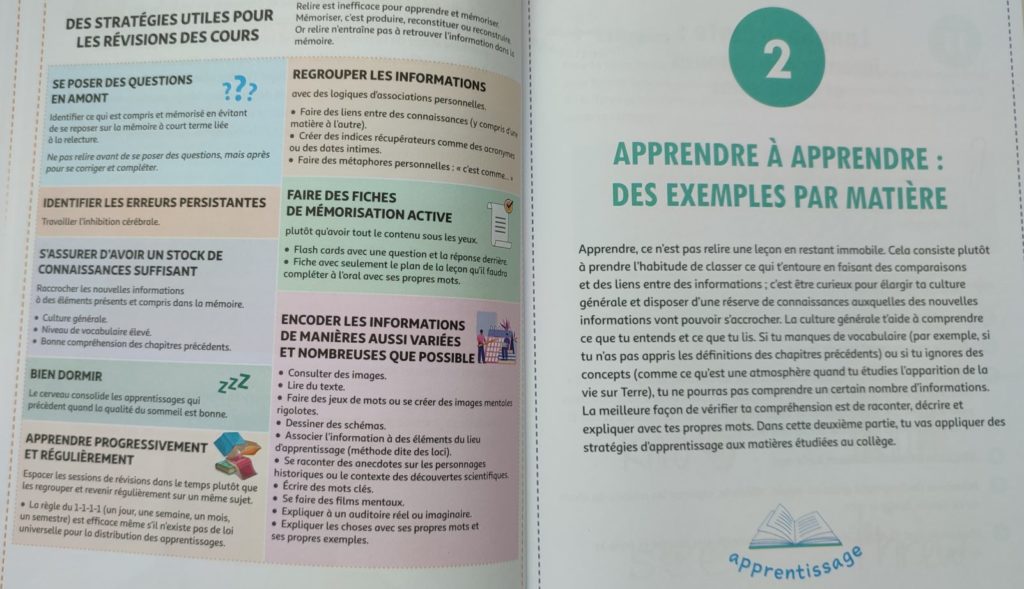
Beyond content, the workbook includes method sheets to build good habits: organising yourself, revising, gaining autonomy and managing stress. Children who feel anxious about change may also benefit from reading about positive discipline at home, since a calm framework supports confidence.
The point is to work on both subjects and cross-curricular skills that stay useful throughout secondary school.

Learning how to learn: organisation and efficiency in Years 7 and 8
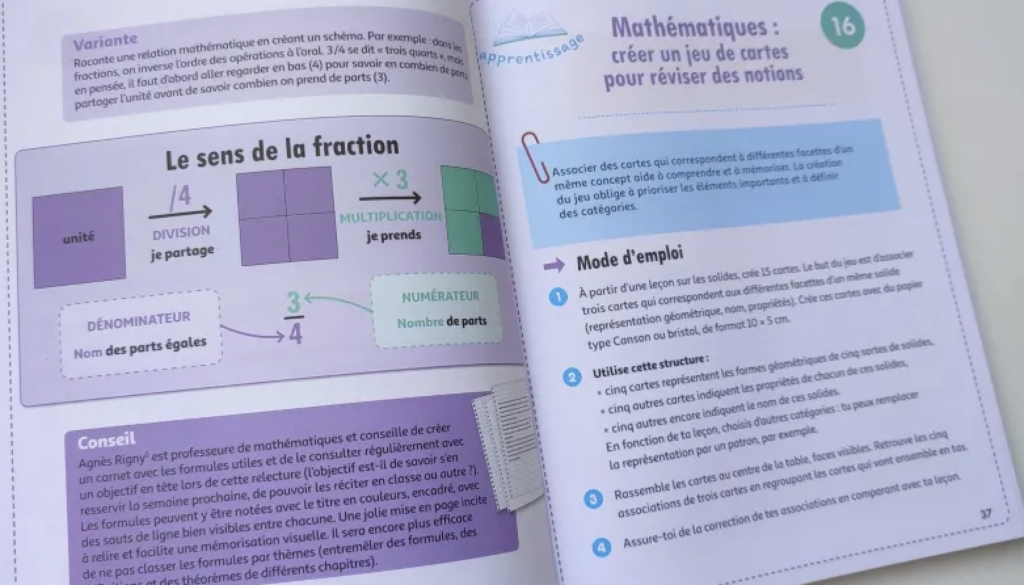
The second book is a guide built around five main parts: memorising and revising efficiently, learning how to learn with examples per subject (French, maths, English, history-geography, science), organising and motivating yourself, concentrating, and managing stress while gaining self-confidence.
It is written for teenagers in Years 7 and 8, but also for parents and professionals looking for learning methods grounded in cognitive science. The idea is to present useful information about how the brain works alongside practical examples pupils can actually apply.
Tools teenagers can use alone
Readers get information on how memory functions, examples for revising lessons and preparing tests, strategies for getting organised, tools and exercises for better concentration, stress management techniques and resources to regain motivation. The concrete scenarios across subjects make it easier to apply, much like the practical everyday tips found in guides such as stubborn children or motherhood blogs.

| Book | Main focus | Best moment to use |
|---|---|---|
| Revision workbook | CM2 basics and method | Summer before Year 7 |
| Organisation guide | Learning how to learn | All year, before tests |
| Spelling book | Grammar, spelling, conjugation | Short weekly sessions |
| Revision workbook | Stress and autonomy | First weeks of Year 7 |
| Organisation guide | Concentration and motivation | When motivation drops |
| Spelling book | Playful practice | Weekends and holidays |
Rebuilding spelling basics to write without errors
The third book targets spelling, often a sore point for secondary pupils. French is genuinely difficult to master in writing, and it can be discouraging to see that every rule comes with exceptions. The book is organised into four parts.
Part one covers grammatical rules: the nature of words, past participles and their agreements, and how adverbs are formed. Part two focuses on progressing in spelling: agreements within the noun group, subject-verb agreement, first-aid strategies for eliminating frequent errors, memorising difficult words and grammatical homophones.
Conjugation and games
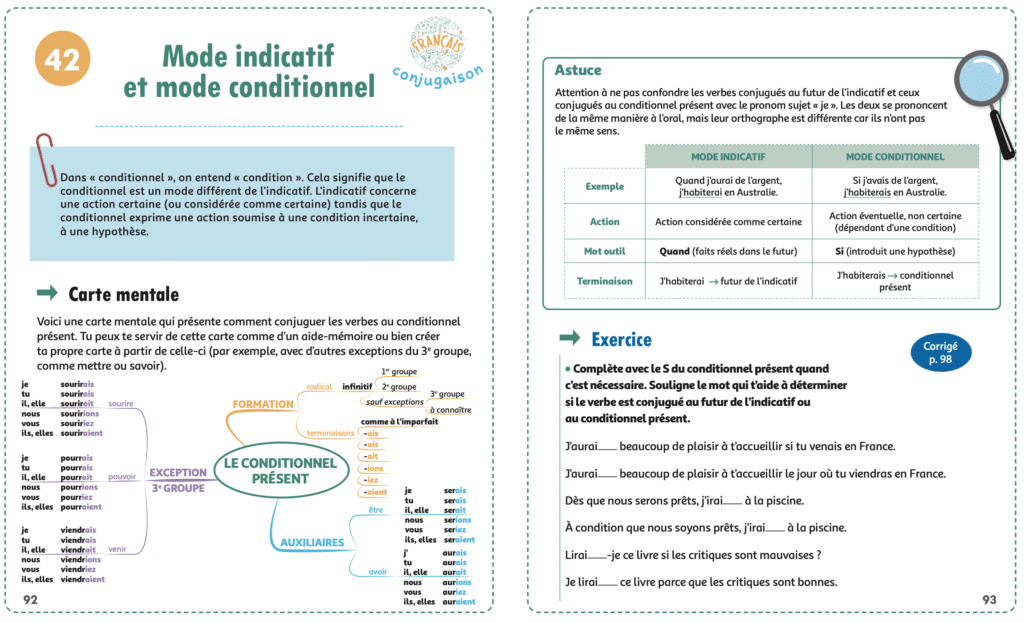
Part three deals with conjugating without mistakes: indicative tenses, pronominal verbs, indicative and conditional moods, and the imperative. Part four invites pupils to play to write without errors, with grammatical exquisite corpses, charades, homophone fortune tellers and conjugation dominoes.
Mental maps recap the notions on the early secondary French programme, tips help pupils take ownership of tricky rules, and playful exercises keep practice light. Some children respond better to games than to drills, a principle that also underpins educational toys for younger siblings.

How the three books fit together
These books are not meant to be used all at once. The CM2 workbook works best in the summer before entry or during the first weeks, when the child still remembers primary school content and needs reassurance.
The organisation guide is the one to keep on the desk all year, dipped into whenever a test approaches or motivation drops. The spelling book is best used in short, regular sessions rather than long blocks.
Building a calm routine
Parents play a big role simply by protecting short, predictable revision slots and keeping the tone encouraging. A child who feels supported at home, with the kind of reassuring routines described in nursery fear articles, is more willing to open a workbook. Keeping the materials tidy also helps, and even small habits like sorting out LEGO boxes can teach organisation.

Choosing the right support for your child
Start from the actual difficulty rather than from the book that looks most appealing. A child who panics before tests needs method and stress tools; a child whose written work is full of agreement errors needs the spelling book; a child about to enter Year 7 needs the revision workbook.
Involve the teenager in the choice. A book selected together is far more likely to be opened than one imposed, and autonomy is precisely the skill these guides aim to build.
Keeping expectations realistic
No workbook replaces regular classwork, and progress in spelling or organisation takes weeks, not days. Celebrate small improvements, keep sessions short, and let the child see that effort matters more than perfection. The same patient approach applies to younger children, as seen with toys for two year olds and toys for six year olds, where play and repetition do the work.






My hands-on take
I have watched children open a revision workbook with real dread, and the difference almost always comes down to how the sessions are framed. When we sat down together for fifteen minutes, picked one grammar point and stopped while it was still going well, the same child came back the next day without being asked.
What struck me most is that the method side matters as much as the content. A teenager who knows how to space out revision and how to prepare a test is calmer, and that calm shows in the results. The games section of the spelling book was the surprise winner in our house: the fortune teller on homophones got used far more than any exercise page, simply because it felt like play rather than homework.
Frequently asked questions
At what age should my child start using these books?
The revision workbook is designed for CM2 pupils preparing for Year 7, while the organisation and spelling guides target Years 7 and 8. Using them slightly earlier or later is fine if the content matches your child's needs.
Can parents use the organisation guide too?
Yes. It is explicitly written for teenagers but also for parents and professionals looking for learning methods grounded in cognitive science, so adults can borrow the techniques.
Does the spelling book replace classroom teaching?
No. It supports and consolidates what is taught in class through rules, mental maps, tips and exercises, and it works best alongside regular schoolwork.
How long should a revision session last?
Short and regular beats long and occasional. A brief, focused session a few times a week is easier to sustain than a single long block.
Product Reviews
 Best Toys for Dogs With High Prey Drive |
Best Outdoor Toys for 3-4 Year Olds |
Best Outdoor Toys for 6 Year Olds |
Best Harness for Poodle |
Best LEGO Sets for Adults |
Best Travel Toys for 4 Year Olds on Airplane |
Best Toy Stores in Washington DC |
Best Potty Training Toys |
Best Toys for Tripod Dogs |
Maillot equipe de france







