


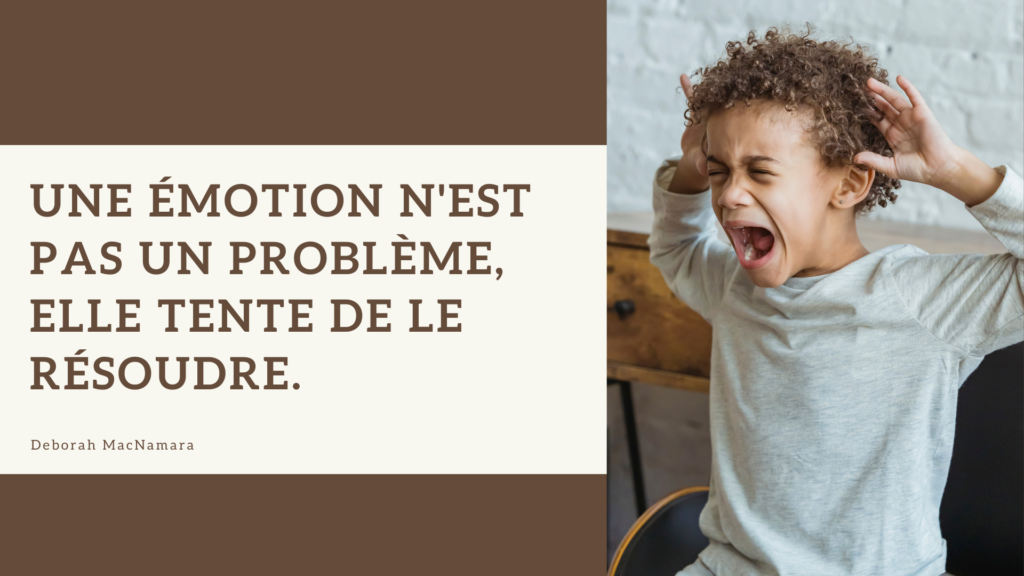
Child emotions are not the problem, even when they arrive at the worst possible moment. According to Deborah MacNamara of the Neufeld Institute, a feeling is not the difficulty itself: it is an attempt to solve one.
That reframe matters because most of us react to the explosion rather than to what it is carrying. A child who melts down over a broken biscuit is rarely upset about the biscuit.

This article walks through why children save their feelings for us, how the emotional pressure cooker works, and what to do when the lid comes off.
Quick takeaways
- A feeling is not the problem; it is an attempt to solve one
- Children often explode over “nothing” because home is the safe place to let go
- The pressure cooker opens at reunions, bedtime and after long restraint
- Reasoning, lecturing, distracting and punishing all treat the feeling as the fault
- Children need help discharging emotional energy, not suppressing it
- Your steadiness, not your control, is what the child borrows
Children never explode over nothing
Every parent has seen it: a child comes home from school and detonates over something trivial. Psychologists sometimes call it the broken biscuit syndrome. From an adult's point of view the trigger is nothing; from the child's point of view it is simply the last straw.
MacNamara reminds us that emotions are not always expressed in the situation that provoked them. Adults know this well: it is hard to show anger to the right person, at the right moment, at the right intensity. We under-express it to avoid hurting someone, censor it out of fear of the reaction, or over-express it and confuse anger with aggression.
Children face the same difficulty with far less practice. If you are working on social interaction skills or simply on helping a child read a room, remember that the feeling itself is not the fault to be corrected.
A child's emotion is not the problem
Parents and childcare professionals alike notice that children's feelings surface in places that seem inappropriate or frankly odd. That is not a malfunction. The human emotional system is designed so that a child holds intense feelings back while away from their parents, because it is not always wise to show what you feel in front of people you are not close to.
It is safer to express emotion when the conditions feel secure, meaning with parents or very close caregivers. So the child who holds it together all day and falls apart at pickup is not being manipulative; they are finally somewhere safe enough to let go. The same logic explains why a child may be fine with a sitter and difficult the moment you return, a pattern worth keeping in mind when you respect the caregiver. This is also why managing your child's fatigue matters, and why outdoor toys can help children release tension.
| Situation | Common reflex | More helpful response |
|---|---|---|
| Child explodes after school | Ask what happened and why | Offer a quiet snack and time |
| Small trigger, huge reaction | “It's not that serious” | Stay close, say little |
| Child cries at bedtime | Distract or hurry them along | Let the wave pass calmly |
| Child shouts or stamps | Punish the behaviour | Allow discharge, keep everyone safe |
| You feel helpless | Join the chaos | Breathe, lower your voice |
The emotional pressure cooker
MacNamara compares the emotional system to a pressure cooker: the lid blows when the contents overflow, or when an opportunity to open presents itself. Reunions after a day apart and bedtime, when everything is finally calm, are classic moments for the valve to release.
Faced with a small frustration that produces a huge reaction, parents often feel helpless and confused. The resulting behaviour can be clumsy and even make things worse. We are tempted to reason with the child (“it's not that serious”), lecture (“stop putting on a show”), distract (“smile, don't think about it”) or punish (“if you carry on, no screen time”).
None of these responses is cruel, but each one treats the feeling as the problem. Knowing that a child who cracks without apparent reason is normal already improves the quality of the relationship.
Let the emotional energy discharge
Emotions carry energy because their purpose is to move the body towards unmet needs. Children and teenagers release that accumulated energy in many ways: playing, shouting, jumping, crying, stamping, talking, withdrawing, or shutting down. Often they do not choose the channel, partly because of immaturity and partly because of what they have observed and copied around them.
We do not need to repress these expressions. We are more useful helping a child discharge the energy than policing its form. MacNamara notes that the bigger problems come not from the expression of emotion but from its absence. A child who never lets anything out is not calm; they are sealed.
If you want outlets that absorb restless energy, look at outdoor toys for preschoolers or fine motor skill toys that keep hands and bodies busy while feelings settle. For related practical guidance, see our kindergarten check FAQ.

Why the lack of control is so hard on parents
The main challenge of children's emotional immaturity is the absence of control. The younger the child, the harder it is to know where, when, how and how intensely feelings will surface. That unpredictability generates helplessness and stress in adults.
It helps to stay in contact with one idea: our role is not to join children in their emotional immaturity, but to offer patience and examples of behaviour worth observing and copying. A parent who stays steady through the storm teaches more than a parent who wins the argument. This is the same modelling principle behind helping a child believe in magical characters without losing trust, or guiding them through princess stories that question the usual scripts.
Practical responses that keep the relationship intact
When the lid lifts, lower the stakes. Stay nearby, say little, and let the wave pass rather than arguing it down. Save the conversation about what happened for later, once the body is calm and the thinking brain is back online.
Build predictable decompression into the day: a quiet snack after school, a few minutes of rough-and-tumble play before homework, a slow bedtime routine. Predictable rhythms give feelings a scheduled place to land instead of ambushing everyone at dinner. Even small routines, like a calm breakfast in the classroom morning, reduce the pressure that builds later.
Finally, protect your own calm. If you are depleted, you cannot lend a child your steadiness. Rest is not a luxury here; it is part of the method.

My hands-on take
I learned the pressure cooker idea the hard way. For months I met my daughter at the school gate with questions, and for months she answered them with a meltdown on the pavement. I assumed something was wrong at school, or that she was simply difficult at pickup.
What changed things was doing less. I started bringing a snack, saying almost nothing, and walking home slowly. The explosion still came some days, but it came smaller, and it stopped feeling like an emergency I had to solve. When I stopped treating the feeling as a problem to fix, I had far more patience for the child having it.
Frequently asked questions
Why does my child fall apart at home but behave at school?
Children often hold intense feelings back around people they are not close to, because it does not feel safe to show them there. Home is where the pressure cooker can finally open.
Should I punish a tantrum over something trivial?
Punishment treats the feeling as the problem and tends to seal it in rather than release it. Staying calm and nearby, then talking later, keeps the relationship and the emotional release intact.
Does letting children express emotions mean letting them do anything?
No. The aim is to allow the discharge of emotional energy while keeping everyone safe. You can set limits on hurting people or property without suppressing the feeling itself.
What if I lose my patience during a meltdown?
It happens, and it does not undo the relationship. Repair afterwards, and remember that your role is to offer steadiness rather than to match the child's emotional immaturity.
Product Reviews
 Best Toys for Dogs With High Prey Drive |
Best Outdoor Toys for 3-4 Year Olds |
Best Outdoor Toys for 6 Year Olds |
Best Harness for Poodle |
Best LEGO Sets for Adults |
Best Travel Toys for 4 Year Olds on Airplane |
Best Toy Stores in Washington DC |
Best Potty Training Toys |
Best Toys for Tripod Dogs |
Maillot equipe de france







