


Sibling jealousy is one of the most common worries parents of more than one child bring up, and it rarely disappears on its own without a little intention. The good news is that you do not need a perfect family to soften rivalry between brothers and sisters; you need a handful of communication habits you can practise every day.
This article gathers simple, realistic keys: giving each child what they actually need rather than identical things, avoiding comparisons, protecting regular one-to-one time, and helping children find their own solutions when they argue. It also offers ready-to-use phrases you can borrow when emotions run high.

Quick takeaways
- Give each child what they need rather than identical things, and explain your reasoning out loud.
- Avoid comparisons, including flattering ones that rank siblings against each other.
- Protect predictable one-to-one time so each child feels they have you to themselves.
- Name the problem neutrally and let children suggest their own solutions to disputes.
- Acknowledge feelings before reassuring when a child says you love a sibling more.
- Step back from minor squabbles when no one is hurt, and praise peaceful resolutions.
Why sibling jealousy appears in the first place
Jealousy between brothers and sisters is not a sign that something is broken. It usually grows from a very ordinary need: each child wants to feel seen, important and secure in their parents' eyes. When attention feels scarce or shared, the youngest and the eldest can both start competing for the same invisible prize.
That is why rivalry often flares at predictable moments, such as bedtime, mealtimes or when a new sibling arrives. Understanding the need underneath the behaviour changes how you respond, and it echoes the calm, curious approach behind children misbehaving rather than treating every squabble as a discipline problem.
It also helps to remember that children read fairness through emotion, not arithmetic. Two identical gifts can still feel unfair to a child who needed something different that day.
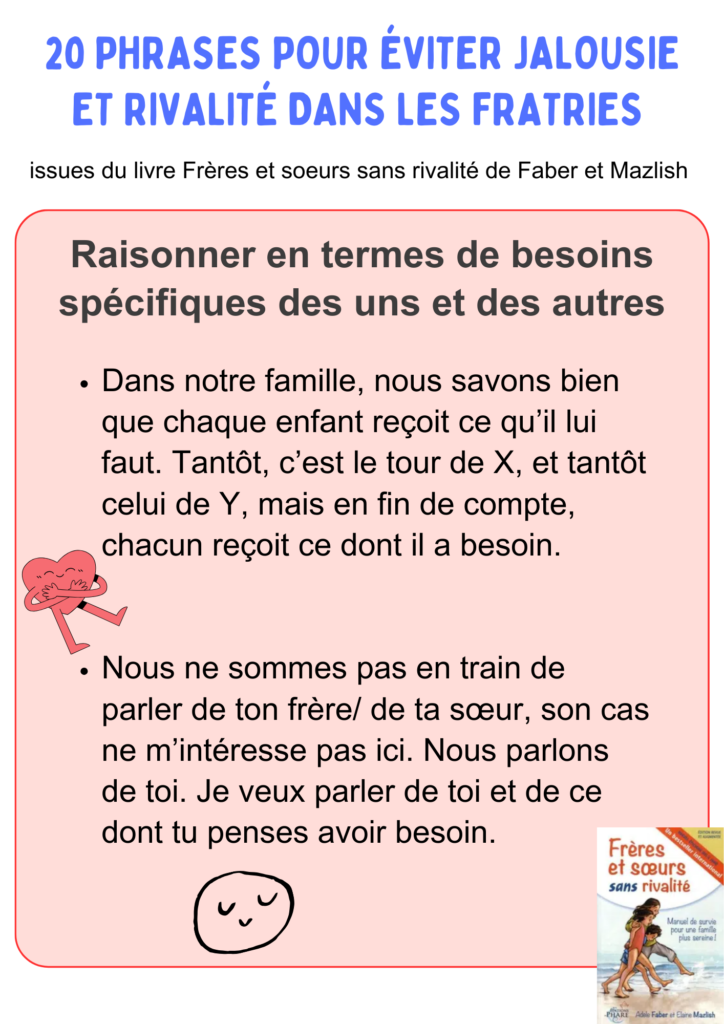
Give each child what they need, not the same thing
One of the most useful shifts is to stop trying to give every child exactly the same thing and start giving each one what they genuinely need. A tired child may need quiet time, while another needs a lap and a story. This is not favouritism; it is responsive parenting.
In practice, this means explaining your reasoning out loud: "Your brother needs help with his shoes today, and later I will need your help with something too." Children accept different treatment far more easily when the reason is visible and warm.
Keep the scales from tipping
Watch for the small habits that quietly feed jealousy, like always asking the eldest to be patient or always praising one child's school results. Balance is not about equal amounts; it is about each child feeling that their particular needs matter, much as you would balance attention when forming a happy family after a big change. The same principle applies to everyday worries, such as hiccups in babies or the questions that arise when going on an exchange abroad.
| Situation | Habit that feeds jealousy | Habit that calms it |
|---|---|---|
| Gift or treat | Buying identical items to be fair | Matching the gift to each child's need |
| Praise | Comparing one child to another | Describing what you see, without ranking |
| Attention | Only shared family time | Regular, predictable one-to-one moments |
| Arguments | Adult decides who is guilty | Children suggest their own solutions |
| Big feelings | "Don't be silly, I love you both" | Naming the feeling, then reassuring |
Avoid comparisons, even flattering ones
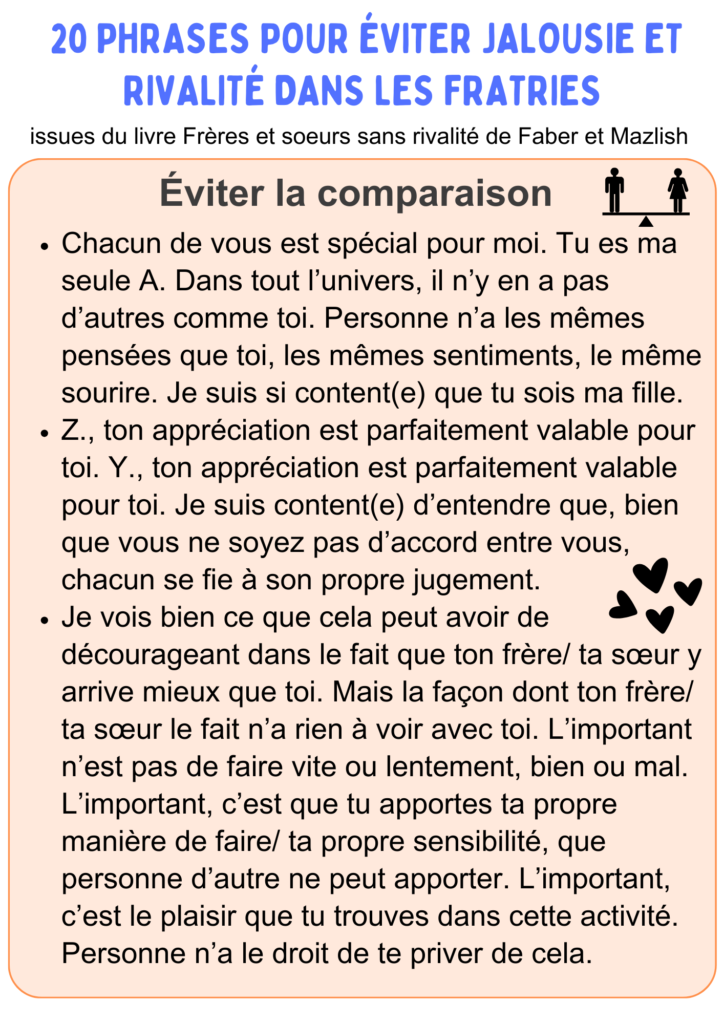
Comparisons sting, even when they sound like compliments. "Why can't you be as tidy as your sister?" or "You're the easy one" both place children in a ranking they did not ask for. Over time, these phrases teach siblings to see each other as rivals rather than allies.
Instead, describe what you see without a yardstick: "Your room is tidy today, that must feel good." Keep praise specific to the child and the moment, and avoid setting one child up as the family standard.
The same rule applies to criticism. When you are frustrated, name the behaviour rather than the person, and resist the temptation to invoke a sibling as evidence. If you are working on calmer reactions at home, the ideas in I hate can help you respond to big words without escalating.
Protect regular one-to-one time with each child
Nothing reduces jealousy faster than a child's quiet certainty that they have you to themselves sometimes. Regular one-to-one time does not need to be long or expensive; a short walk, a shared snack or ten minutes of drawing together can be enough.
What matters is that it is predictable and protected. Say when it will happen and keep the promise, even when the week gets busy. Children cope better with sharing when they know their turn is coming.
One-to-one time is also a natural moment for conversation, and small rituals like a bedtime story help. If you are looking for shared activities, a simple collection such as great books or a few quiet games can give you an easy starting point that works for different ages.
Help children solve their own disputes
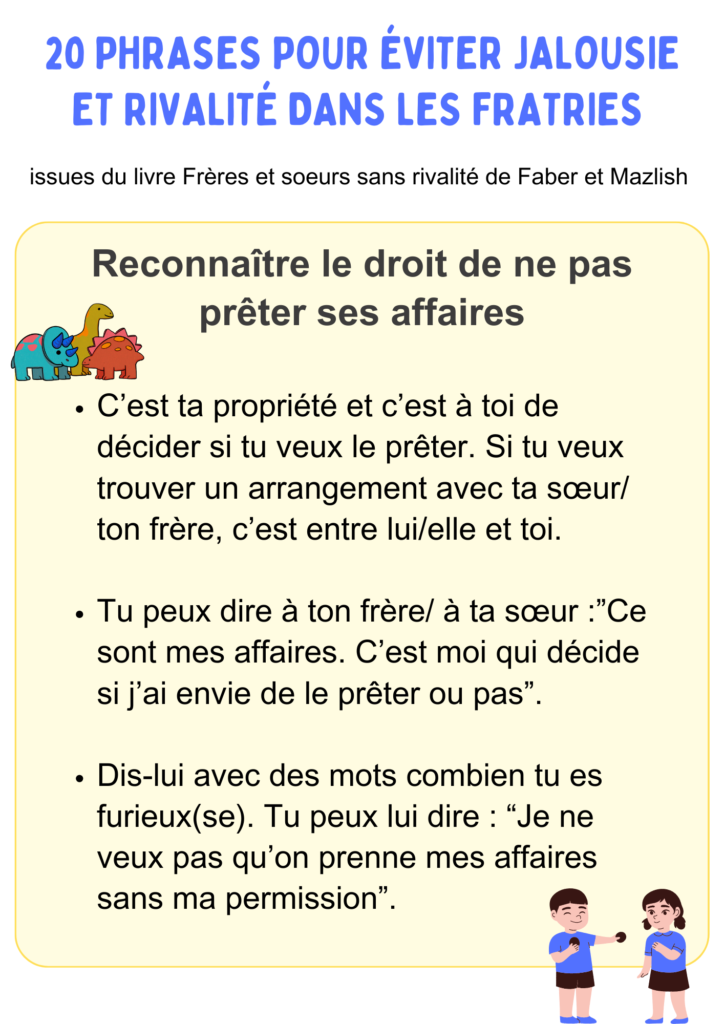
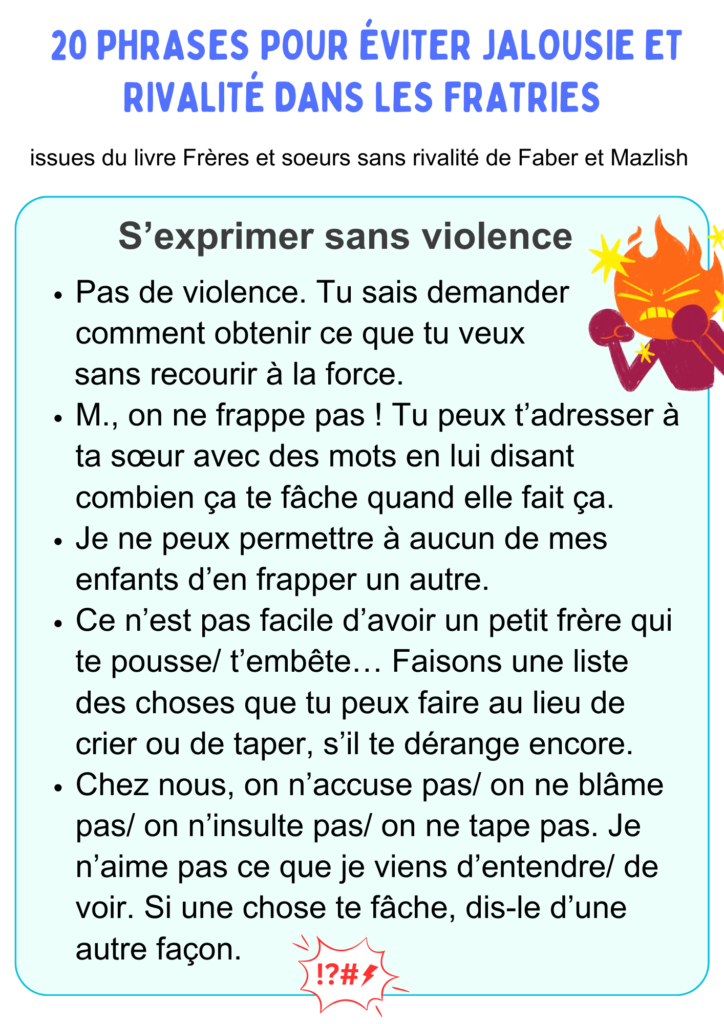
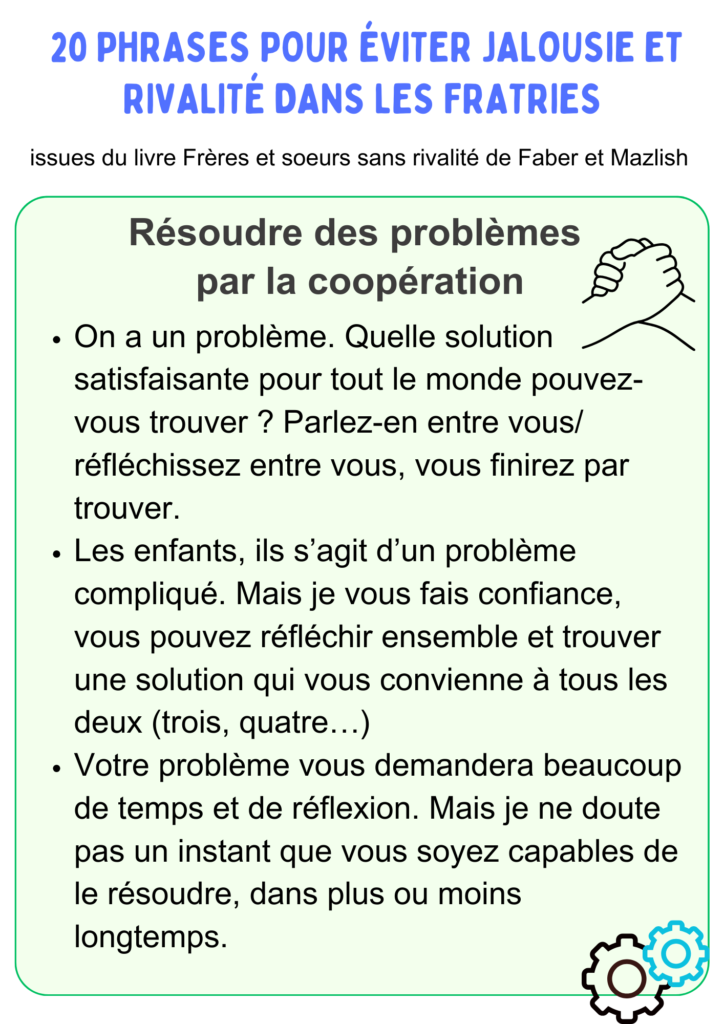
When siblings argue, the instinct is to step in and deliver a verdict. Yet acting as a permanent judge keeps children dependent on you and often leaves one feeling wronged. A better approach is to help them find their own solutions.
Try naming the problem neutrally: "You both want the same toy, and I can see you are both upset." Then hand the thinking back: "What could work for both of you?" If needed, offer a couple of options without choosing for them. This builds negotiation skills they will use for years.
Step back when it is safe
Not every squabble needs an adult. If no one is hurt, give them a moment before intervening, and praise the times they sort it out themselves. The same patient, let-them-practise spirit applies when children are learning new skills, whether that is choosing a bicycle or tidying up after play.
Phrases to use when jealousy rises
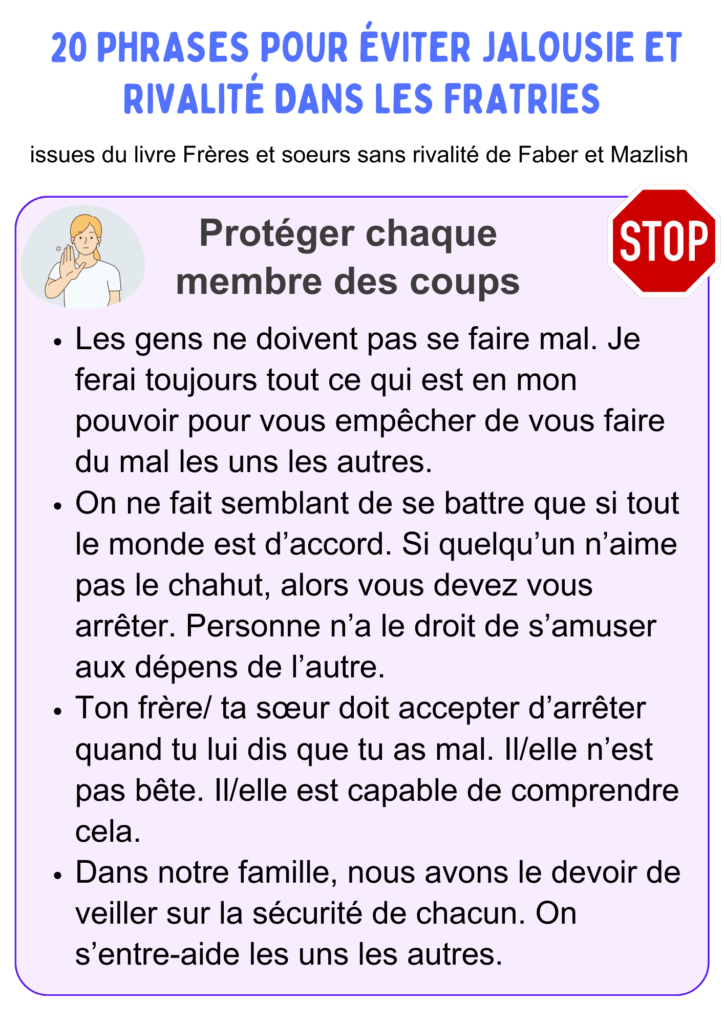
Words matter more than perfect timing. When a child says "you love her more", resist defending yourself and acknowledge the feeling first: "It sounds like you feel left out right now." Then reassure without over-promising: "You are important to me, and I want to hear about it."
When a dispute begins, try: "I am not going to decide who started it. I trust you two to find a way." When one child gets something special, you can say: "Today is her turn; your turn is coming, and I will remember."
These short scripts are not magic, but they lower the temperature and signal that feelings are allowed. Keep them handy, the way you might keep practical reminders for other everyday parenting challenges such as baby sign language, snow games for the weekend, or comfortable summer sandals for warmer days.


My hands-on take
In my own home, the single change that made the biggest difference was dropping the fairness arithmetic. I used to buy two of everything and still end up with two disappointed children. When I started saying out loud why one child needed something different that day, the accusations of favouritism became far less frequent, even if they never vanished completely.
The other habit I lean on is the short, protected one-to-one moment. Ten minutes of drawing with one child while the other reads has done more for the atmosphere than any long lecture about being kind to your sister. I still step in when voices rise, but I try to ask "what could work for you two?" before I offer a verdict, and I am often surprised by what they come up with.
Frequently asked questions
Is sibling jealousy normal?
Yes, it is a very common and ordinary reaction. It usually reflects a child's need to feel seen and secure rather than a flaw in the family, and it tends to soften with consistent attention and calmer communication.
Should I treat my children exactly the same to avoid jealousy?
Not necessarily. Giving each child what they need, rather than identical things, often works better, as long as you explain your reasoning in a warm and visible way so it does not feel like favouritism.
What should I say when they fight over a toy?
Name the problem neutrally and hand the thinking back to them, for example by asking what could work for both of them. Step in only when someone is hurt or unsafe.
How much one-to-one time does each child need?
There is no fixed amount; predictability matters more than length. Short, regular moments that you keep as promised help children cope better with sharing your attention.
Product Reviews
 Best Toys for Dogs With High Prey Drive |
Best Outdoor Toys for 3-4 Year Olds |
Best Outdoor Toys for 6 Year Olds |
Best Harness for Poodle |
Best LEGO Sets for Adults |
Best Travel Toys for 4 Year Olds on Airplane |
Best Toy Stores in Washington DC |
Best Potty Training Toys |
Best Toys for Tripod Dogs |
Maillot equipe de france







