


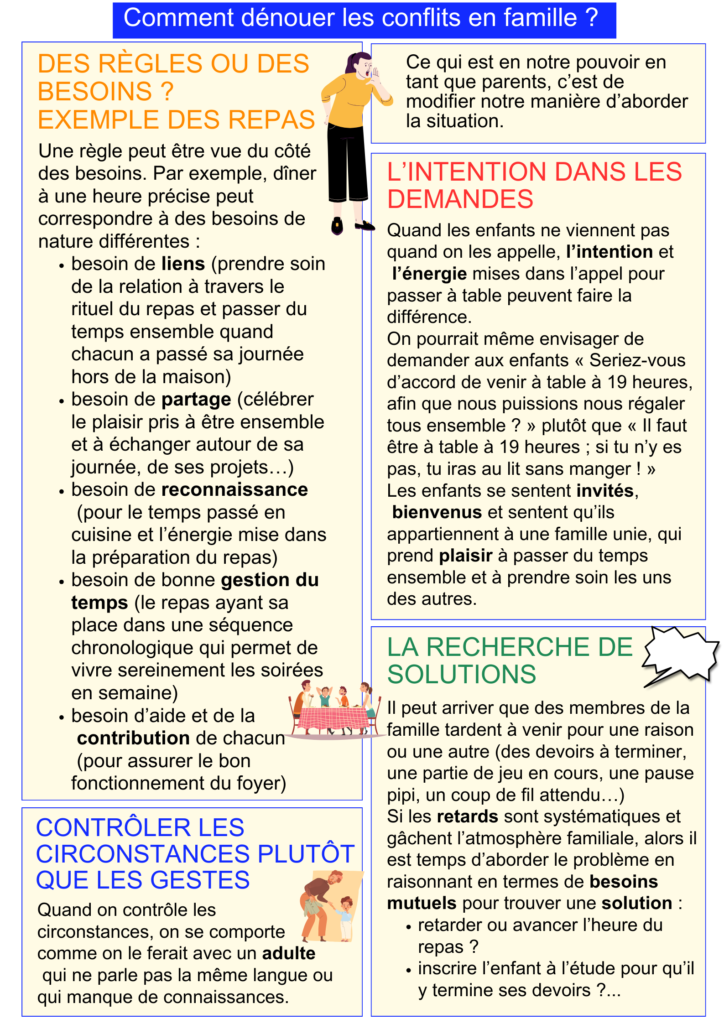
Resolving family conflicts starts with a simple but powerful shift: control the circumstances rather than trying to control the child's every gesture. Marshall Rosenberg, the creator of Nonviolent Communication, offers a clear illustration of this idea in action.
He describes a child who wants to play with an electrical socket. A parent can repeat all day that it is dangerous, yet the child's urgent needs for discovery, exploration and understanding will keep pulling them back toward the socket and its danger.

What truly lies within a parent's power is changing how we approach the situation and changing the child's environment: covering the socket, gently carrying the child into another room. The aim is to meet our need to protect without attacking the child's dignity.
Quick takeaways
- Control circumstances and environment, not the child's every gesture
- Repeated warnings rarely override a child's need to explore
- Cover the socket or move the child instead of punishing
- Protection and punishment differ mainly in intention
- Treat children with the same respect you would show an adult
- Prepare the home so curiosity can be met safely
Why Repeating Warnings Rarely Works
Children are driven by intense needs to explore and understand the world around them. Telling a child over and over that something is dangerous does not remove that drive; it simply sets up a battle of wills. The child is not being defiant, they are following a developmental impulse that is stronger than a verbal warning.
This is why Rosenberg's example matters so much for everyday parenting. Rather than pouring energy into correcting the child, we redirect that energy into shaping the setting. If you are navigating the intense early months of parenthood, our guide to mother's sleep can help you keep your own patience intact while you do this work.
The same principle applies to play. When a child is deeply absorbed in building, interrupting to lecture rarely helps, which is why understanding making towers as genuine learning changes how we respond to conflict around it.
Control the Circumstances, Not the Child
The heart of this approach is a practical swap: modify your own way of handling the situation and modify the child's environment. Put a cover on the socket. Gently lead the child into another room. These actions satisfy your need to protect without harming the child's dignity.
Notice how different this feels from hitting a child's hand or punishing them through forced isolation. The difference between protection and punishment lies in the intention behind the act. When you control circumstances, you would behave the same way toward an adult who does not speak your language or knows nothing about electricity.
This mindset also helps in calmer moments of family life. Choosing toys and activities that suit a child's stage, as you would when picking outdoor toys for preschoolers, prevents many conflicts before they begin.
| Situation | Punishment response | Protection response |
|---|---|---|
| Child reaches for a socket | Slap the hand, isolate the child | Cover the socket, lead child away |
| Child climbs on furniture | Shout and force them down | Move the chair, offer a safe climbing spot |
| Child grabs a fragile object | Take it away angrily | Place it out of reach beforehand |
| Child ignores a warning | Repeat louder, threaten | Change the setting so the risk disappears |
| Child is curious and restless | Punish the behavior | Provide an outlet for exploration |
The Intention Test: Protection Versus Punishment
Rosenberg invites parents to ask a pointed question: by what law should I treat two people differently just because they are a different age, speak a different language, or hold a different body of knowledge? The intention behind our action is what separates care from correction.
If you would not slap an adult's hand for reaching toward a live wire, you can find a better response for a child too. This does not mean abandoning limits; it means expressing them through the environment and through respectful guidance rather than through humiliation.
The same respectful stance carries into other areas, from how you introduce porridge with cereals at the table to how you handle the small rituals children treasure, like the Tooth Fairy letter after a lost tooth.
Building a Calmer Home Environment
Once you accept that circumstances are easier to control than children, your home itself becomes a tool for peace. Remove or secure what is genuinely dangerous, and arrange spaces so that a child's natural curiosity can be satisfied safely. Fewer "no" moments mean fewer conflicts.
This is especially useful for children who are easily overstimulated. If your child tends to get nervous, exploring ideal sports can give that energy a healthy outlet instead of letting it spill into daily friction. Play materials matter too; even a simple choice like a Lego brick set suited to the child's age reduces frustration on both sides.
For families following a particular educational philosophy, the environment is central. Parents curious about the Waldorf method will recognize the same logic: prepare the surroundings, then let the child move freely within them.
Putting It Into Practice Day by Day
Start small. Pick one recurring conflict, such as a child climbing where they should not, and ask what you can change about the setting rather than about the child. Add a gate, move a chair, create a safe alternative nearby. Then observe how the conflict changes.
Keep your language short and warm, and save explanations for calm moments rather than heated ones. When you need a break, remember that small supports help, whether that is a quiet routine at mealtimes or simply sitting the baby at the table with the family using our tips on sitting the baby.
Over time, this habit reshapes the whole atmosphere of the home, and it pairs naturally with choosing best toys that match your child's real interests rather than your hopes for them.

My hands-on take
I remember the phase when my child was fascinated by every socket and switch in the house. For weeks I repeated warnings, and for weeks nothing changed. It was only when I covered the sockets and set up a safe drawer of switches and buttons that the daily battles simply disappeared.
That experience taught me to ask a different question whenever a conflict repeats: what can I change about the situation rather than about the child? Sometimes it is as small as moving a chair or putting a fragile object higher. It takes more thought upfront, but it saves an enormous amount of shouting, and it keeps the relationship intact.
Frequently asked questions
What is the main idea behind resolving family conflicts this way?
The core idea is to control circumstances rather than the child's actions. By changing the environment and your own approach, you meet your need to protect without attacking the child's dignity.
Does this mean children should never face limits?
No. Limits still matter, but they are expressed through the setting and through respectful guidance. The difference lies in intention: protecting a child rather than punishing them.
Why do repeated warnings often fail?
A child's need for discovery and understanding is stronger than a verbal warning. That is why covering a socket or redirecting the child works better than repeating "don't touch" all day.
How do I know if I am protecting or punishing?
Ask whether you would behave the same way toward an adult who does not speak your language or knows nothing about the danger. If not, the response is probably punishment rather than protection.
Product Reviews
 Best Toys for Dogs With High Prey Drive |
Best Outdoor Toys for 3-4 Year Olds |
Best Outdoor Toys for 6 Year Olds |
Best Harness for Poodle |
Best LEGO Sets for Adults |
Best Travel Toys for 4 Year Olds on Airplane |
Best Toy Stores in Washington DC |
Best Potty Training Toys |
Best Toys for Tripod Dogs |
Maillot equipe de france







