


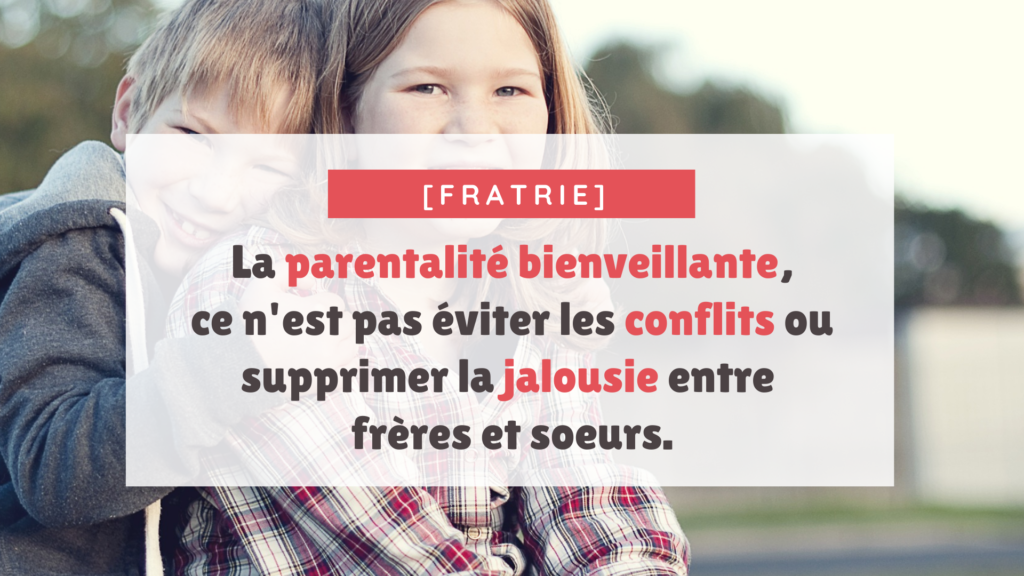
Gentle parenting for siblings is not about avoiding conflict or erasing jealousy between brothers and sisters. A home without arguments is not automatically a sign of good sibling relationships or healthy children. A child who never dares to assert themselves, who never defends their limits, is silencing and denying themselves.
A child who swallows anger and clenches their teeth suffers, and can build resentment that later turns into reproaches or family distance once they gain independence. The goal is not a conflict-free house, but a house where friction is balanced by connection, laughter and repair.

Quick takeaways
- A conflict-free home is not the goal; connection is.
- Siblings who ignore each other risk distant adult relationships.
- Play and laughter balance frequent arguments.
- Absurdity games can defuse a fight without mocking anyone.
- A family signal helps everyone stop before escalation.
- Jealousy is a neutral signal of unmet needs, not a fault.
Building family bonds through play
Laughter and games are among the most powerful tools for strengthening sibling relationships. In their book The Whole-Brain Child, Daniel Siegel and Tina Payne explain that recent studies show the future closeness between siblings depends on how much fun they have together during childhood. Frequent conflict is not the real problem, as long as it is balanced by play and laughter.
The true danger appears when siblings ignore each other. They experience fewer frictions, but risk forming distant, cold relationships as adults. Shared playful activities, like drawing a giant chalk monster, putting on a show, preparing a surprise, playing board games, cooking or teaming up to chase parents with cushions, all reinforce the bond. Any family activity built on fun increases the pleasure of being together and shows children that human relationships are rewarding. Even early baby greetings remind us how rewarding connection can feel.
Two easy games to start tonight
After dinner, announce a surprise party: everyone clears their plate, grabs a blanket and meets in the living room. Or improvise a story where each family member adds one sentence before passing it on. If you want more ideas for independent play between siblings, these independent play toys can help.
Preventing violence between brothers and sisters
You can adopt a play-based approach to prevent violent conflict between siblings. The idea is not to avoid every disagreement, but to learn to resist resorting to violence, insults or hits. There is something positive in conflict, because it offers the chance to observe children close to their reality: in anger and arguments, they show themselves without barriers, and parents can see what truly affects them and what triggers the fights.
Absurdity games are especially effective when siblings start arguing. The parent in a sense "steals" the children's behaviour, joining them in their dispute. The aim is always to encourage laughter while respecting the children's integrity, so make sure they never feel mocked or ridiculed.
Faced with children kicking each other, a parent can slip between them and say cheerfully: "Well then, you're having a foot battle and you didn't invite me! I want to play too!" For calmer moments, simple Montessori crafts give siblings a shared project that channels energy away from conflict. Just as sibling dynamics vary from family to family, so does the way each child handles tension, and knowing how to accompany a child through big feelings makes a real difference.

| Situation | Gentle response | What it builds |
|---|---|---|
| Siblings arguing | Join in with an absurdity game | Laughter and defusion |
| Hitting or kicking | Slip between them playfully | Safety without shame |
| Tension rising | Use the agreed family signal | Self-awareness |
| Jealousy showing | Reflect the feeling aloud | Emotional recognition |
| Daily routine | Short one-to-one moments | Security and belonging |
Finding a shared signal to stop escalation
In a family, everyone can look out for each other to prevent things from going too far. Gather the family and agree on a signal: a word, a gesture, a funny expression. When one member says it, the others know they need to collect themselves.
Anything is possible: a silly word, an invented phrase, or a calm reminder such as "penguin gang", inviting a warming hug like penguins do. A wink can also be sent to the person about to lose control. This kind of shared ritual works well alongside other family routines you build over time, such as the small habits covered in this baby care for younger siblings.
The signal only works if it is agreed together, never imposed, and if parents use it on themselves too. When adults accept the same rule, children see fairness rather than authority.

Reflecting emotions to tame jealousy
Playing and laughing together should neither eliminate disagreements nor replace empathetic listening. Jealousy and fear are real for the child, who believes they have good reason to feel that way. It is useless to tell them their jealousy is abnormal or unjustified. Like all emotional states, jealousy is a neutral signal pointing to unmet needs and discomfort that deserves to be heard.
The main idea is to see the suffering behind what is shown or heard. A child seeking attention indirectly, through mischief, aggression or insolence, needs relationship and reassurance about their parents' love. Recognising what they feel inside is most effective: "that must be hard for you", "you would have preferred to have your parents all to yourself?"
Thinking in terms of needs helps you support a jealous child: belonging, recognition, love, identity, security, usefulness, support. For a baby sibling, gentle routines such as those in this six month toys selection keep the youngest engaged while you talk. Older children may also enjoy a wooden house toy as a quiet space of their own.

What to do when jealousy turns into aggression
When an older child is jealous of a younger sibling and shows it through hitting or regression, the same principle applies: address the need, not just the behaviour. Separate the children calmly, then name the feeling without judgement. A child who hears "you seem to feel left out" learns that their emotions have a name and a place.
Practical rituals help too. Give each child a short daily moment of exclusive attention, however brief, and let them choose the activity. Reading together about colours and shapes, with these books about colors, is an easy shared calm-down routine. For travel days, these toys for flights keep siblings busy side by side instead of competing.
Finally, protect the youngest too: a baby's needs are real, but so are the older child's. Balancing both, without pretending everything is equal, is the everyday work of gentle parenting.
My hands-on take
In our house, the signal started as a joke. One evening, mid-argument over a chair, I said "penguin gang" and hugged them both. They laughed, and the fight dissolved. A week later, my eldest used it on me during a tense homework moment, and I had to admit it worked.
What changed most was my own reaction. Instead of refereeing every dispute, I began joining in with silly voices, then sitting down afterwards to name what had happened. Some days it fails completely. But the small rituals, the shared games and the honest conversations have slowly made our home louder in laughter and softer in conflict.
Frequently asked questions
Should parents try to stop all sibling fights?
No. Frequent conflict is not the problem as long as it is balanced by play and laughter. The real risk is siblings who ignore each other and grow distant.
What if my child feels mocked by playful interventions?
Stop immediately and check in. Playful defusion only works when children's integrity is respected and they never feel ridiculed.
How do I handle jealousy without dismissing it?
Treat jealousy as a neutral signal of an unmet need. Name the feeling, reassure the child of your love, and look for the need behind the behaviour.
Does a family signal really work?
It works when everyone agrees on it together and parents use it on themselves too. Fairness makes children more willing to follow it.
Product Reviews
 Best Toys for Dogs With High Prey Drive |
Best Outdoor Toys for 3-4 Year Olds |
Best Outdoor Toys for 6 Year Olds |
Best Harness for Poodle |
Best LEGO Sets for Adults |
Best Travel Toys for 4 Year Olds on Airplane |
Best Toy Stores in Washington DC |
Best Potty Training Toys |
Best Toys for Tripod Dogs |
Maillot equipe de france







