


Supporting children during medical care is a skill every parent can build, and it starts with respect. We cannot shield children from injuries, accidents, trips to the doctor, the dentist or the hospital, from injections and blood tests. They will feel what they feel, and their emotions are legitimate, as is their pain.
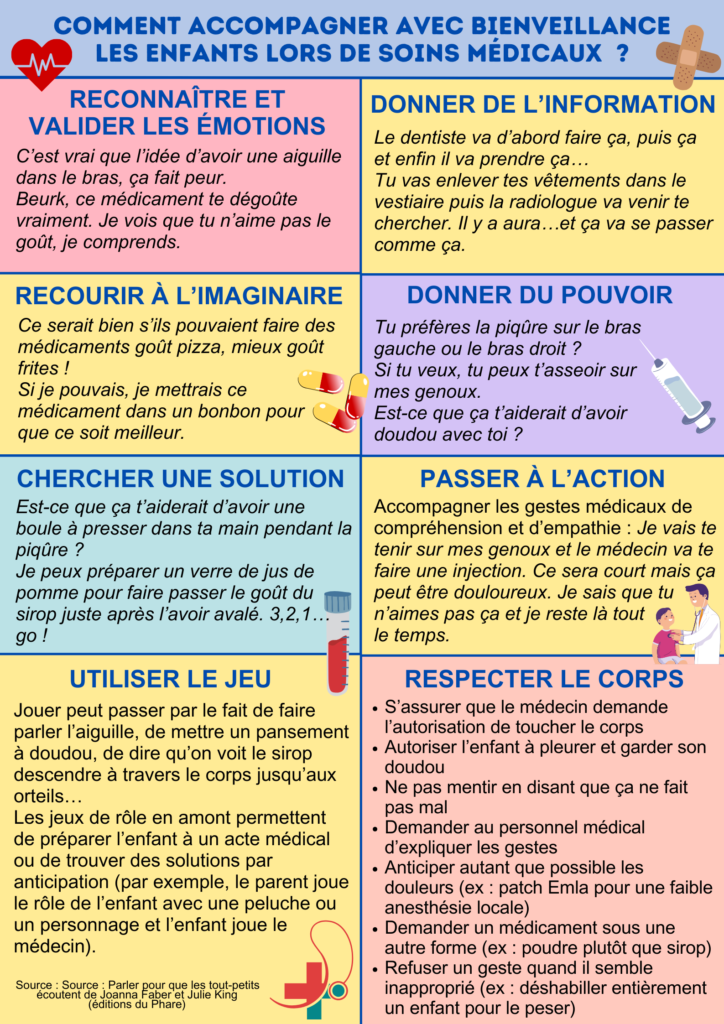
Respecting a child's physical integrity and consent has a real place in healthcare. No gesture should happen without informing and warning the child, even a small one, and asking their permission: "I'm going to examine your tummy, are you okay with that?" As parents, we are the guarantors of our children's physical integrity.

Quick takeaways
- Tell children what will happen before any gesture, in simple words.
- Ask permission before touching or examining, even for small children.
- You may refuse a gesture that seems unnecessary or inappropriate.
- Validate emotions and pain instead of dismissing or bribing them.
- Use play, comfort objects and limited choices to restore control.
- Stay calm yourself; children borrow your steadiness.
Preparing Children Before Any Medical Gesture
Preparation is the foundation of gentle medical care. Before any examination, tell the child what is going to happen, in simple words suited to their age, and give them a moment to absorb it. A child who knows a stethoscope will touch their chest, or that a needle pinches briefly, is far less startled than one who is surprised. This is the same logic behind understanding why car sickness hits young children harder: the body reacts, and knowing what to expect helps.
Consent is not a formality reserved for adults. Ask before you act: "I'm going to look in your ear, do you agree?" If the child says no, acknowledge it, explain why the care matters, and look for a compromise rather than forcing. This habit of asking teaches children that their body belongs to them, a lesson that protects them well beyond the clinic.
Warning, Not Surprising
Never announce a procedure as painless when it is not. Honesty builds trust, and a child who was warned copes better with the next visit. You can also involve them in small choices, such as which arm or which finger, to restore a sense of control. Parents who care this much about a child's comfort often apply the same attention to everyday products, as with bath products chosen carefully for delicate skin, just as they weigh choosing nipple creams with the same care.
Your Right to Refuse an Inappropriate Gesture
As parents, we have the right to refuse a gesture when it seems inappropriate, because we are responsible for our children's physical integrity. For example, undressing a child completely to weigh them is not necessary: a child can be weighed in underwear, or even dressed with shoes removed. Saying this politely but firmly is entirely legitimate, even when family interferes with your decisions.
This does not mean opposing caregivers. It means asking questions, requesting an explanation, and making sure each step is justified. A respectful professional will welcome the conversation. If something feels off, you can ask for a pause, step outside, or request a second opinion. Trusting your parental instinct is part of the care itself.
Small Adjustments That Matter
Many routines can be softened without compromising care: keeping a comfort object nearby, dimming harsh lights, letting the child sit rather than lie down when possible, or having a parent hold their hand throughout. These details cost nothing and change everything about how a child experiences the visit. You can also prepare with calming sea stories beforehand.
| Situation | What to do before | What to do during |
|---|---|---|
| Doctor examination | Explain each step and ask consent | Narrate actions, offer choices |
| Injection or blood test | Name the brief pinch honestly | Hold hand, use a distraction |
| Taking medicine | Offer a cup or flavour choice | Stay neutral, comfort after |
| Dentist visit | Preview the visit, agree a stop signal | Praise effort, not silence |
Practical Ideas for Medicines, Exams and Injections
Several approaches help accompany children gently through medical situations: taking medicine, undergoing an examination, having an injection, or visiting the dentist. The core idea is to combine honest information, emotional validation and a bit of play. A child who can rehearse a visit with a toy doctor, or who is allowed to bring a small quiet toy to hold, arrives calmer.
For medicine, offer limited choices ("do you want it in the blue cup or the green one?") and never disguise a refusal as naughtiness. For injections, name the sensation honestly and stay close. For the dentist, a short preview of what will happen, and a signal the child can use if they need a break, gives them agency. Distraction works too: a familiar song, a story, or a favourite baby toy for younger siblings waiting along.
When Emotions Overflow
Crying is not manipulation; it is communication. Stay present, lower your voice, and name what you see: "That was scary, and you were brave." Avoid bribing beforehand, which can raise anxiety, and instead offer comfort afterward. If a child is regularly frightened, a calm conversation at home, away from the clinic, often reveals what specifically worries them.
Creating a Calmer Environment at Home and in the Waiting Room
Much of the work happens before you reach the clinic. Keep the tone light in the car, pack a snack and a comfort item, and avoid discussing your own medical fears in front of the child. Waiting rooms are a good moment for a low-key game or a story, which shifts attention away from the door opening.
After the visit, let the child talk if they want to, and do not insist on a "brave" performance. Some children process through play, re-enacting the visit with dolls or stuffed animals. Others need quiet. Both are fine. If a child is unwell and you are juggling care alongside work, it helps to have a plan for children's caregiver arrangements so the day runs smoothly.
Looking After Yourself Too
Your own stress is contagious. A few slow breaths before entering the room, and a decision to speak slowly, help your child borrow your calm. If a visit went badly, forgive yourself; the next one is a fresh chance to do it differently.

Where to Find Further Support
Some organisations exist specifically to help children feel less afraid and less sore during care and in hospital, and their resources are worth knowing before a planned procedure. Reading about a topic in advance, whether a chorionic biopsy during pregnancy or a simple vaccination, helps parents answer children's questions with confidence.
Books and picture stories about doctors, dentists and hospitals also prepare children gently, in the same way a bedtime song routine prepares them for sleep. Choose stories where the child character is active and brave rather than passive. Re-reading the same book before a visit builds familiarity and reduces fear.
Building a Family Habit
Over time, these small practices become a family culture: honesty about what hurts, respect for a "no", and comfort freely given. That culture serves children well into adolescence, when they will need to speak up about their own bodies and health.

My hands-on take
In my own experience, the single change that helped most was simply asking before touching. "I'm going to lift your sleeve now, okay?" sounded almost silly the first time, but my child visibly relaxed once they realised they could say no or ask for a pause. The visit took a little longer and was far calmer.
I also learned to stop promising that things would not hurt. Saying instead that it would pinch for a moment, and that I would stay right there, removed the sense of betrayal I had not even noticed before. Afterwards we would talk about it briefly, without forcing a "brave" performance. Some visits still ended in tears, and that was fine. What mattered was that my child learned their body is respected, and that comfort is always available.
Frequently asked questions
Should I warn my child about a painful procedure?
Yes. Honest warning builds trust and helps the child cope better, even if they cry. Promising it will not hurt damages trust for future visits.
Can I refuse a medical gesture for my child?
You can question or refuse a gesture that seems unnecessary, such as full undressing for weighing. Ask for an explanation first and stay respectful with caregivers.
Is crying during care a sign I did something wrong?
No. Crying is a normal expression of fear or pain. Stay close, name the emotion, and offer comfort rather than punishment or bribery.
How do I prepare a child for a hospital visit?
Use simple stories, play with toy medical kits, and explain what will happen step by step. Bring a comfort object and keep your own tone calm.
Product Reviews
 Best Toys for Dogs With High Prey Drive |
Best Outdoor Toys for 3-4 Year Olds |
Best Outdoor Toys for 6 Year Olds |
Best Harness for Poodle |
Best LEGO Sets for Adults |
Best Travel Toys for 4 Year Olds on Airplane |
Best Toy Stores in Washington DC |
Best Potty Training Toys |
Best Toys for Tripod Dogs |
Maillot equipe de france







