


Honoring the positive intent behind a psychological game is a practical way to defuse manipulation without turning the exchange into a battle. The idea grows out of Transactional Analysis, a school of psychology that studies how people trade strokes, roles and hidden messages in everyday conversation.
Instead of reacting to the provocative surface of a remark, you learn to hear the need underneath it. This article walks through the drama triangle, the compassionate triangle that mirrors it, and a simple conversational technique for answering the hidden request rather than the bait.

Quick takeaways
- A psychological game runs from a hook to a final payoff through predictable steps.
- The drama triangle has three roles: Persecutor, Savior and Victim.
- The compassionate triangle looks for the healthy intention inside each role.
- Answer permission, support or vulnerability instead of the provocation.
- The photographer method keeps only the positive part of a negative message.
- Good self-management, rest included, makes the whole approach possible.
The drama triangle and how games begin
Transactional Analysis describes a psychological game as a predictable sequence that runs from an opening move to a final payoff. Stephen Karpman, who created the drama triangle, summed up the sequence as a hook, a weak point, a reaction, an escalation, a switch and a final benefit. One person aims a hook at another person's soft spot, that person bites, and both become players in the same dance.
The dance itself has only three steps, each one a role: Persecutor, Savior or Victim. A game turns into a drama when a player switches from one of those roles to another, which is why the same argument can flip so suddenly. Recognizing the pattern is the first step toward staying together instead of scoring points.
Why the roles feel familiar
Most of us have played all three at some point, often without noticing. The roles are not personality types; they are temporary positions people take up when a conversation starts to feel unsafe.
The compassionate triangle: looking for the positive side
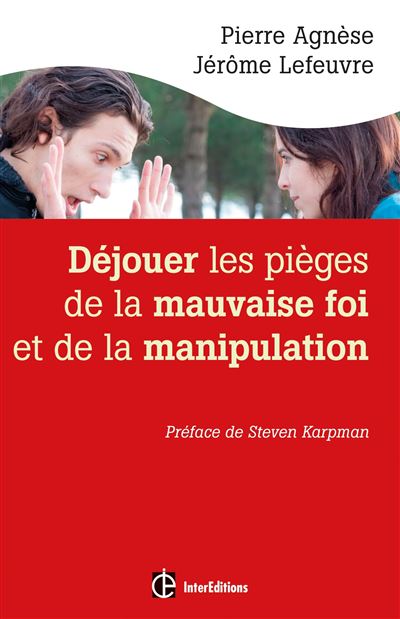
Karpman later designed the OK triangle, also called the compassionate triangle, to reveal what is healthy inside each role. The aim is compassion and better relationships rather than blame. Pierre Agnèse and Jérôme Lefeuvre built on this by suggesting a daily technique: when someone approaches you from one of the three roles, answer the hidden positive intention and quietly decline the invitation to play.
Each role has a constructive counterpart. Behind the Persecutor sits a need for permission, expressed through contracts, rules, personal limits, rights and duties. Behind the Savior sits a request for support. Behind the Victim sit vulnerability and the will to stop behaving helplessly, which means asking for what you need openly and authentically.
This reframing pairs well with the kind of steady, patient presence a good father or mother tries to offer, especially on days when everyone is tired. The same calm attention helps when you choose children's sunglasses or handle a daycare accident.

| Role played | Hidden positive intention | How to respond |
|---|---|---|
| Persecutor | Need for permission and clear limits | Thank them, propose a contract, restate rules |
| Savior | Request for support | Acknowledge the offer, ask what they need |
| Victim | Vulnerability and will to act | Invite an honest need and a concrete step |
| Any role | Some truth and some positive intent | Keep only the useful part of the message |
The photographer method: developing the positive of a negative message
Agnèse and Lefeuvre call this the photographer method, because you start from the negative and keep only what carries positive intent. They also call it selective repartee: you pick out of what the other person says whatever belongs to permission, support or vulnerability. In practice it means learning to turn a deaf ear to the provoking tone of an exchange, which takes solid self-management.
The approach rests on a rule attributed to Karpman: in any attack there is always some positive intention, some truth, and some share of people who would have done the same. When we are the ones opening a game, at least part of what we say is off the mark. Holding that in mind keeps us humble.
It also protects the atmosphere at home, where a calm adult voice does more for controlling visits and daily routines than any lecture.
Putting it into practice with each role
Suppose someone takes a Persecutor stance against you. You can defuse the game by thanking them for making things clear and then proposing a contract, which is a form of permission to move forward together. Something like acknowledging their disagreement and suggesting you decide the next step jointly works better than defending yourself.
With a Savior, name the support they are offering and ask what they actually need from you. With a Victim, invite them to state a need vulnerably and to name the action they want to take, which honors their will to stop feeling powerless.
Small everyday openings
These moves fit ordinary moments, from a tense pickup at daycare to a disagreement over screen time. If your child is at the age where a home computer becomes a negotiation, the same permission-and-contract logic applies: set the rule together, then hold it kindly.
Staying grounded while you practice
This skill asks for good self-management, and that starts with rest. A tired adult has far less room to hear hidden intent, which is why protecting your own daily nap or quiet break matters more than it sounds. Small children mirror our tone, so a calm answer often settles a room faster than a clever one, and staying organized can make that calm easier to hold onto.
It helps to remember that declining a game is not the same as rejecting a person. You are answering the need, not the provocation, and you can do it while keeping your own boundaries clear.
When the exchange involves a child acting out, the same lens works: look for the wish behind the behavior, then offer a limit plus a way forward. Parents who practice this often find that introducing reading or any shared ritual becomes easier, because the child is no longer being managed, only guided. Simple afternoon ideas can also give everyone a fresh start.

My hands-on take
I first tried this during a family dinner that was heading toward the usual argument. Instead of defending myself, I said I heard the disagreement and suggested we decide the next step together. The tone changed within a minute, and nobody had to lose face.
What surprised me most was how much energy I saved. Reacting to every sharp remark used to leave me drained for the rest of the evening. Now I try to catch the hidden request first, and I have learned to protect my own rest so I actually have the patience to do it. It is not a trick that works every time, but it has made our home noticeably calmer.
Frequently asked questions
What is a psychological game in simple terms?
It is a repeated conversational pattern with a hidden payoff, where people trade roles such as Persecutor, Savior and Victim. The surface topic is rarely the real subject.
Does honoring positive intent mean accepting bad behavior?
No. You still set limits and state your boundaries. You simply answer the need underneath instead of reacting to the provocation.
Why does this take so much self-control?
Because the provoking tone is designed to pull a reaction out of you. Pausing, breathing and choosing your words deliberately is what breaks the cycle.
Can I use this with children?
Yes. Looking for the wish behind an outburst and offering a limit plus a way forward works at any age, though it takes patience.
Product Reviews
 Best Toys for Dogs With High Prey Drive |
Best Outdoor Toys for 3-4 Year Olds |
Best Outdoor Toys for 6 Year Olds |
Best Harness for Poodle |
Best LEGO Sets for Adults |
Best Travel Toys for 4 Year Olds on Airplane |
Best Toy Stores in Washington DC |
Best Potty Training Toys |
Best Toys for Tripod Dogs |
Maillot equipe de france







