


Toddler crying can push even the calmest parent to the edge of their patience. The sound is designed to get our attention, and when it goes on and on, irritation, guilt and helplessness often arrive together. Yet tears are a normal, useful part of how children process big feelings.
This article explains what our own tension is really about, offers ten phrases to hold onto in the middle of a meltdown, and shows why punishing a crying child backfires. It is not about ignoring your limits, but about responding to tears with steadiness rather than suppression.

Quick takeaways
- Crying is a healthy release, not a behavior to correct.
- Name your own trigger: guilt, weakness, history or impatience.
- Stay present without fixing; your calm is contagious.
- Give tears as much time as they need.
- Never punish crying, it teaches repression and conditional love.
- Small comfort tools can support, but empathy comes first.
Crying is useful and normal in humans
Tears are not a malfunction. Crying is one of the body's ways of releasing tension after a shock, a fear, a hurt, or even a moment of intense joy. For a child, it is often the fastest route back to emotional balance.
What makes it hard for us is rarely the crying itself. It is the story we attach to it. Once we understand that tears serve a purpose, we can stop treating them as a problem to be solved and start treating them as a process to be supported. Parents who explore conscious parenting often describe this shift as the moment things began to feel lighter.
Why tears get under our skin
Four reactions come up again and again. First, the feeling that we are a bad parent: if my child is crying, I must be failing, or it is my fault because I said no. Second, the belief that the child is weak, a thought that surfaces more often with boys. Third, tension linked to our own history, because children press on our emotional wounds and can reactivate old memories, which blocks empathetic listening. Fourth, plain impatience when we judge the tears exaggerated. Naming which one is yours is already half the work.
Ten guiding ideas to stay calm
These phrases are not magic words. They are anchors you can repeat silently or out loud while the storm passes. They work best when practiced before you need them, so pick two or three that resonate and keep them close.
The ten reminders
My child has the right to cry: it is how they find emotional balance, and they need it. Crying is a healthy, normal process of emotional healing. My child is going through a hard moment and needs my support. I am capable of being there, just there, for my child in distress. I do not need to fix anything, only to let what is be, inside the warmth of my love. My child cries because that is what they need to feel better afterwards. My child knows when things will be OK again, and we have time for tears, as much time as needed.
Being a child is sometimes hard, and being an adult is sometimes hard too. Caring for my child's pain is also a way of learning about myself and tending my own wounds. My child must be able to feel completely safe with me, and I am capable of offering that safety. If you want more tools for daily friction, positive discipline offers a gentle framework that pairs well with these reminders. For lighter moments, you might also enjoy natural places and reading about cravings during pregnancy.

| Reaction you may feel | What it sounds like inside | A steadier response |
|---|---|---|
| Guilt about parenting | "If I were a good parent, they wouldn't cry" | "My child has the right to cry" |
| Seeing weakness | "Boys shouldn't cry like this" | "Crying is a healthy process" |
| Personal history | "This reminds me of something old" | "This is about my child, not my past" |
| Impatience | "This is exaggerated, stop now" | "We have time for tears" |
| Urge to fix | "I must make this stop" | "I only need to be here" |
Never punish a child to stop the tears
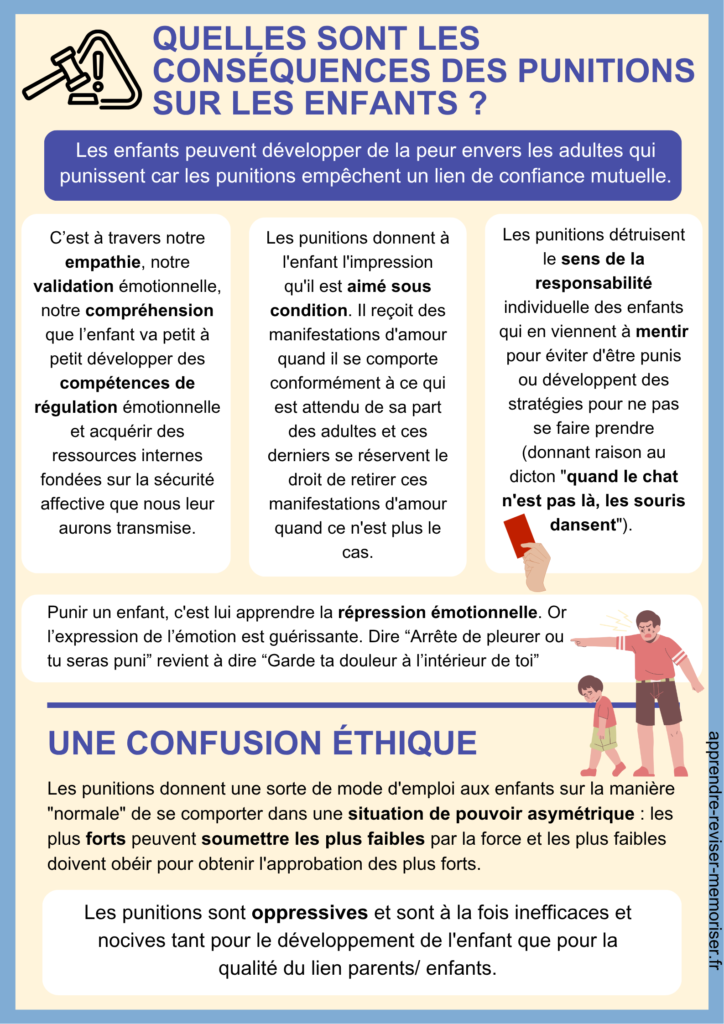
Telling a child to stop crying sends a clear message: your emotions do not matter, you should not trust yourself, your feelings are not legitimate, and you are a nuisance. If we want children to trust their bodies and come to us with big problems later, we have to start by trusting the legitimacy of their small ones now.
Crying is always legitimate and appropriate for the child who cries, otherwise they would have found another way to express it. In our adult eyes, the trigger may look trivial, but to the child it matters enough to bring tears. Through our empathy and validation, children gradually build emotional regulation skills and inner resources grounded in the security we give them.
Why punishment backfires
Punishments are oppressive, and they are both ineffective and harmful, for the child's development and for the quality of the bond. Punishing a crying child teaches emotional repression, when it is the expression of emotion that heals. Saying "don't cry" amounts to saying "keep your pain inside". The opposite approach sounds like: "Go ahead, cry, it helps, and I am here for you". Just as newborns need care rather than blame, children need comfort rather than punishment.
Punishment also gives children the impression that they are loved conditionally: affection arrives when they behave as expected and can be withdrawn when they do not. It teaches that the best reason to do good is to avoid suffering, which erodes a sense of responsibility. Children may lie to escape punishment or develop strategies to avoid being caught, and end up doing the right thing only for approval rather than from a sense of justice. Fear of adults grows, because punishment is a form of violence and blocks mutual trust. Finally, it hands children a template for unequal power: the strong may subdue the weak by force, and the weak must obey to earn approval. As with educational programs that promise quick results, punishment offers a shortcut that ultimately undermines trust.
What to do instead in the moment
Stay close, lower your voice and let the tears run their course. Offer presence rather than lectures, and keep your own body calm so the child can borrow your steadiness. If the meltdown happens in public, a simple change of scenery can help both of you breathe, whether that means stepping outside or heading home. As Ana Morgade's reflection reminds us, parents deserve compassion too.
Practical tools support the emotional work. A favorite comfort object or a small teething toy can help a younger child settle, and a few quiet flight toys kept in your bag can redirect attention when you are out and about. With babies, check that physical needs are covered; even pacifier questions are worth revisiting if sucking is part of how your child self-soothes. None of this replaces empathy, but it makes the moment easier to hold.

My hands-on take
I remember a phase when every "no" at the end of the day ended in tears, and my first instinct was to talk my child out of them. It never worked. What changed things was sitting on the floor, saying very little, and repeating to myself that this was a process, not a battle. Some evenings I still felt the irritation rise, and I learned to name it silently: this is my impatience, not a crisis.
Keeping one small comfort toy within reach helped too, mostly because it gave my hands something to do while my mind stayed with my child. The tears still came, but they ended faster, and we both came out calmer.
Frequently asked questions
Is it normal for my child to cry over small things?
Yes. What looks trivial to an adult can matter deeply to a child, and tears are their way of processing it. The size of the trigger does not determine the legitimacy of the feeling.
Should I distract my child to stop the crying?
Distraction can be useful in some situations, but it should not replace listening. If you always redirect, your child may learn that their emotions are unwelcome. Try presence first, and comfort tools as a complement.
Does letting my child cry mean I am ignoring them?
Not at all. Letting tears flow while staying close, calm and available is the opposite of neglect. You are offering safety, not distance.
What if I lose my patience during a meltdown?
It happens to every parent. Repair afterwards matters more than perfection: acknowledge the moment, reconnect, and remind yourself that the next storm is another chance to practice.
Product Reviews
 Best Toys for Dogs With High Prey Drive |
Best Outdoor Toys for 3-4 Year Olds |
Best Outdoor Toys for 6 Year Olds |
Best Harness for Poodle |
Best LEGO Sets for Adults |
Best Travel Toys for 4 Year Olds on Airplane |
Best Toy Stores in Washington DC |
Best Potty Training Toys |
Best Toys for Tripod Dogs |
Maillot equipe de france







