


Punishment is still presented as the go-to educational tool in many families, yet it is far from the panacea it claims to be. Most of us grew up with it, and society keeps repeating that a good punishment will sort things out, so the habit passes from one generation to the next without much questioning.
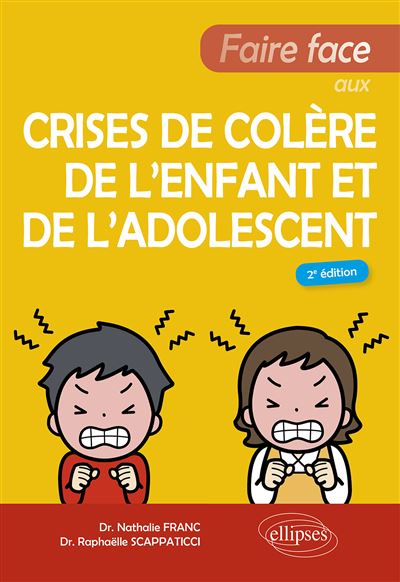
In their book on managing tantrums in children and teenagers, Nathalie Franc and Raphaëlle Scappaticci point out that our whole set of parenting markers is built on punishment. This article unpacks why that belief is so persistent, why punishment rarely works the way we hope, and what a more effective approach looks like.

Quick takeaways
- Punishment is a deprivation, not an educational method.
- The more oppositional a child, the less punishment works.
- Behavioural studies show punishment increases unwanted behaviour.
- Long-term punishment lowers motivation and self-confidence.
- Unenforceable threats trap the parent and damage trust.
- Valuing good behaviour and repairing mistakes builds responsibility.
What punishment actually is, and why it feels so normal
Punishment is defined here as inflicting a deprivation: no internet, no phone, no going out, no pocket money. The parent leans on whatever motivates the child and removes it to cause a proportionate amount of pain. It is a simple, fast reflex, which is exactly why it spreads so easily.
The supposed effectiveness of punishment is carried by the culture around us, through remarks like "one good punishment and it will be fine" or "if they were punished more, they would throw fewer tantrums". Add the fact that it is usually what we experienced ourselves in childhood, and the loop closes. Many parents never stop to ask whether the tool works, only whether it is deserved.
A myth, not an educational method
Believing that punishments can normalise every behaviour and prevent anger or insolence is a myth. The authors go further: the more "difficult" a child is, meaning the more predisposed to opposition, the less effective punishments become.
Behavioural studies point in the opposite direction
Behavioural studies, the backbone of cognitive behavioural therapy, are numerous in oppositional defiant disorder and in ADHD. Their finding is counter-intuitive: punishing an inappropriate behaviour increases how often it appears, while valuing the appropriate behaviour increases that behaviour instead. In other words, punishment aggravates the situation it was meant to fix.
Over the long term, punishments strengthen a child's opposition, reduce their motivation to change, and lower their self-confidence. When a young person is too often deprived of things they saw as positive, there is a real risk of dimming their general motivation. A child who feels constantly cornered has little reason to cooperate, much as a baby own space needs calm and security to settle.
This is why the same logic that helps a newborns and infants feel safe, predictable care rather than threat, still applies years later. The emotional climate matters more than the severity of the consequence.

| Aspect | Punishment | Positive guidance |
|---|---|---|
| What it targets | The unwanted behaviour | The wanted behaviour |
| Short-term effect | Fear and compliance | Understanding and cooperation |
| Long-term effect | More opposition, lower confidence | Better self-discipline and trust |
| Relationship impact | Degrades trust, may trigger revenge | Strengthens connection |
| Parent's position | Domination and threat | Guidance and repair |
| Practical example | No screens for two months | Short, logical, linked consequence |
Why punishment is ineffective and even harmful
The ineffectiveness seems paradoxical: if the consequence is unpleasant enough, surely the child will stop. Several factors explain why this reasoning collapses in real life.
The child cannot fully control the behaviour
First, the child does not have enough control over their behaviour for the threat to work. Being deprived increases their underlying anger, their self-esteem drops, and their baseline impulsivity does not let them picture the long-term consequences of what they do.
Second, some punishments are simply unenforceable. In the heat of anger a parent may announce something impossible to sustain, like no screens for two months, and end up trapped by their own words. The trust relationship then degrades, the child may resent the parent or seek revenge, and the "when the cat is away, the mice will play" effect sets in: without a threat nearby, no solid sense of responsibility has been built. Punishments also count as ordinary educational violence, resting on adult domination over children. A calmer home, much like a best toy stores trip planned without pressure, works better when nobody is being cornered.
What to do instead: value the behaviour you want
The alternative is not permissiveness. It is a shift of attention: notice and value the behaviour you want to see, because that is what makes it more frequent. This is the practical core of behavioural approaches, and it applies to everyday friction as much as to bigger challenges.
Concretely, name what went well, describe the effort rather than the result, and keep consequences short, logical and linked to the situation. If a child throws themselves about at bedtime, the answer is a calm routine, not a threat; the same way you would handle a moment when throws himself crib and needs reassurance rather than a lecture.
Play and shared attention do a lot of this work quietly. A simple toys tummy time session or a few minutes with toys four year olds builds the connection that makes cooperation possible. For older children, a outdoor toys kids afternoon burns energy and prevents the frustration that fuels opposition.
Building responsibility instead of fear
The goal is self-discipline, and self-discipline grows from understanding and repair, not from fear. When something goes wrong, invite the child to repair: help clean up, write a note, find a solution. Repair restores the relationship and teaches accountability at the same time.
Keep your rules few, clear and stable, and apply them the same way whether or not you are watching. That consistency is what builds ethics over time. Even small routines, like tidying up after playing with foam block toys or putting away a graduation gifts kindergarten present, become habits when they are modelled rather than imposed.
Finally, look after yourself. A parent who is exhausted or overwhelmed reaches for punishment more easily. Rest, support and a little planning protect the calm that children actually need from us.

My hands-on take
I remember the evening I announced, mid-argument, that screens were gone for a whole month. Two days later I had trapped myself: the rule was impossible to keep, my child was furious, and I was the one who looked unreliable. What changed things for me was much smaller. I started commenting on the calm moments, the ones I used to ignore because nothing was going wrong, and I kept consequences short and tied to the situation.
It felt slow at first, almost too gentle to count as discipline. But the shouting decreased, and my child began to repair things without being told. I still lose my temper sometimes; the difference is that I now know punishment is not the tool doing the work.
Frequently asked questions
Does this mean I should never set limits?
No. Limits are essential, but they work best when they are few, clear and stable. The difference is that a limit is explained and applied consistently, while a punishment is a deprivation designed to hurt.
Why does punishment seem to work at first?
It often stops the behaviour in the moment because the child is afraid or upset. The problem is what follows: more opposition, less motivation and a weaker relationship over time.
What can I do in the middle of a tantrum?
Stay calm, keep everyone safe and wait for the storm to pass before talking. Once things are calm, name what went well and invite a small repair rather than announcing a consequence.
Is this approach only for children with ADHD or oppositional behaviour?
No. The behavioural findings are strongest in those contexts, but the principle of valuing wanted behaviour applies to every child. It is simply good practice for building responsibility.
Product Reviews
 Best Toys for Dogs With High Prey Drive |
Best Outdoor Toys for 3-4 Year Olds |
Best Outdoor Toys for 6 Year Olds |
Best Harness for Poodle |
Best LEGO Sets for Adults |
Best Travel Toys for 4 Year Olds on Airplane |
Best Toy Stores in Washington DC |
Best Potty Training Toys |
Best Toys for Tripod Dogs |
Maillot equipe de france







