


Gentle parenting books for teenagers help parents move from managing a child to accompanying a young adult. The teenage years bring slammed doors, sudden silences and a strong push for independence, and many parents find that the strategies that worked at six or eleven simply stop working.
This short, personal selection is not exhaustive. It focuses on two complementary approaches: understanding what is happening inside the adolescent brain, and building a firm but kind framework for everyday conflicts. Both books are easy to dip into and can be read by topic rather than cover to cover.

Quick takeaways
- Start with the parent's own stress and history before fixing the teenager
- Expect impulsivity: the adolescent brain is still under construction
- Prefer a side-by-side position to a face-to-face confrontation
- Use family rituals and chosen moments to keep the connection alive
- Turn mistakes into learning opportunities rather than punishments
- Read by chapter and by age band, then try one exercise at a time
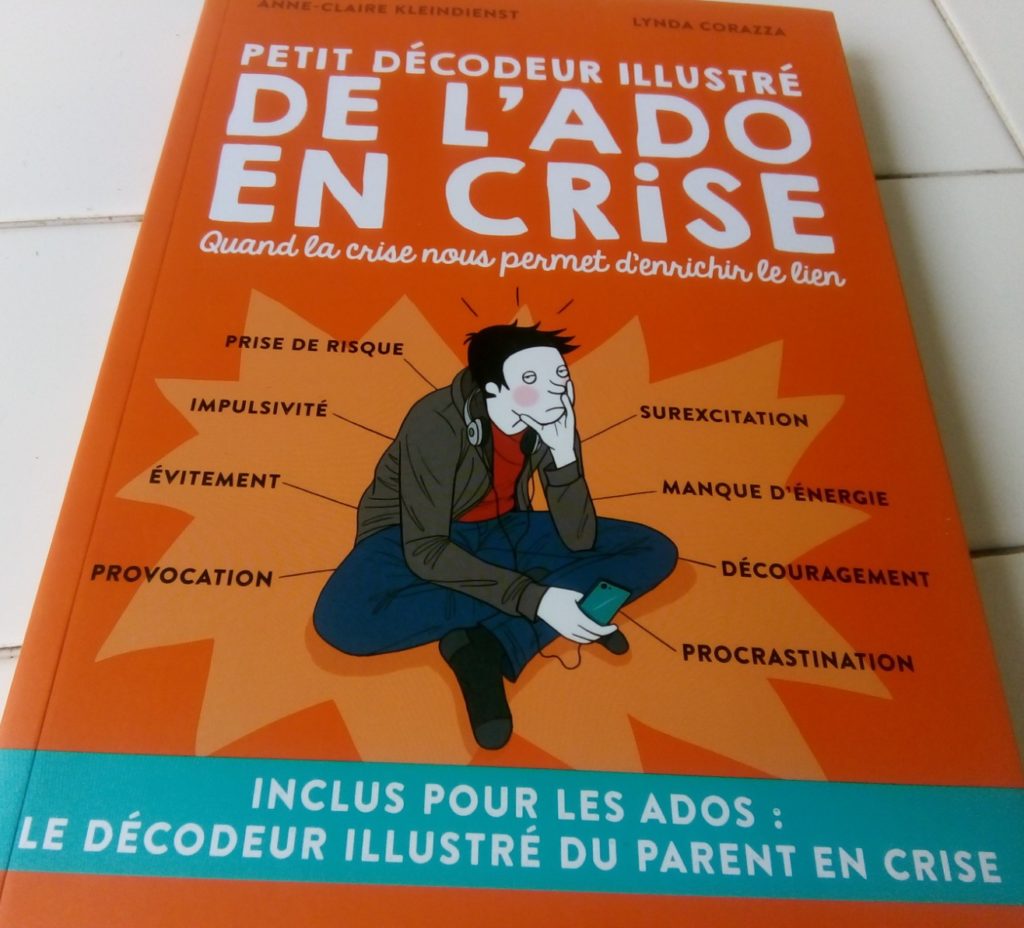
Starting with the parent: On ne se comprend plus ! by Isabelle Filliozat
This book follows the same structure as the author's earlier volumes on younger children, with general chapters on the big issues, a focus on each age band and concrete tools for parents. It invites you to question yourself first and to accept a kind of mourning: the loss of your feeling of being useful. The relationship remains essential, and family rituals help feed that contact.
Filliozat also offers tools for regulating your own adult emotions and stress, which often come from accumulated tension, your own history, a sense of powerlessness or a loss of control. If you are navigating a separation at the same time, the happy family after divorce can be a useful companion read.

What is happening inside the teenage brain
The book then focuses on the changes that adolescents go through, including the effects of neural pruning: the pathways used most often in the brain are reinforced while the others are removed. Because of the very structure of the adolescent brain, teenagers have little control over their impulses. The areas responsible for reasoning and emotional regulation are not yet well myelinated, meaning the sheath around the neurons of the rational prefrontal brain is not fully consolidated.
A sensitive accelerator and a heavy brake
Filliozat's image is memorable: the adolescent has an accelerator pedal so sensitive that it fires without a word, and a brake pedal that is heavy, with cables not always well connected to the engine. Remembering this helps you read behaviour as development rather than defiance. The same patient, developmental lens applies to younger siblings, as in this look at infant development stages. For younger children, choosing the right airplane toys and learning how to motivate young children can support this same developmental approach.

| Feature | On ne se comprend plus ! | La discipline positive pour les adolescents |
|---|---|---|
| Main focus | Brain development and parent emotions | Firm and kind discipline in daily life |
| Best for | Understanding intense reactions | Handling screens, money, going out |
| Structure | General chapters, age bands, tools | Themed chapters, summary boxes |
| Practical extras | Regulation tools for parents | Scenarios and end-of-chapter exercises |
| Reading style | Easy to consult by need | Pleasant, efficient, example-driven |
Peers, meaning and the side-by-side position
In the third part, the author stresses the importance of the peer group in adolescence, but also the need for meaning. She suggests turning your attention towards the needs for exploration, doing things together and autonomy, and taking an interest in them rather than making reproaches. At every stage, a side-by-side position is more effective than a face-to-face one.
The book then works through the big questions parents of teenagers face, always offering keys to understanding and leads for responding with comprehension and efficiency according to the age of the adolescent. It is easy to read and easy to consult by need and by age band. Shared activities feed that side-by-side contact, whether it is a simple game or a bigger project such as a Rubik's cube challenge.

La discipline positive pour les adolescents by Jane Nelsen
Jane Nelsen, the American psychologist who coined the term positive discipline, returns to its pillars, which reconcile firmness and kindness, and applies them to themes specific to adolescence: screens, risky behaviour, going out, money, sexuality, schoolwork, contributing to household chores, drugs, addictions and sleep.
The book is very practical and full of concrete examples: testimonials from parents in difficulty, feedback from parents who attended positive discipline workshops, and the expectations of teenagers interviewed about their relationship with their parents. The table of contents runs from "Do I have a teen at home?" and "Pilot or co-pilot?" to parental attitudes, making mistakes an opportunity to learn, motivating teens, whether teens hear us, family meeting time, chosen moments together, preparing adolescents to take flight, socio-emotional skills, hyperconnection, why they act this way, parents facing risky behaviour, and how our children's adolescence can revive unresolved issues from our own.

How the book is built and how to use it
Each part is summarised in a box that captures the key points, which makes reading pleasant and efficient. The many examples and scenarios show how to move from theory to practice, and each chapter ends with small training exercises to help you take action. That structure suits busy parents who want to read one chapter and try one thing.
Nelsen's message is that choosing a firm and kind parental attitude means taking the time to teach socio-emotional skills, even when criticising or rescuing would be easier. It also means showing confidence in teenagers' abilities and holding the conviction that they can learn, provided we give them enough support and space. If your teen is studying for exams, the 5C rule motivation pairs well with this chapter.
Choosing the right book for your situation
If your main struggle is understanding why your teenager reacts so intensely, start with Filliozat, which explains the brain and the parent's own triggers. If your struggle is practical, with rules, screens, money or going out, start with Nelsen, whose scenarios and exercises give you something to try this week.
Many parents use both: one for the mindset, one for the daily script. Reading a chapter before a difficult conversation, rather than after, tends to make the conversation calmer. Small shared rituals, from a board game to a walk, also create the side-by-side moments both authors recommend, much like the shared play described in these toys for five year olds. When grandparents are part of the picture, it also helps to align the parenting rules so everyone responds consistently, and to handle sensitive topics with the same calm, open tone the books encourage.




My hands-on take
I read both books in the same month, and the contrast was useful. Filliozat gave me the patience to reinterpret a slammed door as a nervous system doing its job, while Nelsen gave me sentences I could actually say when the argument started. What worked best in our house was the side-by-side idea: washing dishes together produced more conversation than any question asked across the table.
I also learned to read one chapter only, then wait a week before trying anything. Reading three chapters in one evening felt productive but changed nothing. One small ritual, one exercise, one calmer conversation at a time is what actually moved things forward for us.
Frequently asked questions
Can these books be read in any order?
Yes. Both are designed to be consulted by topic, so you can jump to the chapter that matches your current difficulty and return to the rest later.
Do I need to read the earlier books first?
No. The Filliozat volume follows the structure of her books on younger children, but it stands alone and explains the adolescent stage from the beginning.
What if my teenager refuses to talk?
Both authors suggest side-by-side moments and family rituals rather than face-to-face interrogation, which lowers the pressure and keeps contact alive.
Are these books only for difficult periods?
No. They are useful before problems appear, as a way to build habits and shared language around rules, emotions and autonomy.
Product Reviews
 Best Toys for Dogs With High Prey Drive |
Best Outdoor Toys for 3-4 Year Olds |
Best Outdoor Toys for 6 Year Olds |
Best Harness for Poodle |
Best LEGO Sets for Adults |
Best Travel Toys for 4 Year Olds on Airplane |
Best Toy Stores in Washington DC |
Best Potty Training Toys |
Best Toys for Tripod Dogs |
Maillot equipe de france







