


Emotional education is the patient work of helping children step outside their own point of view and notice the people around them. It matters because a child who only avoids trouble learns to hide mistakes rather than to care about the harm they cause.
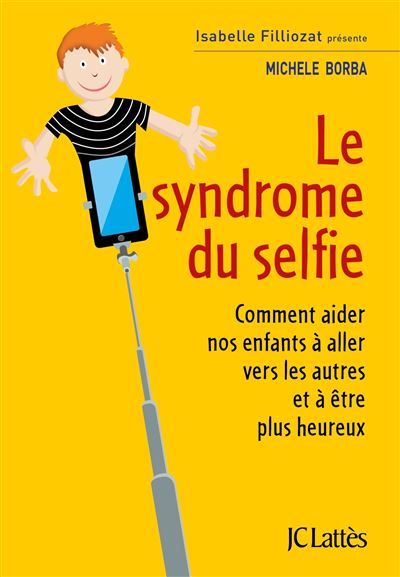
Drawing on the four-step approach described in Michele Borba's book on helping children move beyond the selfie mindset, this article walks through each step with concrete examples and small additions you can use at home. The aim is not to shame a child but to grow genuine empathy and a sense of moral responsibility.

Quick takeaways
- Describe what the child did, then explain why it was hurtful.
- Skip punishment-first reactions that teach fear instead of empathy.
- Ask how the other person feels, thinks and what they need.
- Encourage a heartfelt repair, never an imposed apology.
- State your feelings about the behaviour and your belief in the child.
- Practise empathy in small everyday moments, not just big incidents.
Name the insensitive behaviour before you punish
When a child acts carelessly, the first move is to describe plainly what happened, then explain why it was hurtful. Many adults skip straight to punishment, but an explanation lets the child leave their personal perspective and begin to feel empathy. Punishment alone teaches only fear of getting caught, which invites sneaking and lying.
Keep the correction calm and, where possible, take the child aside so the message lands without public humiliation. For instance: "You shouted to everyone that J. missed his basket. That was hurtful to him." Or: "Texting while your grandfather talks to you is rude."
Why the two-step matters
The educational goal is empathy and responsibility, not obedience. Naming the act and its effect gives a child something to think about rather than something to fear. If you are also working on Montessori method principles at home, this respectful tone fits naturally with that approach.

Show how insensitivity affects the other person
Seeing things from another's point of view is not a skill that falls from the sky. By steering a child's thinking toward the thoughts, emotions and needs of the person they hurt, adults help widen their frame. The practice is simple: ask the child how they would feel in the other's place, what the other must be thinking, and what the other needs.
Once a child grasps the problem from the victim's side, they can step into that person's shoes by focusing on feelings, thoughts and needs. Try questions like: "How would you feel if T. grabbed your toy out of your hands?" or "Make A.'s face when she feels that. What do you think she's feeling?"
For older children, a scenario works well: "Imagine you are S. and you discover someone wrote that text about you. How do you feel? What do you want to say to them?" Role-play and short Christmas stories, including the gentle lessons in movies about books, can reinforce this perspective-taking. After all, motherhood changes priorities, and empathy is one of them.
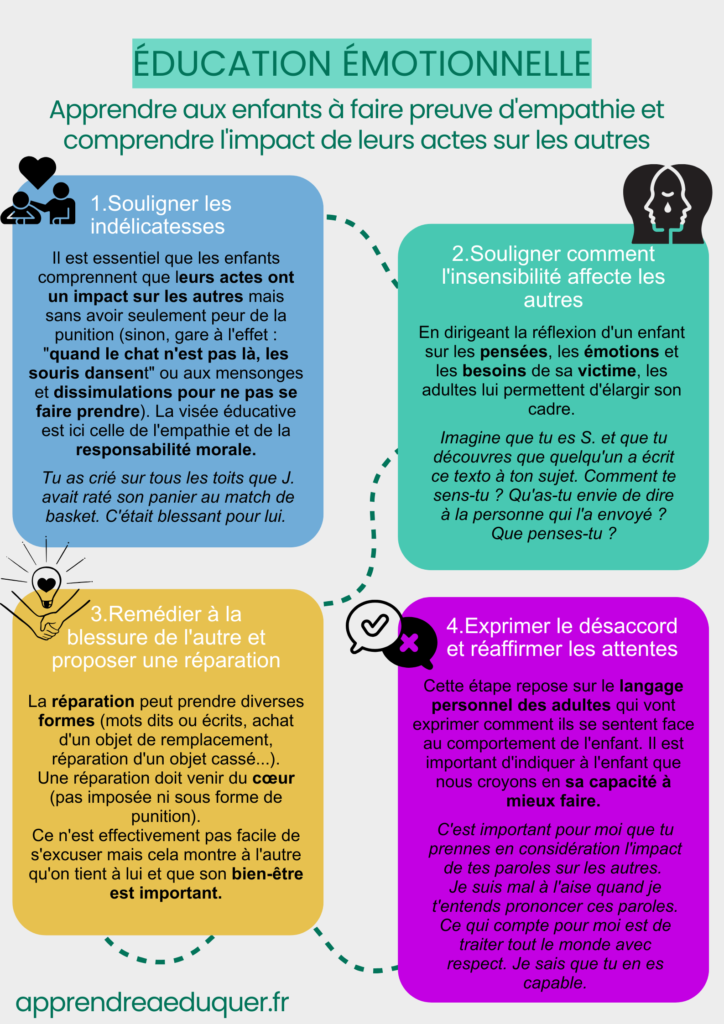
| Step | What you do | Example phrase |
|---|---|---|
| Name the behaviour | Describe the act and its effect | "That was hurtful to him." |
| Shift perspective | Ask about the other's feelings and needs | "How would you feel in their place?" |
| Repair | Invite a genuine apology or fix | "What could make it right?" |
| Restate expectations | Share your feelings and belief | "I know you can do better." |
Repair the hurt and offer a genuine apology
Repairing the injury has several virtues: it lets the victim feel fully understood and relieves the guilt of the child who acted badly. Repair can take many forms, from spoken or written words to replacing an object or fixing something broken.
A repair should come from the heart, never imposed or shaped like a punishment, and it should express regret tied to the hurtful behaviour. Apologising is not easy, but it shows the other person that they matter and that their wellbeing counts.
Make room for the gesture
Children often need a moment to cool down before they can mean an apology. Offer a choice of how to make amends and let them pick, whether a note, a kind act or a shared activity. A calm, creative outlet, such as Christmas tree drawings, can even become the setting for a handmade sorry card.
Express your disagreement and restate your expectations
This step relies on your own plain language. Say how you feel about the behaviour, naming sadness or disappointment about the act rather than about the child. Then state your expectation about the attention owed to others and your belief that the child can do better.
Telling a child you believe in their capacity to improve is essential. Examples: "I don't like hearing you say unkind things behind your friend's back. It matters to me that you consider the impact of your words." Or: "I'm uncomfortable hearing those words. What counts for me is treating everyone with respect. I know you're capable of that."
These conversations build the same steady, respectful connection that supports so much of early growth, from infant development onward, and they echo the patience you would show when helping a child through fear of water. The same calm reassurance helps when treating molluscum contagiosum.

Keep the practice going day to day
Empathy grows through repetition, not single lectures. Look for small, low-stakes moments to practise: a sibling interrupted, a friend left out, a grandparent ignored. Naming these gently, without an audience, keeps the lesson about care rather than shame.
Model the language yourself. When you apologise sincerely or notice someone's feelings aloud, you show the child what accountability sounds like. Pair this with shared play that requires turn-taking, and the lessons carry into everyday routines.
Building a home culture of noticing others takes time, much like choosing the right toys for two-year-olds or the toys for one-year-olds that match a child's stage. Keep expectations realistic and celebrate small signs of consideration when you see them.
My hands-on take
In my own home, the shift from "you're in trouble" to "let's talk about what happened" changed the tone of our evenings. I remember one moment when my child grabbed a toy from a younger cousin, and instead of issuing a time-out, I knelt down and asked how the cousin felt. The pause that followed was longer than any punishment I had given, and the apology that came afterward was quiet but real.
It is not always smooth. Some days I forget the steps and react on autopilot, and I have learned to repair that too by naming my own mistake out loud. What helps most is keeping the language short and the tone steady, and trusting that small, repeated conversations do more than one big lecture ever could.
Frequently asked questions
Why not just punish bad behaviour?
Punishment alone teaches a child to fear getting caught, which can lead to lying or hiding. Explaining the harm instead helps the child step outside their own view and develop real empathy and responsibility.
What if my child refuses to apologise?
A forced apology defeats the purpose, since a repair should come from the heart. Give the child time to calm down, then offer choices for how to make amends so the gesture feels genuine.
Does this approach work for young children?
Yes, though it needs to be simple and concrete. Asking how a character or a friend feels, and naming hurtful acts calmly, works well even for preschoolers.
Product Reviews
 Best Toys for Dogs With High Prey Drive |
Best Outdoor Toys for 3-4 Year Olds |
Best Outdoor Toys for 6 Year Olds |
Best Harness for Poodle |
Best LEGO Sets for Adults |
Best Travel Toys for 4 Year Olds on Airplane |
Best Toy Stores in Washington DC |
Best Potty Training Toys |
Best Toys for Tripod Dogs |
Maillot equipe de france







