


Recognizing the signs of depression in a parent matters, because parental exhaustion and anxiety are too often brushed aside as ordinary family life. Many mothers and fathers feel ashamed to admit to a doctor that their children have become a source of anxiety and deep unease.
This guide walks through the warning signs to watch for, explains why weekends and school holidays can be especially risky periods, and looks at how to help a struggling parent or how to ask for help yourself. The aim is simple: never normalize a parent's suffering, and never leave it unaddressed.

Quick takeaways
- Shame often stops parents from admitting their children cause them anxiety or distress.
- Warning signs include lasting fatigue, irritability, withdrawal, and feeling trapped.
- Weekends and school holidays can be especially risky for struggling families.
- Never minimize a parent's suffering, even when it looks like a practical problem.
- Offer concrete help with childcare, meals, and errands rather than vague support.
- Encourage professional help and reassure parents that asking is a sign of strength.
A shame that keeps parents silent
One of the biggest obstacles to recognizing depression in a parent is shame. It can feel embarrassing to tell a doctor that your own children are a source of anxiety or that daily family life has become a burden. That silence delays help and lets distress quietly build.
Yet parental well-being is not a luxury; it is the foundation of family life. When one parent is running on empty, the whole household feels it, from routines to patience levels. Treating a parent's difficulty as something worth naming out loud is the first step toward real support.
Why feelings get dismissed
Parents are often told that tiredness and worry are simply part of the job, so genuine warning signs get waved away. If you have ever felt that your struggles were not serious enough to mention, know that this is a common and understandable reaction. You can read more about sharing the load in parenting partnership and shared responsibilities.
The warning signs to watch for
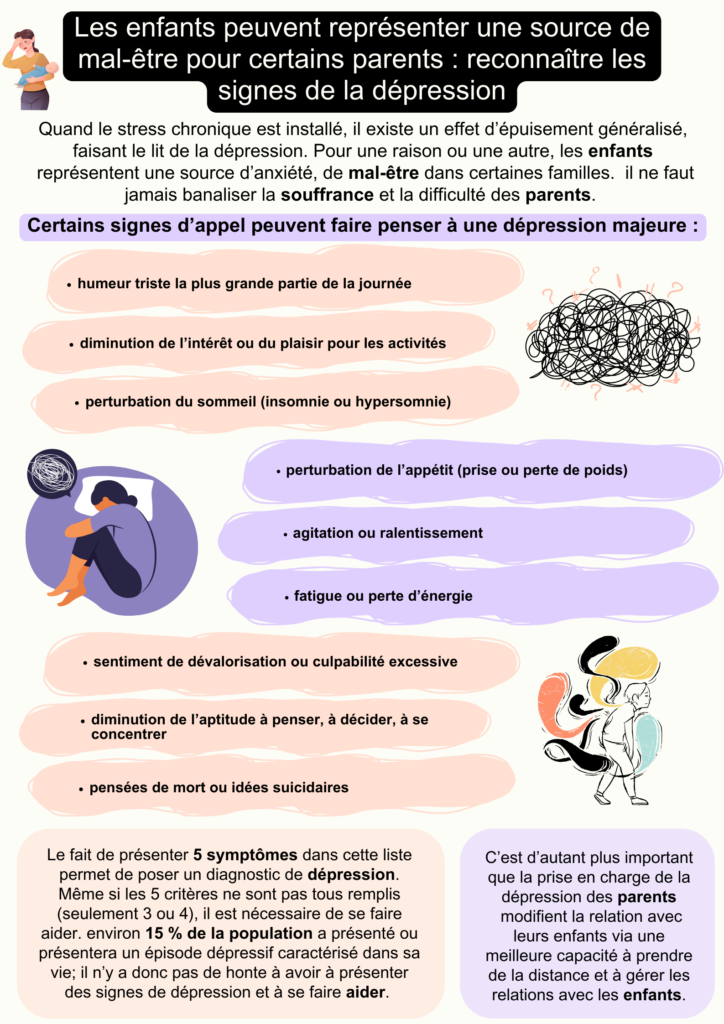
Depression in a parent rarely looks dramatic at first. It often shows up as persistent fatigue that rest does not fix, a loss of interest in things that used to bring pleasure, irritability that flares over small things, and a feeling of being trapped or hopeless.
Other signs include withdrawing from friends and family, sleeping badly, and a growing sense that you are failing as a parent. Some parents describe feeling numb or detached from their children, which in turn fuels guilt. Recognizing these patterns early makes it easier to seek help before a crisis.
Small moments that signal strain
Watch for changes in how a parent talks about everyday tasks, like choosing clothes or managing bedtime. Articles such as choosing clothes and repeated phrases can help you notice when ordinary decisions start to feel overwhelming. Gentle curiosity, not judgment, is the right response.
| Sign to watch for | What it may look like | Helpful response |
|---|---|---|
| Lasting fatigue | Tired despite rest, low energy | Offer practical help and rest |
| Withdrawal | Avoiding friends and family | Check in gently and regularly |
| Irritability | Flaring over small things | Listen without judgment |
| Feeling trapped | Hopelessness about daily life | Encourage professional support |
| Holiday stress | No childcare, no structure | Plan support in advance |
Why weekends and holidays raise the risk
For some families, weekends and school holidays are particularly risky periods. The usual structure disappears, childcare becomes harder to arrange, and the pressure on parents intensifies. One documented case involved a child assessed urgently in child psychiatry after a mother's suicide attempt, triggered by the start of the long summer holidays, when she could not find anyone to look after her child, who had already been excluded from a holiday club because of difficult behavior.
This is a stark reminder that practical pressures and emotional strain are deeply connected. A parent who cannot find childcare is not simply inconvenienced; they may be pushed to breaking point. Never minimize the difficulty a parent is facing, even when it looks like an ordinary logistical problem.
Practical pressure points
Holiday planning, feeding the family, and keeping children occupied all add weight. Even small routines, like ice cream treats or newborn adaptation, can become flashpoints when a parent is already exhausted. Planning support in advance can make a real difference.
How to help a parent who is struggling
If you suspect a parent is depressed, start with a calm, private conversation and avoid fixing or judging. Ask how they are really doing, listen without rushing to solutions, and take their answers seriously. Offer concrete help with childcare, meals, or errands rather than vague promises to "be there."
Encourage them to speak to a doctor or mental health professional, and offer to help arrange the appointment if that feels daunting. Reassurance that seeking help is a sign of strength, not failure, can be powerful. For new parents, resources on postpartum care and infant feeding can ease some of the pressure.
Supporting without pressure
Respect their pace and keep checking in over time. A parent who is struggling may not ask twice, so consistent, low-key support matters. Thoughtful gestures, like a teething toy for a baby or a shared activity, can open space for honest conversation.

How to ask for help yourself
If you recognize yourself in these signs, please take them seriously. Tell someone you trust, whether a partner, friend, or doctor, and be honest about how you feel. It is not a betrayal of your children to admit that parenting has become hard; it is a responsible step toward getting better.
Ask for specific help rather than waiting for others to guess. A partner can share the load more evenly, and articles like avoiding blackmail and 10 board games offer ways to build fairer, calmer family habits. Small changes in routine, such as 10 Best Learning Toys for younger children, can also reduce daily friction.
Building a support plan
Write down who you can call, what practical help you need, and when you will contact a professional. Having a plan reduces the sense of being alone. Remember that recovery is not linear, and asking for help early is always better than waiting for a crisis.

My hands-on take
I have seen how easily parental strain gets dismissed, both by others and by the parents themselves. In my own circle, the hardest part was never finding the right words; it was admitting that everyday family life had become genuinely heavy. Once that was said out loud, practical help followed more easily than expected.
What helped most was keeping things small and concrete: one honest conversation, one offer of childcare, one appointment booked. I have learned to check in more than once, because a struggling parent rarely asks twice. If you are the one carrying the weight, please treat your own well-being as part of caring for your family, not as something separate from it.
Frequently asked questions
Is it normal to feel overwhelmed as a parent?
Feeling overwhelmed sometimes is common, but persistent hopelessness, fatigue, or withdrawal are warning signs worth taking seriously. If these feelings last, speaking to a doctor is a sensible step.
Why are holidays riskier for some parents?
Structure disappears and childcare becomes harder to arrange, which can intensify pressure on an already strained parent. Planning support in advance helps reduce that risk.
How can I help a parent who seems depressed?
Start with a calm, private conversation, listen without judging, and offer concrete help. Encourage them to speak to a professional and check in consistently over time.
What should I do if I recognize these signs in myself?
Tell someone you trust and be honest about how you feel, then contact a doctor or mental health professional. Asking for help early is a responsible step, not a failure.
Product Reviews
 Best Toys for Dogs With High Prey Drive |
Best Outdoor Toys for 3-4 Year Olds |
Best Outdoor Toys for 6 Year Olds |
Best Harness for Poodle |
Best LEGO Sets for Adults |
Best Travel Toys for 4 Year Olds on Airplane |
Best Toy Stores in Washington DC |
Best Potty Training Toys |
Best Toys for Tripod Dogs |
Maillot equipe de france







