


Sensory needs in children describe the everyday hunger for movement, touch, sound, smell, taste and balance that helps them explore the world and connect with the people around them.
When those needs go unmet, children often reach for inappropriate strategies instead: squirming, rocking back on a chair, biting nails, chewing pencils or making mouth noises. The goal is not to stop the behaviour but to offer better outlets.

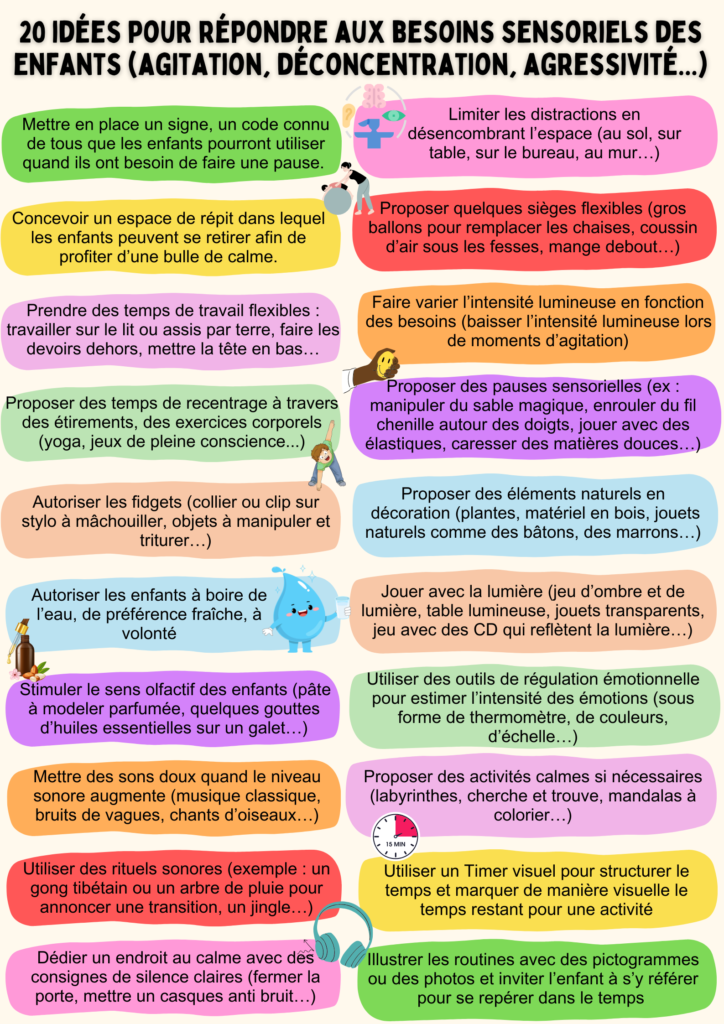
This guide gathers twenty sensory strategies you can use at home and in class, plus the value of a sensory pause to prevent overstimulation and help everyone reset.
Quick takeaways
- Sensory seeking is a need, not naughtiness: offer an outlet instead of punishment.
- Build movement into the day with carrying, pushing, jumping and short breaks.
- Provide safe mouth and hand alternatives such as crunchy snacks and fiddle objects.
- Notice whether your child seeks or avoids sound, smell and texture, then adjust.
- Schedule sensory pauses before overstimulation, not after it.
- Pick two or three strategies and use them consistently at home and in class.
Why Children Seek Sensory Stimulation
Children need sensory input to discover their environment, explore it and communicate with those around them. Movement, touch, taste, hearing, smell and vestibular stimulation all feed that need, and a child who is short of it will find a way to top up, even if the method looks like misbehaviour.
Recognising this changes how you respond. Instead of asking a fidgeting child to simply sit still, you can build movement and touch into the day. The same principle applies when you children understand world differently and adjust expectations to their stage of development.
Daily life offers plenty of small tensions, and sensory strategies help adults and children meet them more calmly, whether during homework, transitions or a busy classroom morning.
Movement and Vestibular Ideas
Movement is often the fastest way to settle a restless child. Offer regular chances to jump, push, carry something heavy or climb, and let them use their whole body rather than asking for stillness.
For children who love to move, active play is not a distraction from learning but a support for it. If your child has discovered climbing, channel it safely with baby knows climb ideas rather than fighting it. Younger children benefit from toys that invite crawling and reaching, and you can find options in our guide to toys encourage crawling.
Simple movement outlets
Try carrying grocery bags, pushing a laundry basket, marching to music or a short movement break before homework. A quick stretch or walk between tasks can reset attention without a big interruption.
| Need | At home | In class |
|---|---|---|
| Movement | Carrying, pushing, marching | Movement break before tasks |
| Touch | Play dough, fabric, fiddle toy | Textured cushion or pocket object |
| Mouth | Crunchy snacks, safe chew item | Water bottle, chewy snack |
| Sound | Quiet corner or gentle music | Headphones or calm space |
| Overstimulation | Planned sensory pause | Short reset away from noise |
Touch, Mouth and Hand Strategies
Many children seek input through their hands and mouth. Chewing on a pencil, nail biting and mouth noises are often attempts to meet that need, so offer safe alternatives such as crunchy snacks, a chewable item or something to fiddle with.
Texture play matters too. Sand, water, play dough and fabric scraps give hands something to explore, and building toys keep fingers busy while the mind settles. Our roundup of toys under 25 includes affordable options for this kind of play, and LEGO sets designed shows how construction play can hold attention for long stretches.
For older children, a small object in the pocket or a textured cushion on the lap can quietly meet a touch need during quiet time.
Sound, Smell and Taste
Auditory and olfactory input counts too. Some children seek noise and hum or tap; others are overwhelmed by it. Notice which way your child leans and adjust the environment, offering quiet corners or gentle background sound as needed.
Smell and taste are easy to overlook. Cooking together, smelling herbs or offering varied textures at meals gives safe sensory experience. If mealtimes are tricky, our article on baby bites breastfeeding reminds you that mouth behaviours are often developmental rather than defiant.
Keep choices simple and predictable, and let the child lead when trying new textures or flavours.

Building a Sensory Pause Into the Day
A sensory pause prevents overstimulation and lets a child recharge. It can be a quiet corner, a few minutes with headphones, a slow drink of water or a short lie-down away from noise.
Plan pauses before they are needed, for example after school or between homework subjects. Structure helps: clear routines and shared expectations reduce friction, much like the contract good use of screens that many families now use to set boundaries.
Teachers can build the same pauses into the classroom day, and the values cannot relegate in teaching remind us that calm, respect and consistency are part of the learning environment, not extras.
Making It Work at Home and in Class
Consistency matters more than perfection. Choose two or three strategies that fit your child, use them daily and watch what changes. A simple checklist on the fridge or desk keeps everyone on the same page.
If your child is very young, outings and new environments can be sensory overload, so plan ahead with our tips baby outings and keep expectations realistic.
Above all, treat sensory seeking as information rather than misbehaviour. When adults respond with curiosity and practical outlets, the small and big tensions of the day become easier to handle for everyone.

My hands-on take
In my own experience, the biggest shift came when I stopped treating fidgeting as a battle to win. I started keeping a small basket of fiddle objects near the homework table and offering a two-minute movement break before we began. The difference was not dramatic overnight, but over a few weeks the pencil chewing faded and the arguments shrank.
What helped most was watching my child rather than guessing. Some days a quiet corner was exactly right; other days a walk around the block did more than any calm-down talk. I still get it wrong, but having a few reliable options ready makes the difficult moments much easier to handle.
Frequently asked questions
What are sensory needs in children?
They are the everyday need for movement, touch, sound, smell, taste and balance that helps a child explore the world and communicate. When unmet, children often seek input in ways adults find difficult.
Is fidgeting or chewing pencils a discipline problem?
Usually not. These behaviours are often attempts to meet a sensory need, so offering a safe alternative tends to work better than asking the child to simply stop.
What is a sensory pause?
It is a short, planned break from stimulation, such as a quiet corner or a few minutes with headphones. It helps prevent overstimulation and lets a child recharge.
Can these strategies be used during homework?
Yes. A short movement break, a fiddle object or a drink of water before starting can make homework calmer for both child and adult.
Product Reviews
 Best Toys for Dogs With High Prey Drive |
Best Outdoor Toys for 3-4 Year Olds |
Best Outdoor Toys for 6 Year Olds |
Best Harness for Poodle |
Best LEGO Sets for Adults |
Best Travel Toys for 4 Year Olds on Airplane |
Best Toy Stores in Washington DC |
Best Potty Training Toys |
Best Toys for Tripod Dogs |
Maillot equipe de france







