


Learning how to praise children's progress is one of the quietest but most powerful tools a parent has, because self-belief grows from being seen, not from being flattered. Even small successes deserve attention: a grade that moves from 5/20 to 8/20, or something we tend to consider "normal", like handing in an essay on time when that has never happened before.
That on-time essay is not ordinary at all for a child who has always struggled with deadlines. It represents real progress, and naming it as such tells your child that effort counts. The goal is not to inflate every moment into a celebration, but to notice growth and reflect it back honestly.

Quick takeaways
- Notice small gains, not just big results
- Treat "ordinary" achievements as real progress
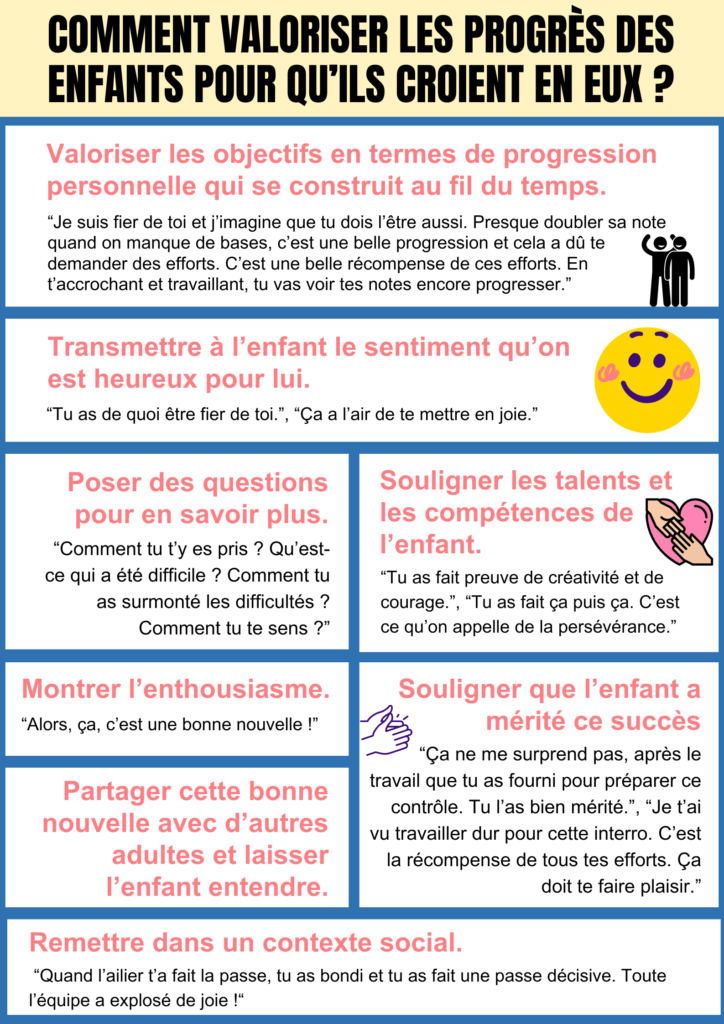
- Show you are happy for your child, not just proud
- Ask questions to let them explain their success
- Name specific talents and skills you observe
- Let them overhear you praising them to others
Why Small Wins Deserve Real Attention
Progress is rarely a straight line, and children often cannot see their own growth because they are living inside it. When you point out a modest improvement, you give your child a mirror: they learn that moving forward, even slightly, is worth something. This is why a jump from 5/20 to 8/20 matters as much as a top mark.
Equally important are the everyday achievements we overlook because they seem ordinary. Handing in an essay on time for the first time, remembering a bag, or finishing a task without reminders are all signs of real progress. Naming them helps your child connect effort with outcome.
Focus on personal progression
Rather than comparing your child to classmates, frame success in terms of where they were before. This keeps motivation healthy and reduces the pressure that can quietly erode confidence.
Show That You Are Happy for Them
Children read our faces before they hear our words, so let your enthusiasm show. When your child shares a win, transmit the simple feeling that you are happy for them, not just proud of a result. That distinction matters: being happy for someone is about them, while pride can sometimes feel like it is about us.
Ask questions to learn more rather than rushing to evaluate. "How did you manage that?" or "What part was hardest?" invites your child to reflect and keeps the conversation open. This kind of curiosity supports the same language-building muscles described in how they learn to speak, where back-and-forth dialogue does more than correction.
Curiosity also works well when a child is exploring something new, whether that is a first school routine or a fresh interest at home. Even small everyday moments, like arriving late at school or getting used to water safety elements, can become chances to talk things through together.
| Situation | What to notice | What to say |
|---|---|---|
| Grade moves from 5/20 to 8/20 | The improvement itself | "You moved forward, that's real progress." |
| Essay handed in on time | Effort and organization | "You planned this and it worked." |
| Child shares a win | Their own excitement | "Tell me how you did it." |
| Skill shown at home | A specific strength | "You were really patient there." |
| Success shared with others | Social context | "I told grandma how you handled that." |
Name Their Talents and Skills Out Loud
Children often underestimate what comes naturally to them, so it helps to name their talents and skills explicitly. Point to patience, organization, humor, or persistence when you see it in action. Specific language is more convincing than a vague "well done".
It also helps to underline that your child earned this success. Effort, choices, and practice belong to them, and saying so builds a sense of agency. This is the same principle behind supporting children who think differently, as with children with a lot of, where recognizing strengths matters more than smoothing over differences.
Connect effort to outcome
When a child hears "you worked at this and it paid off", they learn that ability is something they can grow rather than a fixed label.
Let Them Overhear Your Praise
One of the most memorable ideas is to let your child hear the good things you say about them to others. Sharing a success with another adult, in your child's hearing, carries a special weight because it sounds unguarded and sincere. A brief comment to a grandparent or friend is often enough.
This works best when it is grounded in a social context. Remind your child that their progress matters to the people around them, at home, at school, or in activities. The same social framing appears in a day at kindergarten, where children learn to see themselves as part of a group. Just as training a family dog rewards good behavior in front of everyone, praise shared openly reinforces positive habits.
Keep it genuine and specific, and avoid turning it into a performance. The point is for your child to catch you being honest, not to stage a compliment.

Build a Habit of Noticing Progress
Praise works best as a steady habit rather than a rare event. Keep a light mental note of what your child is working on, and check in regularly rather than waiting for report cards. Small, frequent observations feel more believable than big speeches.
You can also involve your child in tracking their own progress, which shifts the focus from pleasing you to owning their growth. This reflective approach echoes the balanced thinking discussed in the most beneficial school day, where structure and rest both shape how children learn.
Keep expectations realistic
Celebrate the step taken, not only the destination, and let your child set some of the goals themselves. Ownership keeps motivation alive long after the novelty fades.
Avoid the Traps That Undermine Praise
Even well-meant praise can backfire if it compares siblings, focuses only on results, or sounds automatic. Children notice the difference between a genuine observation and a reflex "good job". Keep your comments tied to something you actually saw.
It also helps to stay calm when progress stalls, since setbacks are part of any learning curve. Responding with curiosity rather than disappointment keeps the door open, much like the patience needed when helping a child through a difficult moment such as vomiting in children, where reassurance matters more than fixing. The same steady encouragement echoes the stories of people who overcame barriers.
Finally, remember that praise is not the same as pressure. The aim is for your child to feel seen, not to feel that every small step is being graded.

My hands-on take
In my own home, the praise that landed best was never the loudest. I remember noticing that my child had packed their bag without being asked, and instead of a generic "good job" I simply said I had seen them do it. The look on their face told me they had been waiting to be noticed.
I have also learned to bite my tongue when progress stalls. Early on I would rush in with encouragement that sounded more like a fix-it plan, and it rarely helped. Now I ask a question and then stay quiet, which is harder than it sounds but usually gets a better answer. Letting a child overhear a kind word to a grandparent has become my favorite trick, because it costs nothing and seems to stick.
Frequently asked questions
Should I praise every small thing my child does?
No. Praise works best when it is specific and genuine, so focus on moments where you actually noticed effort or growth. Constant automatic praise quickly loses meaning.
What if my child's progress is very slow?
Slow progress is still progress, and noticing it matters more than waiting for a big result. Frame it in terms of where your child was before rather than comparing to others.
Is it wrong to feel proud as a parent?
Not at all, but try to lead with being happy for your child. That keeps the focus on their experience rather than on your own expectations.
How do I praise without creating pressure?
Keep comments tied to what you observed and avoid turning every step into a performance review. Let your child set some goals themselves.
Product Reviews
 Best Toys for Dogs With High Prey Drive |
Best Outdoor Toys for 3-4 Year Olds |
Best Outdoor Toys for 6 Year Olds |
Best Harness for Poodle |
Best LEGO Sets for Adults |
Best Travel Toys for 4 Year Olds on Airplane |
Best Toy Stores in Washington DC |
Best Potty Training Toys |
Best Toys for Tripod Dogs |
Maillot equipe de france







