


Teen body image is one of the biggest drivers of future self-esteem, and it deserves careful attention from parents. A negative body image is a known risk factor for the development of eating disorders, while a positive one predicts how confident a teenager will feel later in life.
That is why it helps to know concrete ways to free teens from complexes tied to weight and physical appearance. The ideas below are simple, everyday moves you can start using at home, in sport and in the way your family talks about bodies.

Quick takeaways
- Body image strongly predicts a teen's future self-esteem.
- Negative body image is a risk factor for eating disorders.
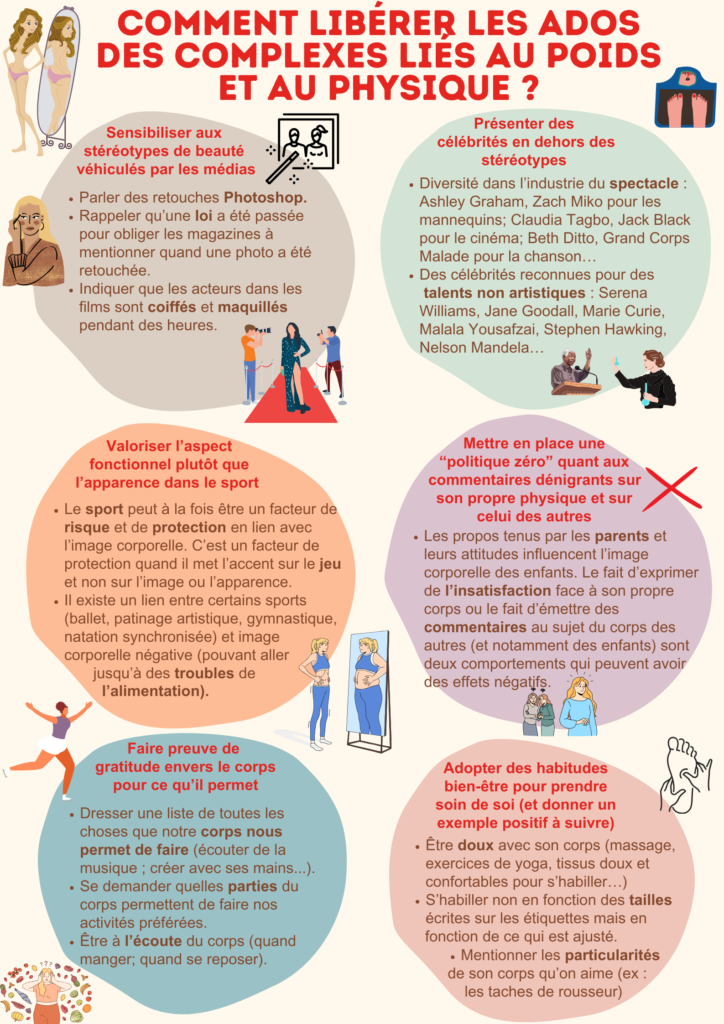
- Teach teens to spot media beauty stereotypes.
- Show celebrities who fall outside the usual mould.
- Praise what the body can do, not how it looks.
- Set a zero-comment rule on degrading body talk.
Why teen body image matters so much
Body image sits at the heart of how adolescents see themselves, and it shapes much more than their mirror moments. A negative body image is a risk factor for eating disorders, but the reverse is also true: body image is the strongest indicator of a teenager's future self-esteem.
This means the goal is not to chase a perfect body but to help your teen build a calm, realistic relationship with their own. Small, repeated messages at home carry more weight than a single big talk, and consistency is what makes them stick.
Make teens aware of media beauty stereotypes
Teenagers are surrounded by edited, filtered images of "ideal" bodies, and they rarely notice how constructed those images are. A first step is simply to raise awareness of the beauty stereotypes carried by the media, so your teen can start spotting them on their own.
Talk about retouching, lighting and selection when an advert or a post catches your eye. If screen habits are a daily battle at home, some screen time boundaries can free up space for these conversations, and if your teen struggles to fall asleep, look at evening screen use too.
Show celebrities outside the stereotypes
Balance the narrow ideal with real variety. Point out celebrities and public figures whose bodies fall outside the usual mould, and celebrate what they achieve rather than how they look. Just as you would check what to look for in choosing nipple creams, be selective about the images and messages you let into your home.
| Situation | Avoid | Try instead |
|---|---|---|
| Media images | "That's a perfect body" | Discuss retouching and filters |
| Sport | Commenting on shape | Praising strength and energy |
| Family talk | Jokes about weight | Zero degrading comments |
| Reading | Ignoring the struggle | Suggesting a body-image book |
| Meals | Judging portions | Neutral, calm conversation |
Praise function over appearance in sport
Sport is a place where bodies are judged fast, so it is a powerful setting to shift the focus. Instead of commenting on how your teen looks, value the functional side: stronger legs, better endurance, faster recovery, more energy.
Ask what their body allowed them to do today rather than how it looked doing it. If you are choosing gear together, safety and comfort come first, and it helps to know the water safety differences before a pool or beach day.
This functional framing also protects the joy of movement, which matters far more for long-term habits than any aesthetic goal.
Set a zero-tolerance rule on body comments
One of the most effective moves is a clear family policy: no degrading comments about your own body or anyone else's. That includes jokes, "harmless" teasing and the casual remarks adults make about their own weight in front of teens.
Teens copy what they hear, so model the language you want to hear back. If you are rebuilding your own habits after a baby, our postpartum care tips can help you speak about your body with more patience. The same gentle approach applies to learning to walk at any age.
A zero-comment rule is not about pretending bodies do not exist; it is about removing the running commentary that feeds complexes.

Talk about bodies without shame at home
Everyday family talk shapes how a teenager feels about their own body. Keep conversations neutral and curious, and avoid turning meals or clothes into a verdict on anyone's appearance.
It also helps to notice the pressure adults carry. Some of it echoes older generations, and reading about mothers then and now can make those inherited reflexes easier to spot and let go.
When a teen is tired, withdrawn or unwell, body worries can hide behind it, so it is worth knowing how to read the signs in our guide on a son always tired.
Give teens tools and reading to feel better
Teens need language to push back against their own inner critic, and books can hand them that language gently. A recommended read for young people is a book aimed at helping them move past complexes and build a positive body image, suitable from around eight years and up.
For the adults, a book on freeing your child from the cult of the perfect body offers concrete suggestions to apply at home. Pair reading with calm routines: if sleep is chaotic, positive discipline ideas can help create a steadier evening rhythm.
Keep the tone light and offer these resources as tools, not homework.

My hands-on take
I remember catching myself commenting on my own body in front of my teenager and seeing them echo the same criticism a week later. That moment pushed me to set a simple house rule: no degrading comments about our own bodies or anyone else's, even as a joke.
In practice, it was harder than it sounds, and I slipped often. What helped was replacing the comment with something functional, like noticing that a long walk left us both with more energy. Over time the tone at home shifted, and my teen started talking about what their body could do rather than how it looked.
Frequently asked questions
Is a negative body image really that serious?
Yes. A negative body image is a recognised risk factor for eating disorders, while a positive body image is the strongest indicator of a teenager's future self-esteem.
How do I talk about media images without lecturing?
Keep it short and curious. When an advert or post appears, ask your teen what they notice about lighting, editing or selection, and let them draw the conclusion.
What should I praise in sport instead of appearance?
Focus on function: stronger muscles, better endurance, more energy, faster recovery. Ask what their body let them do today rather than how it looked.
Are there books that can help?
Yes. There are books written for young readers to help them move past complexes and build a positive body image, and books for parents on freeing a child from the cult of the perfect body.
Product Reviews
 Best Toys for Dogs With High Prey Drive |
Best Outdoor Toys for 3-4 Year Olds |
Best Outdoor Toys for 6 Year Olds |
Best Harness for Poodle |
Best LEGO Sets for Adults |
Best Travel Toys for 4 Year Olds on Airplane |
Best Toy Stores in Washington DC |
Best Potty Training Toys |
Best Toys for Tripod Dogs |
Maillot equipe de france







