


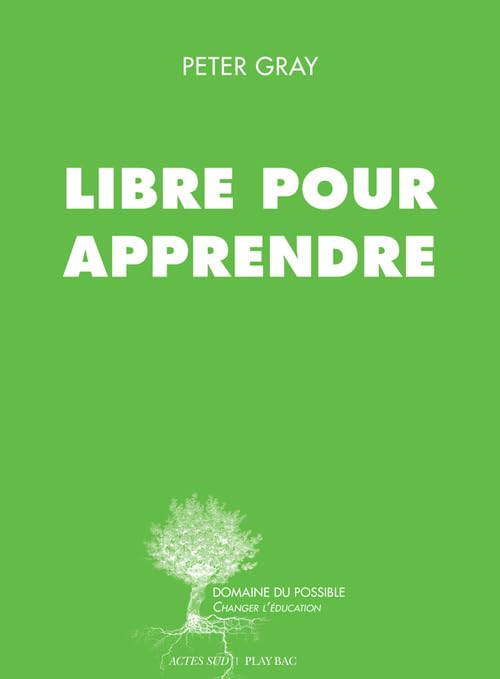
Self-directed learning is the idea that children learn most deeply when they, not adults, steer the process. Psychologist Peter Gray, who specialises in learning and play, sets out six conditions that make learning at school genuinely effective and lasting. His starting point is simple: the only learning that truly sticks is the learning a child owns.
These conditions are not a curriculum or a method to apply by the clock. They describe an environment, a set of habits and a way of relating to children that lets curiosity do its work. Some of them concern the child, some the adults, and some the group around them.

Below, each condition is explained in plain terms, with practical ideas for home and classroom. The aim is not perfection but direction: small shifts that give children more room to take charge of what they learn.
Quick takeaways
- Hand responsibility for learning back to the child whenever possible.
- Protect long, uninterrupted stretches for play, exploration and interests.
- Let children explore the tools of their culture, screens included, with guidance.
- Be a helper rather than a judge when a child struggles or makes mistakes.
- Mix ages so younger and older children learn from each other.
- Build stable, democratic groups where every child's voice counts.
1. Learning is the child's responsibility
Once children understand that their education belongs to them, they are usually capable of carrying that responsibility. It changes how they approach a task: instead of waiting to be told, they start to notice what they want to know and what they need to practise.
The opposite happens when children believe an adult is responsible for their learning and that their job is simply to follow orders. Initiative fades, and so does self-knowledge: their own wishes, needs and emotions become harder to read. They stop feeling answerable for developing their potential, whether intellectual, physical or relational.
This does not mean abandoning children to figure everything out alone. It means handing back decisions where possible, asking what they think before telling them, and letting them live with small consequences. A child who chooses a project and sees it through learns something no worksheet can teach. Even daily routines can carry this message, for instance letting a child decide the order of their afternoon tasks.
2. Play, exploration and personal interests need unlimited time
When Peter Gray says unlimited, he means it literally: far more than an hour a day, and far more than three hours a week. Trying different things, testing hypotheses, practising, making, undoing and remaking all take time. Finding a passion, practising it, digging deeper and enriching it requires time that is neither constrained nor bounded.
It is impossible to interrupt activities with bells and to decide for others how they will spend their time, while expecting them to find their Element, the concept Ken Robinson used for the place where talent meets passion. Children cannot bring their talent to the world to make a positive difference if they never get a long, uninterrupted stretch in which to get lost.
At home, this can be as simple as protecting a block of unstructured time and resisting the urge to fill it. If a child is deep in a build, a drawing or a game, the kindest thing is often to let it run. The same applies to quieter interests, such as returning to a favourite story collection again and again until it is known by heart. Just as you would request schedule changes to protect family time, guard these long stretches too, and keep an eye on sunburn risks during outdoor play.

| Condition | What it looks like | Adult's role |
|---|---|---|
| Responsibility | Child chooses and follows through | Ask before telling |
| Unlimited time | Long, uninterrupted play | Protect the block |
| Culture tools | Screens, hands-on materials | Guide, don't police |
| Helper, not judge | Mistakes treated as information | Listen, don't grade |
| Mixed ages | Siblings, cousins, mixed classes | Create the occasion |
| Democratic community | Rules debated together | Share the power |
3. Let children play with the tools of their culture
The culture we grow up in depends on where we are born. In a hunter-gatherer culture, the indispensable tools to master would be bows and arrows, knives and fire. In our modern Western culture, the main tool is the computer, tablet or smartphone.
It is no surprise that children love playing on screens. They sense that this is the tool of their culture, and spending a lot of time making it their own is almost instinctive, until it becomes a kind of extension of their own body, much as a bow would be in a hunter-gatherer culture.
Seen this way, screen time is not simply a battle to win or lose. Children need room to explore the tools that will shape their adult lives, alongside guidance about balance and safety. Hands-on materials belong in that same toolbox: building with foam block toys or taking apart a model teaches the logic of construction that digital tools also rely on.
4. Adults should be helpers, not judges
Adults who support children's development cannot be judges or censors. Someone who evaluates and remarks, "but you still don't know that!", is the last person a child wants to ask for help. Children feel nervous, anxious and even stressed around that kind of adult.
Benevolent adults, who do not judge by standards or age milestones, are the ones children turn to when things get difficult. They are the people a child can confide in: "I don't know how to do this at all. I made a mistake. I need help."
Being a helper rather than a judge takes practice. It means biting back the correction, asking what the child has already tried, and treating mistakes as information rather than failure. The tone adults use when a child is struggling matters more than any lesson plan, and it shapes whether a child dares to ask again next time. The same care applies to everyday safety, as with hydroalcoholic gel around young children.

5. Mixed ages benefit both younger and older children
Peter Gray argues for mixed classes in which children of all ages spend time together. Children of the same age do not necessarily have much to teach one another, and interactions are richer when the age gaps are wider.
The younger ones gain models to imitate and a window onto what comes next. The older ones gain something less obvious: explaining, patience and a sense of responsibility. A child who shows a smaller one how to build a tower is consolidating knowledge while gaining confidence.
Families can borrow the idea without changing schools. Time with cousins, neighbours or siblings of different ages is valuable, and so is letting an older child take a genuine role in a shared activity. Even a simple game can become a small lesson in cooperation when the ages are mixed.
6. Immersion works when the group is a stable, democratic community
Children need recognition and belonging. Communities in which each child knows that their ideas and actions are taken into account and debated by other members meet both of these fundamental needs.
In such a group, children feel responsible both for themselves and for others. They learn to manage themselves, to establish rules according to each person's needs and the problems that arise as community life unfolds. Interactions shape how the community works, and the community in turn shapes the children.
This is not a utopia: this kind of organisation already exists. In France, examples include the École dynamique in Paris, inspired by the democratic Sudbury school in the United States, and Bernard Collot's "school of the third type", public schools without notebooks, lessons, programmes, evaluations, timetables or schedules, open to children and adults even during holidays. A primary teacher, Collot transformed his single class over forty years of practice and countless exchanges with colleagues, without ideological presuppositions, simply by letting Freinet pedagogy develop in a multi-age context. He managed to reconcile effective learning at school with children's well-being, much as families reconcile everyday concerns like frequent hair problems and questions about contraceptives after childbirth with daily life.

My hands-on take
I tried the "helper, not judge" condition first, because it was the one I got wrong most often. My instinct when a child struggled was to step in and correct, and I could see the shoulders drop every time. So I started asking a single question instead: "What have you tried so far?" It felt awkward for a week or two, and then something shifted. The children began bringing me problems rather than hiding them.
The second change was protecting time. I stopped scheduling every afternoon and left one block empty. Some days it looks like nothing is happening, and other days a whole world gets built on the floor. I have not turned our home into a democratic school, and I am not sure I would want to. But those two small shifts made the house calmer and the children more willing to take charge of their own projects.
Frequently asked questions
What is self-directed learning?
It is an approach in which the child, rather than an adult, takes responsibility for what and how they learn. Adults still help, but as supporters rather than judges, and children's interests guide the process.
Does this mean no rules or no lessons at all?
No. The conditions describe an environment, not the absence of adults. Rules still exist, but they are set according to real needs and problems, and children take part in deciding them.
Can these ideas be used at home, not just at school?
Yes. Protecting free time, handing back small decisions, responding to mistakes without judgement and mixing ages are all things families can do without changing schools.
Are there schools that actually work this way?
Yes. Democratic schools inspired by Sudbury exist in several countries, and some public schools have adopted similar practices. They show the model is workable, not merely theoretical.
Product Reviews
 Best Toys for Dogs With High Prey Drive |
Best Outdoor Toys for 3-4 Year Olds |
Best Outdoor Toys for 6 Year Olds |
Best Harness for Poodle |
Best LEGO Sets for Adults |
Best Travel Toys for 4 Year Olds on Airplane |
Best Toy Stores in Washington DC |
Best Potty Training Toys |
Best Toys for Tripod Dogs |
Maillot equipe de france







