


These gentle books to prepare for baby's arrival, and for the first months of motherhood, are a calm companion for the weeks around birth. They suit first-time parents, growing families and the whole postpartum period.
The titles below focus less on routines and more on how you feel. They treat rest, attachment and the messy reality of early parenthood as normal rather than problems to fix.

You will find a summary of each book's main ideas, plus practical ways to use them at home.
Quick takeaways
- The first month after birth is for recovery and bonding, not performance.
- Accept fatigue and ask for help, even when your needs seem contradictory.
- Guilt often signals exhaustion and a need for support.
- Babies are wired for close contact; keeping them near is normal.
- When you feel overwhelmed, hand over and step away.
- Postpartum depression is different from baby blues and deserves professional help.
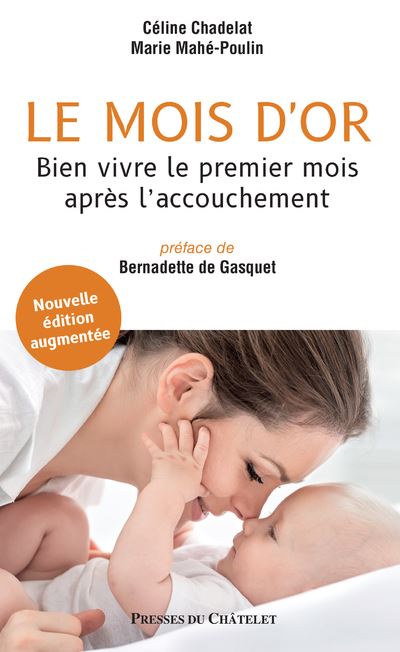
Le Mois d'Or: Living Well Through the First Month
In Le mois d'or, Céline Chadelat and Marie Mahé-Poulin give a name to the month after birth: the Golden Month. They describe two priorities for this time, recovering energy (or at least not losing more) and building a relationship with the newborn. This is a month of transition and letting go, not of pressure.
The authors, a journalist and a psychologist, list four main difficulties new parents face, especially mothers, and answer them with reassurance and resources. If you want a wider look at this stage, see these postpartum care tips and this guide on photographs about breastfeeding.
Fatigue
Recovering energy during the 30 to 40 days after birth matters. Accept tiredness as normal, surround yourself with supportive people, and say what you need, even when your needs seem contradictory, such as both support and privacy. A simple help schedule for family and friends can make this concrete.
Perfection, guilt and isolation
The fantasy of perfection pushes us to become someone we are not, and "I must" rarely helps. Guilt can be read as a signal that you are at your limit and need help. Isolation is the other trap: stay in your bubble with baby without cutting yourself off. Ask for practical help, such as meals, cleaning or taking older children out.
Attachment: Why Babies Need Close Contact
The book reminds us that human babies are programmed to attach to the adults who care for them, and that this attachment is a matter of survival. Respecting it softens the shock of birth and separation for both baby and mother. Fusion then gives way not to emptiness but to a new transitional state, the mother-baby symbiosis.
Ideas still common in our societies about early independence contradict our mammal nature and attachment theory. Keeping baby close, rather than in a separate room or parked in a stroller or bouncer, matches how carrying mammals behave. You can read more on how children understand the world and on twins and sleep.
This does not deny how hard the postpartum period is. Many mothers sometimes feel their baby resembles a rival, even a persecutor, during short nights and demanding days. It helps to remember that baby is not a rival but in a state of immense dependence, unable to postpone needs the way adults can.

| Difficulty | What it can look like | Gentle response |
|---|---|---|
| Fatigue | Feeling drained, tearful, unable to rest | Accept it, plan help, eat iron-rich food |
| Perfectionism | Constant "I must" and "I should" | Drop the pressure, keep expectations low |
| Guilt | Feeling you are failing | Read it as a signal you need help |
| Isolation | Staying in your bubble alone | Ask for practical help, find local groups |
When You Feel at the End of Your Rope
Responding to crying can be a real challenge for many parents. When you feel about to shake the baby, or when fatigue and stress bring violent urges against yourself or your baby, it is urgent to find resources. Handing over, stepping away, going outside for a moment, or calling someone you trust are emergency strategies.
Young mothers need those around them to show empathy toward them, not only toward the baby. Learning to put needs and emotions into words, and asking for material help, is a skill worth practising. Local listening groups, parent associations and mother-child drop-in spaces exist in many places, and professional support can be useful.
Note that postpartum depression, which differs from baby blues, affects roughly 10% of young mothers and can lead to suicidal thoughts. If this sounds familiar, seek professional help quickly. For related reading, see this piece on losing a baby and this on hair changes.
Preparing the Home and the Wider Family
Preparation is not only about the nursery. It is also about who will cook, who will hold the baby while you shower, and who will take the older children to the park. Writing a short list before birth saves you from explaining everything while exhausted.
Practical comfort matters too. Think about feeding positions, a safe sleep space and easy meals. Expecting parents may enjoy gentle movement such as yoga tree pose or finding where to practice prenatal yoga. Small preparations like these support rest without adding pressure.
If older siblings are part of the picture, plan small moments with them and let trusted adults take them out. Toys and quiet activities can help fill those days; browse toys for toddlers or teething toys for simple ideas.
What the Other Two Books Add
The other two gentle titles in this selection follow the same spirit: information without judgement, and permission to do less. They complement the Golden Month by covering the practical side of welcoming a baby, from feeding and sleep to the emotional load of becoming a parent.
Read them before birth if you can, then keep them nearby for the first weeks. Skimming a few pages during a night feed is often more useful than reading cover to cover. For playful breaks with older children, you might look at 10 Best Potty Training Toys Reviews or 10 Best Transformers Toys Reviews.
Above all, treat these books as company rather than instructions. Take what fits your family and leave the rest.

My hands-on take
I read the Golden Month book during my last weeks of pregnancy, mostly in short bursts. What stayed with me was the idea of a help schedule: we wrote down who could cook, who could take the older child out, and who could simply sit with me. It felt awkward to ask, but having the list ready made it much easier when I was too tired to explain.
The part about feeling at the end of your rope also stayed with me. I remember one difficult night when handing the baby to my partner and stepping outside for five minutes was the most useful thing I did all week. These books did not give me a routine; they gave me permission to lower the bar.
Frequently asked questions
When should I read these books?
Ideally during pregnancy, so the ideas are familiar before birth. Keep them nearby afterwards and skim a few pages when you can.
Are they only for first-time mothers?
No. They also suit families welcoming a second or third child, and partners who want to understand the postpartum period.
What is the difference between baby blues and postpartum depression?
Baby blues is common and short-lived, while postpartum depression lasts longer and can include suicidal thoughts. It affects roughly 10% of young mothers and needs professional support.
Do these books push one parenting style?
They lean toward attachment-based care but stay gentle and non-judgemental. Take what fits your family.
Product Reviews
 Best Toys for Dogs With High Prey Drive |
Best Outdoor Toys for 3-4 Year Olds |
Best Outdoor Toys for 6 Year Olds |
Best Harness for Poodle |
Best LEGO Sets for Adults |
Best Travel Toys for 4 Year Olds on Airplane |
Best Toy Stores in Washington DC |
Best Potty Training Toys |
Best Toys for Tripod Dogs |
Maillot equipe de france







