


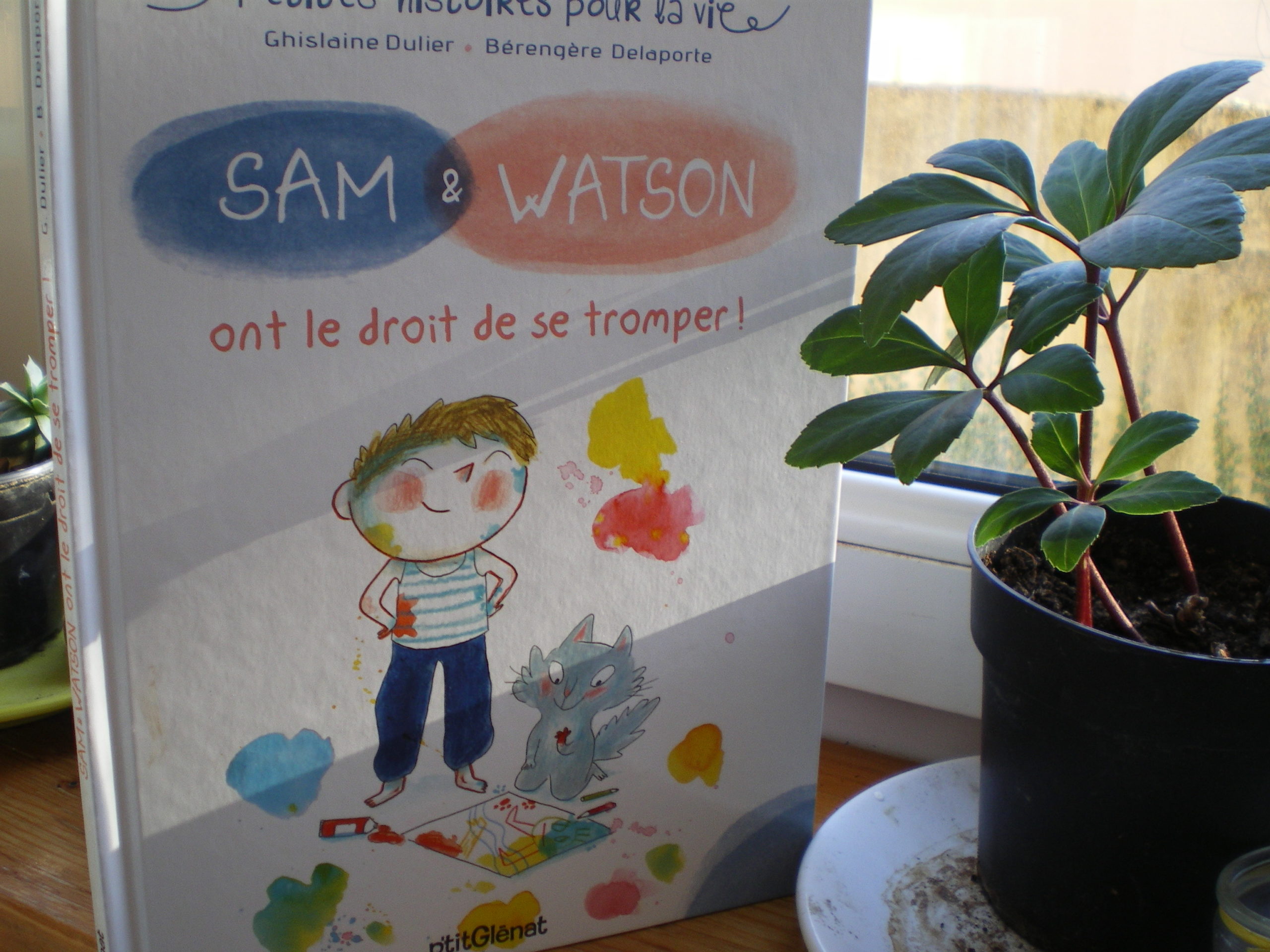
Children's books about mistakes can do something remarkable: they show a child that getting it wrong is not the end of the story. One picture book, Sam & Watson ont le droit de se tromper, follows a small boy whose carefully drawn picture is ruined in a single stroke of the pencil.
Instead of scolding him, a wise cat named Watson tells him the tale of the tarte Tatin, a dessert born from a dropped pie served upside down. From there, the whole family shares their own mishaps, and Sam learns that errors can lead to something better.

This article walks through the story, the real-life examples it uses, and simple ways to bring the same message into your home.
Quick takeaways
- Mistakes are part of learning, not a sign of failure
- Everyday family stories teach resilience better than lectures
- The tarte Tatin shows how an accident can become a success
- Invite your child to retell a mistake and what came from it
- Model your own errors and what you learned from them
- Open-ended play gives children room to experiment safely
What the Story Is Really About
Sam is drawing a picture for his mother when things go wrong. He is unhappy with the result, gets frustrated, and decides he is simply bad at drawing. He feels discouraged at the very idea of offering the gift.
That is when Watson steps in. The cat tells him the story of the tarte Tatin: a restaurant owner accidentally tipped her pie over while customers were waiting for dessert. Rather than panic, she served it upside down and called it a new recipe. The mistake became a famous dessert.
The book asks a simple question: do our errors sometimes give birth to our best ideas? With a little imagination, getting something wrong can lead to success. If you want to nurture that kind of confidence from the start, these ideas on happy childhood are a good companion.
Real Examples That Speak to Children
Excited by the story, Sam runs to tell his parents, and they respond with examples of people who got things wrong throughout history. Sailors believed they had landed on new lands that were not the ones they expected, and sticky notes were born from a failed glue recipe.
Small history meets big history when Sam's father recalls taking a wrong turn and ending up at the top of a hill, where he watched an unexpectedly magnificent sunset. Each family member then shares a mistake and what it taught them.
Sam even learns that his parents met because of a bus line his mother took by mistake. These everyday stories matter as much as famous ones, and they pair well with a calm family routine such as a healthy classroom breakfast or a relaxed weekend morning. Stories that turn Mathematics into fun can extend the same playful spirit, and outdoor toys offer another way to learn through trial and error.

| Situation | What to say | What to do next |
|---|---|---|
| Child is frustrated with a drawing | "Tell me what you don't like" | Suggest using the mess as a starting point |
| Child says "I'm bad at this" | "You're learning, not failing" | Break the task into a smaller step |
| Something spills or breaks | "Let's see what we can do" | Fix it together and name what was learned |
| A plan goes wrong | "What surprised you?" | Try a new version of the plan |
| Child compares with others | "Everyone gets it wrong sometimes" | Share one of your own mistakes |
From Ruined Drawing to New Idea
Inspired by all these stories, Sam picks up his drawing again. He changes his plan and uses the initial mess as the starting point for a new idea. In the end he loves the picture, and so does his mother.
Watson's closing message is clear: everyone has the right to be wrong, and that is how we learn. Children come away from the reading convinced that mistakes are not serious and often help us do even better afterwards.
That lesson travels well beyond drawing. Whether a child is learning to ride a bike or building with blocks, the same patience applies, much like the focus behind bricks helped one child face illness with determination.

How to Use the Book at Home
Reading the story is only the beginning. The real value comes from the conversation that follows, when you invite your child to name a mistake they made and what came out of it. Keep the tone light and curious rather than corrective.
You can also model it yourself. Share a small slip of your own, such as a wrong turn or a recipe that went sideways, and explain what you learned. Children copy what they see far more than what they hear.
Pair the reading with open-ended play where there is no single right answer, such as building, drawing, or pretend play. Choosing toys that invite experimentation, like the options in these outdoor toys or a simple set of foam block shapes, gives mistakes room to become ideas.

Why the Right to Be Wrong Matters
A child who fears mistakes stops trying. A child who sees errors as information keeps experimenting, and that mindset supports learning in reading, maths, and social situations alike. The book makes this visible without a lecture.
It also helps parents reframe their own reactions. Instead of rushing to fix or correct, you can ask what the child noticed and what they might try next. That small shift turns a frustrating moment into a shared problem to solve. Much like LEGO designers, who iterate through failed prototypes, children learn most when trial and error is welcomed.
For families navigating bigger transitions, the same gentle patience helps, whether it is the first days of baby check-ups or helping an older sibling who wants small again for a while. Consistency and warmth carry the message further than any single book.

My hands-on take
I have read this book more times than I can count, and the part that always lands is the family sharing their own slip-ups. The first time we tried it at home, my child was quiet for a moment, then offered a story about a tower of blocks that collapsed. We talked about what he built the second time, and he was genuinely proud of the result.
What I appreciate most is how little the book preaches. It simply shows a boy who feels bad, a cat who offers another way of looking at things, and a family who joins in. In practice, I now try to catch myself before saying "that's wrong" and instead ask what my child noticed. It is not always easy, especially on busy mornings, but the shift in mood is worth it.
Frequently asked questions
What age is this book suitable for?
It is a picture book aimed at young children, roughly the early primary years, and works well read aloud with a parent. Older siblings can enjoy retelling the family stories afterwards.
What is the main message of the story?
The book teaches that everyone has the right to make mistakes and that errors are how we learn. Sam discovers that a ruined drawing can become the start of a better idea.
Is the tarte Tatin story true?
The book presents it as a well-known legend about a dessert served upside down after an accident. Treat it as a charming illustration of the idea rather than a verified historical account.
How can I start this conversation with my child?
Read the book together, then ask your child to share a small mistake and what happened next. Follow up by sharing one of your own to show that getting it wrong is normal.
Product Reviews
 Best Toys for Dogs With High Prey Drive |
Best Outdoor Toys for 3-4 Year Olds |
Best Outdoor Toys for 6 Year Olds |
Best Harness for Poodle |
Best LEGO Sets for Adults |
Best Travel Toys for 4 Year Olds on Airplane |
Best Toy Stores in Washington DC |
Best Potty Training Toys |
Best Toys for Tripod Dogs |
Maillot equipe de france







