


Attachment theory stages describe how a baby gradually builds a deep emotional bond with one specific figure, usually the mother. Many articles online frame this as a problem, asking how to detach a "clingy baby" from mum, but that framing misses something fundamental about human nature.
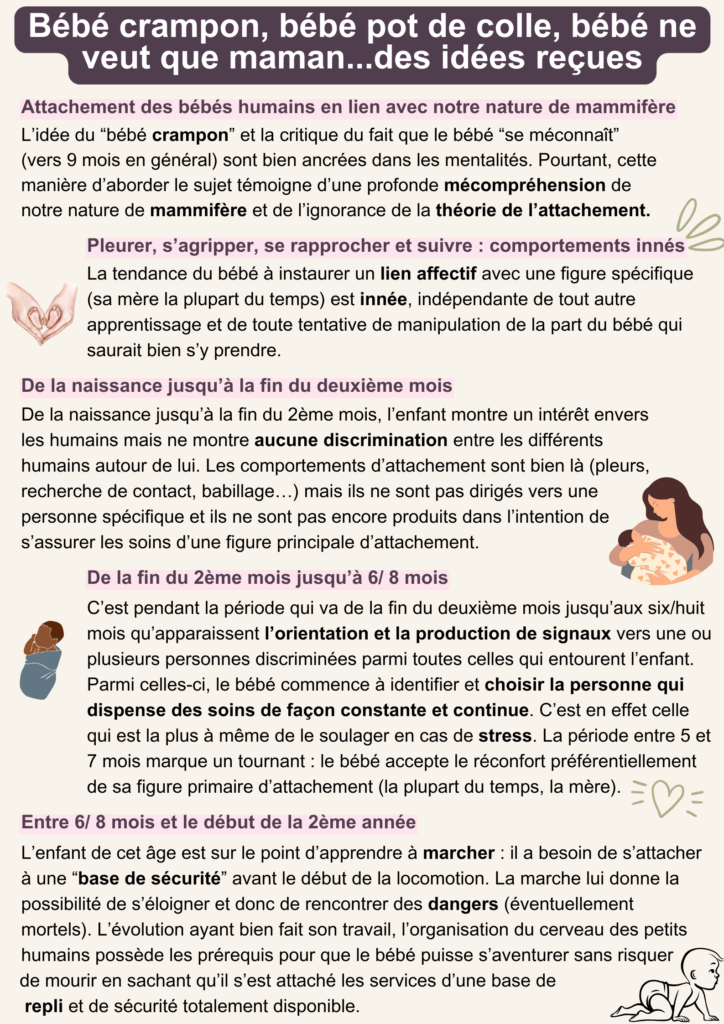
In her book on attachment and theory of mind, Grazia Attili explains that a baby's drive to form an affective tie with a specific figure is innate. It does not depend on learning, and it is not a manipulation the baby has cleverly worked out. Crying, gripping, approaching and following are inborn behaviours that keep the caregiver close, and that closeness means survival.

Quick takeaways
- Attachment to a specific figure is innate, not learned or manipulative
- Crying, clinging, approaching and following are survival behaviours
- Closeness to the caregiver is what the baby is biologically driven to seek
- Stranger wariness around nine months signals that a bond has formed
- Responding consistently builds confidence rather than dependency
- A secure base is what allows a child to explore independently
Why the "clingy baby" label misses the point
The idea of the "clingy baby" is deeply rooted in popular thinking, and so is the criticism of babies who become wary of strangers, usually around nine months. Yet this way of talking about the topic reveals a deep misunderstanding of our mammalian nature and an ignorance of attachment theory.
Attili reminds us that the tendency to form an emotional bond with a specific figure is innate and independent of any learning or manipulation. A baby who cries when separated is not being difficult; he is running an instinct that has kept human infants alive. If you have ever wondered hold crying child during these moments, the answer from attachment research is reassuring: responsiveness is not spoiling.
Understanding this shifts how we read everyday behaviour. The baby is not calculating. He is following a biological programme that treats proximity to the mother figure as the difference between safety and danger.
Innate behaviours that keep the caregiver close
Crying, clinging, approaching and following can all be considered innate behaviours in human babies. Each one is a way of maintaining or provoking the mother's closeness, which is synonymous with survival.
Attili puts it plainly: the child is motivated to keep contact with his attachment figure because that contact is precisely what allows him to survive. He therefore needs to maintain proximity to something that, for mammals and primates, carries the characteristics of the mother.
This is why a baby protests so strongly when the person he depends on moves away. The reaction is not a sign of a bad habit forming, and it is not something to train out of him. Parents who are navigating mealtimes and small daily routines alongside this intense need often find that babies candy drinks and similar questions come up, but the deeper need underneath is closeness, not indulgence. Understanding how children learn follows the same principle of responsive, patient support, and it is worth avoiding the kind of Machiavellian toys that push independence too soon.
| Stage | What you may notice | How to respond |
|---|---|---|
| Early weeks | General responsiveness, soothed by contact | Offer closeness and calm routines |
| Preference emerging | Clear favouring of one caregiver | Stay consistent and patient |
| Around nine months | Wariness of strangers, protest at separation | Reassure, avoid forcing separation |
| Growing independence | Checking back while exploring | Act as a secure base |
| Everyday moments | Bond reinforced through care | Keep interactions calm and responsive |
The stages of attachment, step by step
Attachment does not appear all at once. It develops in stages, and knowing them helps parents interpret what they see without panic. In the earliest weeks, babies respond to people in a general way and are soothed by closeness and contact, without yet showing a clear preference.
Over the following months, a preference for one specific figure emerges. The baby begins to distinguish familiar caregivers from strangers, and the behaviours described above intensify around that chosen person. This is the phase many parents find hardest, and it is also the phase where patience pays off most. Simple, predictable routines help, whether that means fresh cheese snack times or a consistent bedtime ritual.
Why the nine-month mark matters
Around nine months, wariness of strangers and strong protest at separation often become obvious. This is not regression; it is the visible sign that a specific bond has formed. From there, the baby uses his attachment figure as a secure base from which to explore, checking back before venturing further.
What parents can actually do
The practical response to all of this is simpler than the internet suggests. Rather than trying to separate a "clingy" baby from his mother, respond to his signals with consistency. A baby who learns that his calls are answered builds confidence, not dependency.
That confidence shows up later in play and independence. A child who feels secure is more willing to try things alone, whether that means tackling household chores children or simply playing in another room. The secure base is what makes exploration possible, and the perfect age matters less than the consistency you offer.
It also helps to share this understanding with the people around you. Grandparents and other caregivers sometimes read clinginess as a bad habit, so talking about it openly, in the spirit of grandparents parenting rules, keeps everyone consistent. And when you need a moment to yourself, a few well-chosen toys can support independent play without undermining the bond you are building.
Supporting the bond through everyday moments
Attachment is built in ordinary moments, not grand gestures. Feeding, bathing, nappy changes and quiet cuddles are where the bond is reinforced, day after day. Keeping those moments calm and responsive matters more than any technique.
Play is part of this too. Choosing toys that match your baby's stage, such as the options in this guide to teething toys babies, supports development while keeping the focus on interaction rather than entertainment. Reading together, singing and simply narrating your day all feed the same need for closeness.
As children grow, the attachment relationship continues to shape how they handle new situations, from learning to write to managing small frustrations. Parents who want to go deeper often find that TED Talks parenting offer accessible ways to reflect on these ideas. The goal is not a perfect technique but a reliable presence.

My hands-on take
When my own child went through the phase of crying every time I left the room, I initially read it as a habit I needed to break. I tried quick exits and distractions, and it only made things worse. What changed was understanding that the protest was communication, not manipulation.
Once I started announcing my departures calmly and coming back when I said I would, the intensity eased. It was not instant, and there were difficult days, but the shift in my own expectations made the whole period far less stressful. I stopped treating clinginess as a problem to solve and started treating it as a need to meet, and that reframing helped more than any technique I tried.
Frequently asked questions
Is a clingy baby a sign of bad parenting?
No. Clinginess reflects an innate drive to stay close to the attachment figure, which is how human infants survive. Responding to it consistently supports healthy development rather than spoiling the child.
Why does my baby suddenly fear strangers around nine months?
This is a normal stage that usually appears around nine months and shows that a specific attachment has formed. The baby can now tell familiar caregivers from unfamiliar people, and he protests when separated from the person he depends on.
Can responding too much make my baby dependent?
Attachment research suggests the opposite. A baby whose signals are reliably answered builds confidence and becomes more willing to explore independently, using the caregiver as a secure base.
Do these stages happen at exactly the same age for every baby?
The sequence is broadly similar, but timing varies from child to child. What matters most is the consistency of the caregiver's response rather than hitting a precise age.
Product Reviews
 Best Toys for Dogs With High Prey Drive |
Best Outdoor Toys for 3-4 Year Olds |
Best Outdoor Toys for 6 Year Olds |
Best Harness for Poodle |
Best LEGO Sets for Adults |
Best Travel Toys for 4 Year Olds on Airplane |
Best Toy Stores in Washington DC |
Best Potty Training Toys |
Best Toys for Tripod Dogs |
Maillot equipe de france







