


Communication habits in parenting shape the quality of the bond between you and your child. Some habits build strong family ties, while others raise walls instead of bridges.
This article looks at which habits to avoid and which to favour, based on the approach of Danish family therapist Jesper Juul and his book on the five pillars of a fulfilling family life. The core idea is simple: speak honestly, speak personally, and treat children as whole human beings.

None of these changes are dramatic. They are small wording swaps that gradually become natural.
Quick takeaways
- Share real emotions in personal language: "I am tired," not "You exhaust me."
- Treat children as whole people and respect their body and emotions.
- State your position clearly instead of hinting or manipulating.
- Use direct invitations that genuinely allow a refusal.
- Replace automatic phrases with encouraging, specific words.
- Expect new wording to feel odd before it feels natural.
Say what you feel, honestly and personally
Many parents believe they cannot share sincere, deep emotions with their children. If you are tired of playing, you hold back, put pressure on yourself, swallow your irritation, and quietly build resentment. Over time, that creates inauthentic relationships.
Juul advises always sharing your emotions, even unpleasant ones, in authentic language that reflects the real feeling and its real intensity. Keep it personal: say "I am tired" or "I have had enough" rather than "You exhaust me" or "You are driving me crazy." The first describes you; the second blames the child.
This honesty is not an excuse to vent. It is a way to stay genuine without making the child responsible for your mood. If you are juggling work and family, the same principle helps when you need support, as with virtual babysitters during busy teleworking days.
Take children seriously as whole people
It is essential to take children seriously as full human beings, respecting their physical integrity (their body) and their moral integrity (emotions, imagination). That means not talking to them in a pseudo-teaching way, but addressing them as concretely and realistically as possible.
An adult should always state their position clearly and without ambiguity. Vague hints and half-sentences leave children guessing, and guessing is exhausting. Clear speech respects their intelligence and avoids the quiet misunderstandings that turn into conflict.
This respect also shows up in how we answer their curiosity. When a child asks where a grandmother fits in the family tree, a plain and honest reply is far better than a vague one, much like the clarity explored in family relationships explained simply.
| Habit to avoid | Why it creates walls | Try instead |
|---|---|---|
| Swallowing irritation | Builds resentment and inauthenticity | "I have had enough of playing right now." |
| "You exhaust me" | Blames the child for your mood | "I am tired and need a quiet moment." |
| "Does anyone want to do something?" | Vague, leaves children guessing | "I want to walk in the forest. Who is coming?" |
| Pseudo-teaching tone | Feels condescending | Concrete, realistic, plain speech |
| Hinting at a hidden expectation | Invites mind-reading and pressure | A clear invitation that accepts refusal |
Replace vague questions with clear invitations
Juul suggests avoiding vague formulations such as "Does anyone feel like doing something?" Instead, use direct, precise wording with no hidden meaning and no attempt at manipulation. Say what you want, and let the child answer freely.
A good example: "It is Sunday and I would like to go for a walk in the forest this afternoon. Who wants to come with me?" This is an invitation that accepts a refusal. The child is not cornered; they are genuinely asked.
The same clarity helps in planning shared activities. If you are choosing an outing, clear preferences make decisions easier, whether you are picking among hiking routes or planning a simple weekend walk.
Why precise wording works
Precise wording removes the pressure to read your mind. Children respond better to a real choice than to a question that hides an expectation.
Swap common phrases for encouraging words
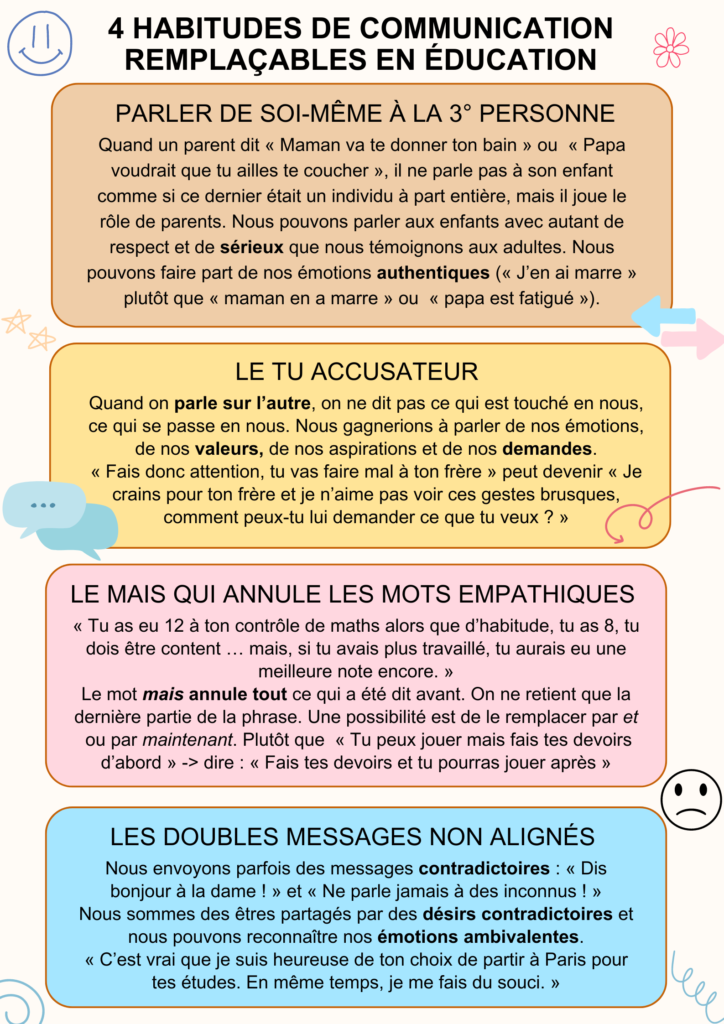
Certain everyday phrases slip out automatically. A visual reminder of common communication habits to avoid, paired with suggestions for finding just, encouraging and personal words, can help you notice them. Print it and keep it somewhere visible.
Instead of a flat "That is wrong," try describing what you see and what you need. Instead of "You are always like this," name the specific moment. The goal is not perfect speech but words that stay respectful and personal.
These new ways of speaking feel unusual at first, then gradually become natural. The same gradual shift applies to bigger conversations, such as knowing when a child is ready to discuss sensitive topics, as explored in talking about sex.

Keep the tone calm when topics get difficult
Some subjects make everyone tense. Scary stories, news, or a frightening trailer can leave a child anxious, and how you talk about it matters more than the content itself. A calm, honest explanation respects their emotions instead of dismissing them.
If a trailer scares your child, as with scary television trailers, name the fear and stay close. If a topic divides parents, such as screen time or discipline, discussing it calmly models the communication you want at home, much like the debates in controversial parenting issues.
And when children ask odd questions, like whether more babies are born on a full moon, answer with curiosity rather than dismissal, following the spirit of full moon births.
Make the change gradually and kindly
You will not rewire years of habit in a week. Pick one habit, practise the replacement wording, and notice how your child responds. Small shifts in tone often change the whole atmosphere of a conversation.
Be as kind to yourself as you are to your child. When you slip back into an old phrase, name it honestly and try again. That repair is itself a lesson in authentic communication.
Reading about parenting ideas helps, but the practice happens in daily moments, the same way children build skills through play with imaginative play toys and everyday conversation.

My hands-on take
When I first tried replacing "You are driving me crazy" with "I am worn out and need five minutes," I felt awkward saying it out loud. My child just looked at me, nodded, and went to play. Nothing dramatic happened, and that was the point.
What surprised me most was the invitations. I used to ask vague questions and then feel annoyed when nobody answered the way I hoped. Now I say what I actually want and let the answer be a real one. Sometimes the answer is no, and I have learned to be fine with that. The house feels calmer, and I argue less with myself about whether I am being honest.
Frequently asked questions
Is it really okay to tell my child I am tired of playing?
Yes. Juul advises sharing even unpleasant emotions in authentic, personal language. Saying "I have had enough" describes your feeling without blaming the child, which keeps the relationship honest.
What makes a vague question like "Does anyone want to do something?" a problem?
It leaves children guessing what you actually want and hides an expectation. A direct, precise invitation states your wish clearly and genuinely allows the child to refuse.
How long does it take for new wording to feel natural?
These new ways of speaking seem unusual at first, then gradually become natural with repetition. Pick one habit at a time rather than changing everything at once.
Does clear, honest speech spoil children?
No. Respecting a child's body, emotions and imagination while stating your position clearly treats them as a full person. It builds trust rather than walls.
Product Reviews
 Best Toys for Dogs With High Prey Drive |
Best Outdoor Toys for 3-4 Year Olds |
Best Outdoor Toys for 6 Year Olds |
Best Harness for Poodle |
Best LEGO Sets for Adults |
Best Travel Toys for 4 Year Olds on Airplane |
Best Toy Stores in Washington DC |
Best Potty Training Toys |
Best Toys for Tripod Dogs |
Maillot equipe de france







