


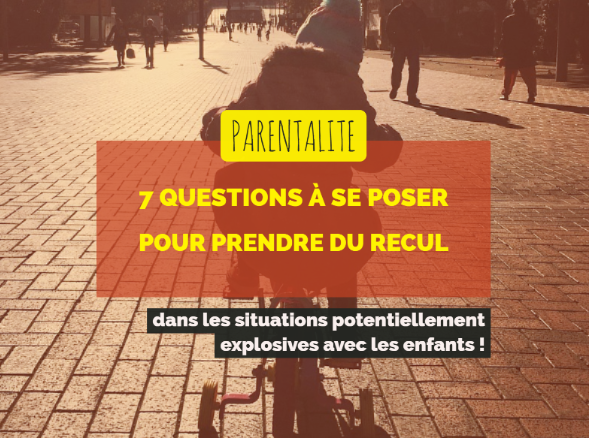
Staying calm with kids starts with a simple habit: asking yourself the right questions before you react. When a child's behaviour pushes you toward rage, pausing to reflect shows a real desire to answer that particular child as an individual rather than firing off an automatic response.
Every relationship is a unique creation, and no two explosive moments are quite the same. The seven questions below help you slow down, look at the situation through the child's eyes, and choose a response you can stand behind.

Quick takeaways
- Ask what the child is feeling before judging the behaviour.
- Look for the emotion and the need behind a tantrum.
- Remember that your words become your child's inner voice.
- Check whether habit or convention is dictating your yes or no.
- Name your own needs and cooperate rather than compete.
- Set clear limits calmly, then repair after conflict.
What is the child actually living through?
A small child is caught in the immediacy of their emotional response, without the thinking that lets an adult put things in perspective or rank what matters. When their reactions seem incomprehensible, it pays to listen and to work out what they are associating, interpreting, feeling and thinking.
Get down to their height, look with their eyes and hear with their ears. Taking children and their emotions seriously means asking: what is happening, what is making them sad, what are they afraid of? A tired toddler and a hungry preschooler often look angry when they are simply overwhelmed.
Look before you judge
Before labelling the behaviour, gather the facts of the moment: sleep, hunger, noise, transitions, an unfamiliar place. These small details explain far more than a label ever will.
What is the child saying behind what you see and hear?
Behind what parents call a tantrum, behind odd, out-of-place, excessive or simply unusual behaviour, look for the emotion and look for the need. The child is saying something. Children always have a good reason to act as they do: they act as best they can with the skills and the environment they have.
Any behaviour that seems disproportionate and systematic, whether aggression or extreme passivity, intense attention-seeking or constant opposition, has a motivation and an explanation. Children do not always use words; they send messages through cries, tears, inappropriate reactions, refusal to cooperate or physical symptoms, and sometimes even through hiccups in babies or other physical signs.
If you notice recurring patterns around bedtime, a look at bedtime songs routine can help you spot whether exhaustion is driving the behaviour rather than defiance. Likewise, psychomotor skills games can reveal whether unmet movement needs are fuelling the frustration.
| Question | What to notice | Calm response |
|---|---|---|
| What is the child living through? | Tiredness, hunger, fear | Lower your voice, get to their height |
| What is the message behind it? | Emotion and unmet need | Name the feeling out loud |
| What am I transmitting? | Tone and words | Choose a message of love |
| What dictates my attitude? | Habit, convention, instinct | Pause and justify your choice |
| Whose needs are in conflict? | Yours and theirs | Use "I" messages, seek solutions |
| How do I hold the limit? | The rule and the feeling | State the limit briefly, reconnect |
What message do I want to pass on?
At each of our reactions we choose between messages of love ("I love you, you are capable") and destructive messages ("You are worthless"). Children listen and watch: each act and each word, toward them and toward others, sends a message. The way we speak to children becomes their inner voice.
So ask yourself whether you embody what you want to transmit. Do you respect the law? Do you know how to feel indignant at injustice? How much joy do you show day to day? What message do you send about work, effort, freedom, respect for people, things and the environment, personal fulfilment and love?
Kids absorb these lessons through daily routines too, from gross motor development play to how you handle a scraped knee — see childhood illness signs for staying steady when worry spikes.
Why am I saying this, and what is dictating my attitude?
What pushes you to say yes or no to your children's requests? What dictates your attitude? The automatic character of our assertions can alert us that the unconscious, rather than the conscious mind, is in charge.
Ask whether social conventions guide your choices, and whether you agree with them or can accept detaching yourself. Ask whether instinct alone dictates the decision, and whether you could justify it with reasoning based on reliable information.
Pause on the automatic yes and no
A quick "no" that surprises even you is worth revisiting later. Naming what drove it turns a reflex into a choice.

Are my needs competing with my child's?
If we do not recognise our own needs, frustrated of essentials for our own development, we will struggle to give children what they need. Listening to and acknowledging your own needs, and finding ways to meet them as far as possible, is part of the parental job.
When needs conflict, competition is not the only option. Cooperation is always more effective in the long term, and it requires each person to express their needs authentically with mutual respect. Recognise their needs and assert your own.
Using "I" messages and searching for solutions together reconciles everyone's needs in a family and helps avoid exploding with rage. Practical supports help here: avoiding parental blackmail and toxic parenting models both show what to steer away from.
How do I set limits without exploding?
To live happily together, we contain children's overflow within limits that we explain and hold. Limits are not punishment; they are the frame that makes a shared life possible, and they work best when stated calmly and consistently.
Prepare the ground with routines that reduce friction. A predictable wind-down, a clear visual schedule, and calm transitions cut down the number of flashpoints in a day. When a limit is crossed, name the behaviour, name the feeling, and restate the rule in one short sentence.
Keep the repair in mind too. Every parent loses their temper sometimes; coming back afterward to reconnect teaches children that relationships survive conflict. For families juggling several children at once, sleep for twins and calm before holidays offer realistic ways to lower the daily pressure. Safety gear is another area where clear limits help, so it pays to know the child water safety elements before you need them.

My hands-on take
I have used these questions most often at the end of the day, when everyone is tired and small things blow up fast. What helped me most was the second question: looking for the need behind the behaviour. More than once, what looked like defiance turned out to be hunger or simple exhaustion, and once I named it, the tension dropped.
The other habit I lean on is the "I" message. Saying "I need five quiet minutes" instead of "stop bothering me" changed the tone in our house. I still lose my temper sometimes, but I now come back afterward and reconnect, which I have found matters more than getting it right every time.
Frequently asked questions
What should I do first when my child's behaviour makes me furious?
Pause and ask what the child is living through before reacting. Getting to their eye level and naming the feeling often defuses the moment faster than a reprimand.
Is a tantrum always manipulation?
No. Children act as best they can with the skills they have, so a tantrum usually signals an emotion or a need rather than a plan to upset you.
How do I handle my own needs without feeling selfish?
Recognising your needs is part of parenting, not a luxury. When needs conflict, expressing them honestly and looking for solutions together works better than competing.
How do I set a limit without shouting?
Keep the rule short, name the feeling, and hold the limit calmly and consistently. Repair the connection afterward if you did lose your temper.
Product Reviews
 Best Toys for Dogs With High Prey Drive |
Best Outdoor Toys for 3-4 Year Olds |
Best Outdoor Toys for 6 Year Olds |
Best Harness for Poodle |
Best LEGO Sets for Adults |
Best Travel Toys for 4 Year Olds on Airplane |
Best Toy Stores in Washington DC |
Best Potty Training Toys |
Best Toys for Tripod Dogs |
Maillot equipe de france







