


Raising obedient children feels like the obvious goal of parenting, yet it is a project that quietly works against the relationship you actually want. When obedience becomes the measure of success, the child's needs fade behind the adult's need for control.
This article looks at five traps that keep us stuck in the obedience myth: our own childhood history, the way we talk, the beliefs we never question, the power games we fall into, and the gap between what we know and how we act. Each one is a chance to look differently at the child and at yourself.

Quick takeaways
- Obedience as a goal puts control ahead of the relationship.
- Unresolved childhood emotions resurface most under stress and fatigue.
- Fixed phrases label the child instead of describing the behavior.
- Beliefs about "bad children" justify power games and punishment.
- Educating means finding the need behind the behavior.
- Cooperation grows from connection, clear limits and shared rules.
Your own history shapes how you see your child
Childhood experiences keep working long after childhood ends, and they leave marks on the way you relate to your own child. The emotional stakes are high, so unresolved feelings can be reactivated in this relationship and cause harm without anyone intending it. Children have a quiet talent for waking up unfinished situations from the past.
Buried emotions, unmet needs and old refusals can resurface on contact with a child. That is why excessive reactions, rigid demands for obedience, bursts of authoritarianism or harshness are often fuelled by emotions that were never heard. These reactions grow sharper when you are stressed or tired, and looking at your own wounds feels risky because it seems to question your parents.
Two ways to move past it
In moments when you feel out of control, stop and turn toward your own history. Notice the hurting inner child, feel the unpleasant sensations in your body, breathe, and offer that child empathy before returning to your own child with the same empathy. A real inner process also helps, whether through therapy, an honest talk with a kind friend, art or writing. Slow, cozy moments together, like choosing fun pajamas, can also create space for calm connection.

The communication habits that trigger resistance
Everyone has typical ways of answering children, a kind of parental answering machine. It runs on fixed phrases: stop complaining, do it now, you will regret that, you should know better, look at your cousin, you are always like this, you deserve a punishment. These lines close the conversation instead of opening it.
Most of them label the child rather than describe the behavior, and that is exactly what invites resistance. There are ways to communicate that sidestep these habits, and learning to communicate effectively takes practice rather than perfection. If your child struggles to put feelings into words, it may be worth asking whether the child needs a speech therapist.
It also helps to remember that children hear tone before content. A short pause before answering often changes the whole exchange, and small hormone shifts during growth phases can make the same words land very differently from one week to the next. The same principle applies to daily routines like choosing school shoes, where calm guidance works better than pressure.

| Situation | Obedience reflex | Conscious alternative |
|---|---|---|
| Child refuses to get dressed | Countdown with a threat | Name the need, offer two choices |
| Child complains loudly | "Stop complaining" | "Something is bothering you" |
| Child hits a sibling | Punishment and shame | Separate, then repair together |
| Child fails a test | "What if you fail again?" | "What felt hard about it?" |
| Parent loses control | Push harder | Pause, breathe, tend the inner child |
The beliefs that make obedience feel mandatory
A belief is an intellectual attitude that holds a statement as true without needing objective proof. Many educational beliefs in Western societies convince us that children must obey at any cost. That belief feeds power games, such as counting to three with a threat attached, which quietly tells the child that the stronger person's needs matter more.
If children are seen as bad, then adults are cast as the ones who must straighten them out by any means. But educating means looking for the need behind an inappropriate behavior and responding to it. It also means setting rules together, reminding children those rules exist without calling them bad, and letting the rules evolve as children gain experience.
Neuroscience has shown that hitting a child teaches hitting, teaches the child not to love themselves, and teaches acting out of fear of punishment instead of responsibility. It is worth asking whether a hard day is really about defiance or simply about a child who is not bad, just learning.
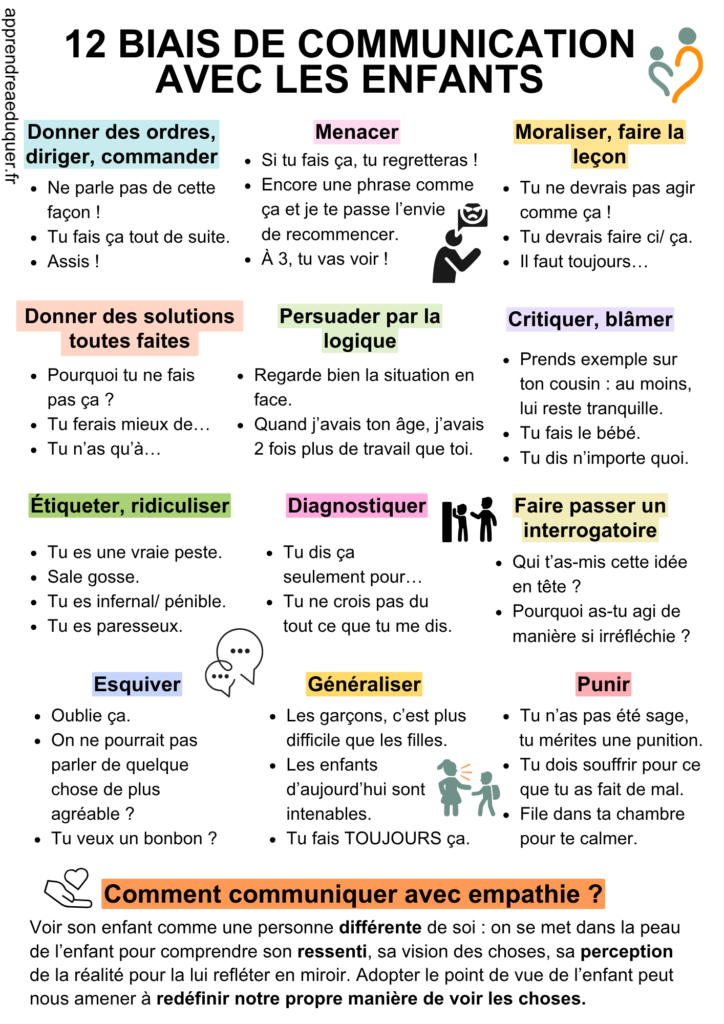
Power struggles and punishment do not build cooperation
Threats, countdowns and shaming produce short-term compliance and long-term distance. The child learns to calculate risk rather than to understand the effect of their actions on others. Cooperation grows instead from connection, clear limits and a genuine interest in what the behavior is communicating.
That shift is easier when daily life leaves room for movement and play, since regulation often starts in the body. Open-ended play and psychomotor skills activities give children an outlet that no lecture can replace, and simple toys for 18 month olds support the same principle for younger siblings.
Family rhythm matters too. Shared meals, unhurried mornings and predictable routines reduce the moments where obedience is demanded simply because everyone is rushed.

Looking at the child, and at yourself, differently
Opening your heart to the child as they are, and to your own inner child, is a path rather than a destination. It is a path strewn with obstacles that have to be overcome one at a time if the myth of the obedient child is to be left behind. Each obstacle is also an invitation to grow.
This is slow, unglamorous work, and it rarely looks like progress on any given day. Yet over time the household shifts from battles over compliance to conversations about needs. If you want more support, these phrases your mother used are a good place to notice what you repeat without thinking.

My hands-on take
I noticed my own obedience reflex most clearly during the morning rush. My child would stall over shoes, and I would hear my father's countdown coming out of my mouth before I had decided to say anything. What helped was not a new technique but a pause: I started naming what I felt in my chest, taking one slow breath, and then offering two choices instead of a threat.
Some mornings it still fails. But the shift from "do it now" to "which shoes today" changed the temperature of the whole house, and my child began negotiating instead of freezing. That felt like the real goal all along.
Frequently asked questions
Does this mean children should have no rules?
No. Limits are essential; the difference is how they are set and enforced. Rules built together and reminded calmly teach responsibility rather than fear.
Why do I react so strongly to my child's behavior?
Strong reactions often point to unfinished situations from your own childhood. Stress and fatigue make those reactions sharper, so noticing them is the first step.
How do I start changing my communication?
Begin with one or two phrases you use most, such as "you always" or "you should". Replace them with a description of what you see and a question about what the child needs.
Is it too late if my child is already older?
It is never too late to change the tone of a relationship. Children respond to genuine shifts in adult behavior, even after years of power struggles.
Product Reviews
 Best Toys for Dogs With High Prey Drive |
Best Outdoor Toys for 3-4 Year Olds |
Best Outdoor Toys for 6 Year Olds |
Best Harness for Poodle |
Best LEGO Sets for Adults |
Best Travel Toys for 4 Year Olds on Airplane |
Best Toy Stores in Washington DC |
Best Potty Training Toys |
Best Toys for Tripod Dogs |
Maillot equipe de france







