


Screen addiction is a phrase parents hear constantly, yet international health bodies do not recognize it as a diagnosis. What doctors and researchers describe instead is a range of problematic uses, and the difference matters when you are trying to decide how worried to be about your teenager.
This article walks through what is officially recognized, what is still debated, and why the teenage years deserve a more patient reading than a simple label allows.

Quick takeaways
- No international body recognizes "screen addiction" as a diagnosis.
- The WHO does recognize gaming disorder, listed in ICD-11 since 2019.
- Addiction requires withdrawal symptoms and relapse risk; screens rarely meet both.
- Heavy teen use often fades between ages 11-12 and 15-16 as the brain matures.
- Correlation between screens and poor mental health does not prove causation.
- Watch for withdrawal from friends and school, not hours logged.
Problematic use, not screen addiction
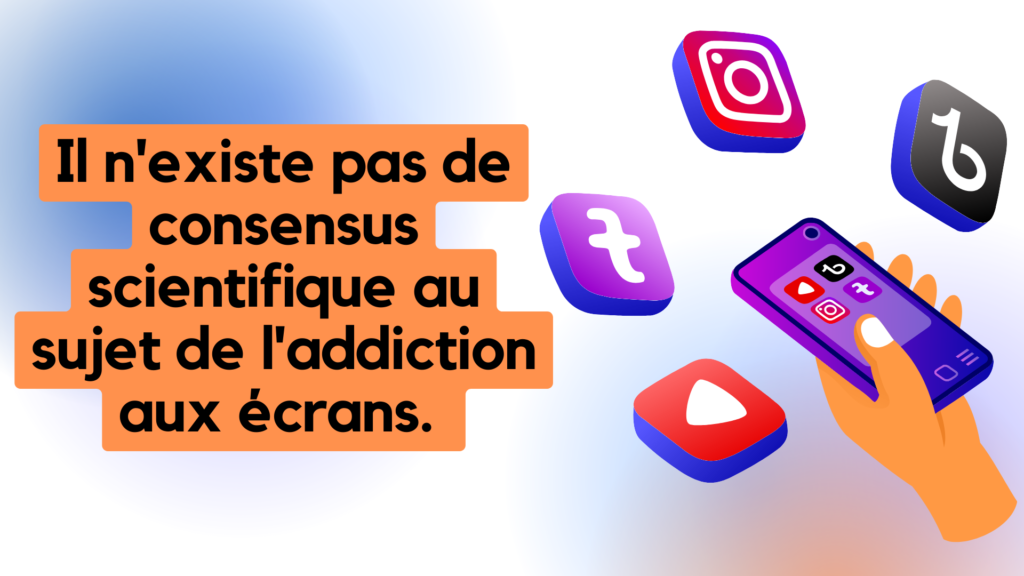
In her book on teenagers and social media, education journalist Béatrice Kammerer relays the position of psychiatrist Serge Tisseron: no international body recognizes an addiction to screens or to social networks as such. Only gaming is acknowledged by the World Health Organization, and even then it is a behavioral addiction, quite different from dependence on a toxic substance.
An addiction, strictly defined, rests on two pillars. The first is a withdrawal syndrome, where stopping the product abruptly produces uncomfortable or even dangerous physical symptoms. The second is a risk of relapse that can only be prevented by total abstinence from the substance involved.
Tisseron argues that neither criterion holds for ordinary screen use. This does not deny that screens can disrupt someone's life to the point of psychological dependence. It simply means physicians prefer terms like "behavioral problems" or "problematic use." If you are juggling several parenting worries at once, from relationship strain to daily routines, keeping language precise helps you target the right issue.
Gaming disorder is a real diagnosis
One digital trouble is formally recognized: gaming disorder, listed in the International Classification of Diseases (ICD-11) since 2019. A diagnosis involves several symptoms together, including intensive use of online games and marked social withdrawal observed over more than twelve months.
For Tisseron, the practical test is simpler. If the teenager has friends and attends school without difficulty, the question of a disorder does not really arise. The gaming itself is not the signal; the collapse of other areas of life is.
What parents can watch for
Rather than counting hours, notice whether friendships, sleep, schoolwork and family meals are still holding. A young person who games heavily but keeps those anchors intact is in a different situation from one who has withdrawn from all of them. The same measured approach applies to younger children and the toys you choose, as with these tummy time toys for babies, where fit matters more than quantity. For broader perspective, these parenting TED Talks and movies about motherhood can help parents reflect on their own expectations.
| What you observe | Ordinary phase | Worth professional advice |
|---|---|---|
| Friendships | Maintained | Withdrawn, isolated |
| School | Attended normally | Declining, avoided |
| Sleep and meals | Mostly intact | Disrupted regularly |
| Mood when offline | Mild frustration | Distress, panic |
| Duration | A few years in teens | Persists beyond adolescence |
Social media: where is the threshold?
Several researchers have tried to establish a cutoff point for "problematic social media use." Their criteria are multidimensional: thinking constantly about the next connection, feeling bad when unable to log on, neglecting other activities such as homework, and social media becoming a source of family conflict.
Kammerer notes that these attempts have so far been unsuccessful, because one question remains open. The listed symptoms could be a direct effect of the platforms, or they could reveal pre-existing personal difficulties or conditions, whether neurodevelopmental or psychiatric, such as depression, bipolar disorder or schizophrenia.
That ambiguity is why a single number of hours tells you very little. Context, timing and what the screen time replaces all matter more than the raw count. Parents who enjoy simple shared activities, like the hormone game or a board game evening, often find conversation opens more easily than during a confrontation about the phone.
Why the teenage brain amplifies everything
Tisseron offers a reassuring physiological explanation. These excesses generally fade on their own as adolescence gives way to adulthood. The teenage brain is characterized by a mismatch in maturation: it is hypersensitive to rewards and to peer expectations, yet does not yet have the means to regulate desires and impulses.
That is why a passionate immersion in video games or social networks typically lasts three or four years, roughly between ages eleven or twelve and fifteen or sixteen, unless an underlying psychiatric condition is present. In other words, the intensity is often developmental rather than pathological.
Knowing this changes how you respond. A parent who understands the phase can set boundaries without treating normal enthusiasm as a disease, and can save real concern for the cases where withdrawal and distress persist. For younger siblings, the same principle of matching the activity to the child's stage applies to toys for tummy time and to toys for 1 year old alike.

Autism and screens: correlation is not causation
Franck Ramus, a cognitive scientist and research director at the CNRS, shared a recent study suggesting that being autistic increases time spent with screens. In this reading, the higher-than-average exposure of some autistic children is a consequence of their neurodevelopmental profile, not its cause.
The study, based on genetic analyses of predisposition to such conditions, seems to indicate that screens do not cause autism, but that genetic predispositions to autism raise the likelihood of growing screen exposure. Ramus remains cautious: the findings deserve confirmation by later work before being treated as settled.
The lesson generalizes. When two things rise together, the arrow of cause can point either way, or both ways at once. That habit of asking which direction the causality runs is worth keeping whenever you read a alarming headline about children and technology.
Mental health and screens: an open question
Since 2010, there has been a correlation between the spread of screens and a deterioration in adolescent mental health. Here too, the question is whether this reflects causation or a reverse causality: did mental health decline, driven by external factors, lead to heavier screen use?
Researchers have not settled the matter. The mental health difficulties of teenagers and students are real, including depression and anxiety disorders, and they were worsened by lockdowns. But that reality should not be instrumentalized to designate a single culprit, at the risk of forgetting environmental factors.
A fair reading holds both truths: some young people genuinely struggle, and the causes are multiple. Support, sleep, family connection and, where needed, professional help matter more than a scapegoat. Even everyday purchases deserve that same skepticism, whether you are comparing classroom prize toys or reading up on hydroalcoholic gel safety, and the same care applies to newborn health topics such as newborn jaundice risks.

My hands-on take
I went through a phase of counting my teenager's screen hours and logging them in a notebook, convinced the number itself was the problem. It made every evening a negotiation and taught me almost nothing. What actually changed things was paying attention to what disappeared first: the Friday football, then the family dinners, then the friends he used to call.
Once I started asking about those instead of the clock, the conversations got shorter but more honest. I still set limits, and I still worry, but I try to treat the intensity as a stage to be guided rather than a disease to be diagnosed. That shift helped me stay calm enough to notice when something genuinely seemed wrong.
Frequently asked questions
Is screen addiction a real diagnosis?
Not according to international health bodies. They recognize gaming disorder, but not addiction to screens or social networks in general. Doctors prefer the terms problematic use or behavioral problems.
How long does intense teen screen use usually last?
Psychiatrist Serge Tisseron describes a phase of roughly three or four years, typically between ages eleven or twelve and fifteen or sixteen. It generally fades as the adolescent brain matures, unless an underlying condition is present.
Do screens cause autism?
Current research suggests the opposite direction. Genetic predisposition to autism appears to increase screen exposure, rather than screens causing autism. Researchers stress these findings need replication.
When should I worry about my teenager?
Look at what is being displaced. If friendships, school attendance, sleep and family life are holding, the situation differs from one involving sustained social withdrawal over many months.
Product Reviews
 Best Toys for Dogs With High Prey Drive |
Best Outdoor Toys for 3-4 Year Olds |
Best Outdoor Toys for 6 Year Olds |
Best Harness for Poodle |
Best LEGO Sets for Adults |
Best Travel Toys for 4 Year Olds on Airplane |
Best Toy Stores in Washington DC |
Best Potty Training Toys |
Best Toys for Tripod Dogs |
Maillot equipe de france







