


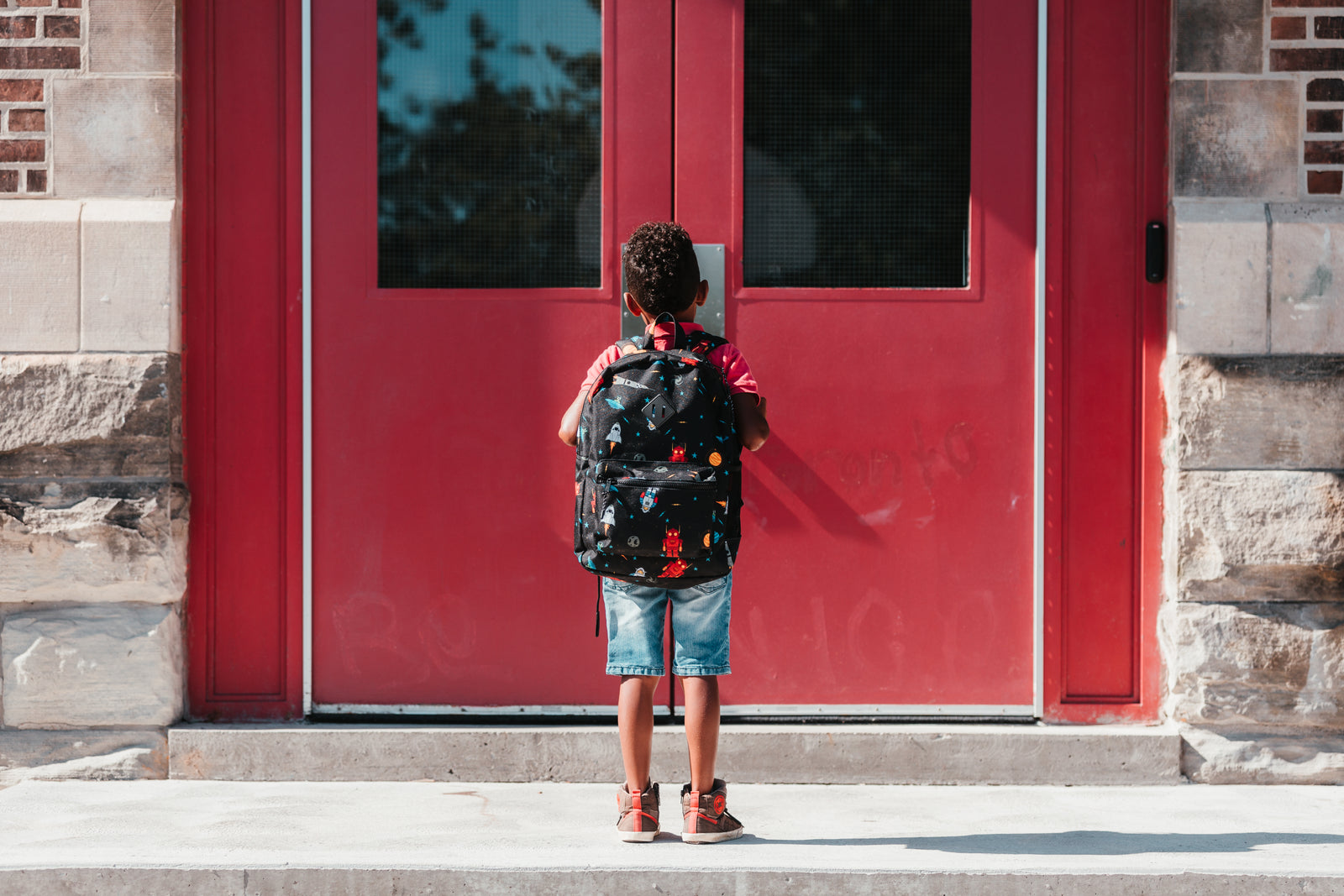
Reconnection time after school is one of the simplest yet most overlooked parts of a child's day. After hours spent sitting, following instructions and holding emotions in, children come home carrying both physical and emotional tension that needs somewhere to go.
Whether your child is in nursery or primary school, the school day rarely respects their basic needs: freedom of movement, drinking when thirsty, using the toilet on demand, or simply being close to their parents. The result is a child who is often tired, overstimulated and not yet ready to sit down again for homework.

This article explains how to build in a daily decompression break, why free play matters, and how small slow rituals can refill everyone's emotional tank.
Quick takeaways
- A daily decompression break after school helps children release physical and emotional tension.
- Free play supports creativity and concentration, and makes homework easier to start.
- Some children need solitude rather than activity; a cosy corner can serve as a consented retreat.
- A short shared ritual each evening refills the emotional reservoir of both parent and child.
- Slow family time counteracts the pace of modern life and protects family bonds.
- Keep the early evening free of screens and errands so the break can actually happen.
Why Children Need to Unwind After School
The school day asks a lot of children. In nursery, young children are often placed in conditions that don't fully respect their basic needs, from limited movement to separation from their parents. In primary school, days are still poorly suited to what children actually need, and they spend a great deal of time sitting still.
That's why a daily decompression break matters so much. As soon as the weather allows, plan a relaxed moment with no particular constraints so your child can release both emotional and physical tension, whether at the local square, in the garden or at the park. If you're looking for ways to make outdoor time more engaging, these outdoor toys can help children move freely and burn off energy.
Movement Is Not a Luxury
Free movement isn't a reward for good behaviour; it's a basic need. Giving children space to run, climb and shout after school is one of the fastest ways to help them settle later in the evening.
The Power of an Hour of Free Play
Ideally, an hour of relaxation and free play each evening lets schoolchildren discharge their tension and supports their creativity and concentration. This pause also makes it easier for children to focus when homework time comes around.
Free play doesn't need equipment or a plan. It can be running around outside, building something with whatever is to hand, or simply pottering about. If your child enjoys quieter indoor play, a simple board game or a family challenge works just as well; these family escape rooms are a fun option for older children who like puzzles.
The key is that the child chooses the activity, not the adult. That sense of control is part of what makes the break restorative.

| Child's need | Best break type | What it looks like |
|---|---|---|
| Lots of energy to burn | Outdoor free play | Park, garden or square with no fixed plan |
| Overstimulated by noise | Quiet solo time | Cosy corner with cushions, books, soft toys |
| Craves closeness | Shared slow ritual | Story, board game or craft together |
| Restless indoors | Active indoor play | Building, puzzles or a family game |
| Several siblings | Separate spaces | One in the living room, one in the bedroom |
Quiet Corners for Children Who Need Solitude
Not every child decompresses by running around. If a child likes being alone, the break can take the form of a consented withdrawal: the child lowers their level of excitement and stimulation after a day in the community.
For families with several children who don't have their own bedrooms, it helps to suggest playing separately, for example one in the living room and one in the bedroom. Small spaces can be set up around the house to allow this retreat: a cosy corner with cushions, soft toys, books and blankets.
Setting Up a Calm Space
You don't need a whole room. A beanbag by a window, a blanket draped over a chair, or a basket of books in a quiet corner can be enough. Pair it with a few airplane toys or similar quiet items for younger children who need something to hold while they settle.
Daily Reconnection Rituals for Parents and Children
A reconnection moment can be offered every evening after the school day. Reconnecting means living a special moment together, short or long, through shared and pleasant activities in a slow-life spirit: a story read aloud, a board game, a craft, an artistic project.
The goal is to spend quality time as a family to fill each person's emotional reservoir. Even ten minutes of undivided attention can shift the mood of an entire evening. If you have a baby in the house too, these newborn tips can help you protect those small windows of connection.
These slow pauses and reconnection times act as a remedy for modern, separating lifestyles that nibble away at our family bonds. They don't require money or planning, just a little protected time.

Making Room for Slow Time in a Busy Week
Slow time doesn't happen by accident; it has to be protected. Try to keep the first part of the evening free of screens and errands so the decompression break can actually take place. If your child tends to zone out in front of the television, this piece on eating with TV is a useful reminder of how habits form.
It also helps to think about the whole family rhythm. Crafts are a lovely shared activity, and these crafts Instagram accounts offer plenty of simple ideas you can prepare in advance. And if you're expecting another child, reading up on pregnancy cravings or even baby shower themes can be a gentle way to keep family life feeling celebratory rather than rushed.
The point isn't perfection. It's consistency: a little space each day where nobody is being hurried.
My hands-on take
In our house, the first twenty minutes after school used to be the hardest part of the day. Everyone was tired, nobody wanted to talk, and any request about homework turned into a negotiation. What changed things was simply going to the park on the way home, weather permitting, and letting the children lead.
I stopped asking questions in the car and started saving them for later, once they'd run around and had a snack. By the time we got home, the mood had usually shifted and homework felt far less like a battle. On rainy days we use a cushion corner in the living room and a stack of books, and honestly that works nearly as well. It isn't a system or a method, just a small daily pause we try to protect.
Frequently asked questions
How long should the after-school break be?
Around an hour of free play is a good target when possible, but a shorter, genuinely unstructured pause still helps. What matters most is that the child chooses what to do and isn't being hurried.
What if my child refuses to play and just wants to sit?
That can be a form of consented withdrawal, and it's worth respecting. Offer a quiet corner with books or cushions and let them come back to you when they're ready.
Does this break replace homework time?
No, it comes before it. The pause helps children settle and concentrate, which usually makes homework smoother rather than later.
Do we need special toys or equipment?
Not at all. Outdoor space, everyday objects, a book or a board game are enough. The value is in the freedom and the shared time, not the equipment.
Product Reviews
 Best Toys for Dogs With High Prey Drive |
Best Outdoor Toys for 3-4 Year Olds |
Best Outdoor Toys for 6 Year Olds |
Best Harness for Poodle |
Best LEGO Sets for Adults |
Best Travel Toys for 4 Year Olds on Airplane |
Best Toy Stores in Washington DC |
Best Potty Training Toys |
Best Toys for Tripod Dogs |
Maillot equipe de france







