


Reconnecting children with nature has become one of the quiet challenges of modern parenting, because children in France and around the world now spend most of their time indoors, at school and outside it, in the city and even in the countryside.
This lack of nature goes hand in hand with a more sedentary life, which can affect physical health through weight gain and underdeveloped motor skills, and mental health through sleep problems and low mood. The shift is recent, and schools have not yet grasped its full scale.

Quick takeaways
- Wonder is innate; adults only need to protect it.
- Overstimulation makes ordinary, slow reality feel boring.
- Regular nature contact supports health, mood and attention.
- Screens, fear of risk and lost transmission drive the disconnect.
- Use daily, weekly, monthly and yearly nature steps.
- Small, repeated outdoor moments beat rare big adventures.
The broken bond between children and nature
Wonder is innate in a child. It is not something we have to instil or stimulate, only respect. Children under six explore their surroundings naturally and with all their senses: pulling the tablecloth to make everything fall, putting grass or soil in their mouth, playing with water.
Catherine L'Ecuyer, a doctor in educational sciences, calls this a "reality deficit". Children need to touch, to smell with their nose and skin, to move, to communicate and to build relationships in order to learn and develop harmoniously. Overstimulation also makes them bored by reality, because reality is slow and demanding.
Why slow reality feels hard
Children who are overstimulated by fast-cutting cartoons, back-to-back extracurricular activities with no pause, and senses constantly solicited by blue screens, harsh sounds or background noise struggle to tolerate the ordinary pace of daily life. Regular contact with nature is the antidote to both the reality deficit and this intolerance of slowness.
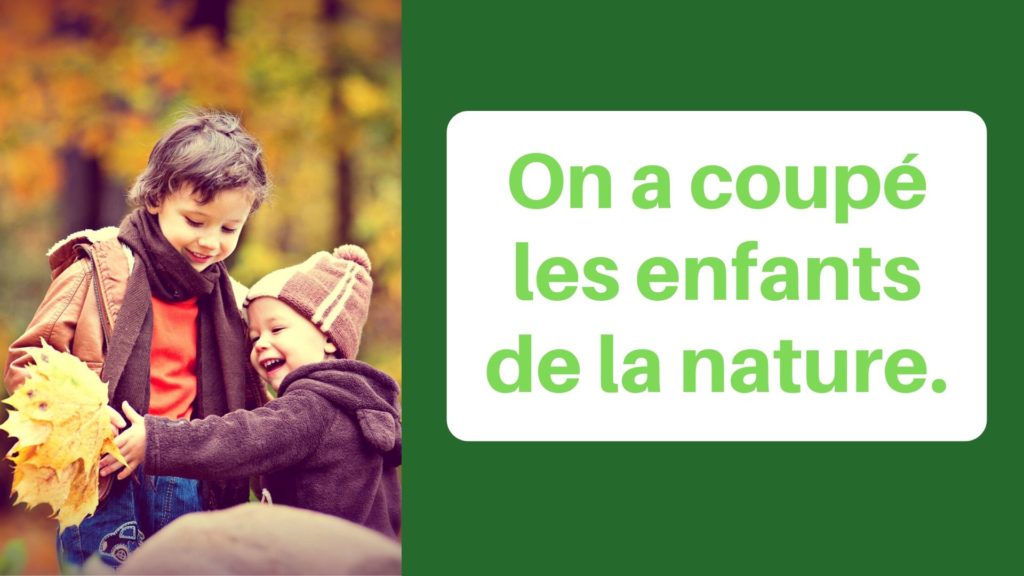
What regular contact with nature gives children
Regular time outdoors also helps children who have been cut off from nature stay healthier and develop emotional and relational skills. Our culture feeds the disconnect in many ways: screens everywhere, a fear of risk, and adults who became parents after little contact with nature themselves, which breaks the chain of transmission. As with hiccups in babies, small everyday responses can make a real difference.
Nobody sets out to deprive children of nature on purpose. Our lifestyles and school organisation simply leave children's need for nature barely met, or not even considered. Even so, some schools are changing, including in cities, and a movement to restore contact with nature is under way, much as awareness grows around cases like Chachat's story.
Outdoor schooling is growing, even in public institutions. Forest kindergartens appeared in Denmark sixty years ago, and in that model children spend the day outside with fewer constraints on movement and exploration than in a classroom. The result was improved attention in the children.
| Level | Frequency | Practical example |
|---|---|---|
| One | Every day | Undirected play in a green space |
| Two | Every week | Nature walk, gardening or birdwatching |
| Three | Every month | Green weekend within an hour of home |
| Four | Every year | Full immersion holiday in nature |
| All levels | Ongoing | Let children touch, climb and get dirty |
Becoming a nature guide for your child
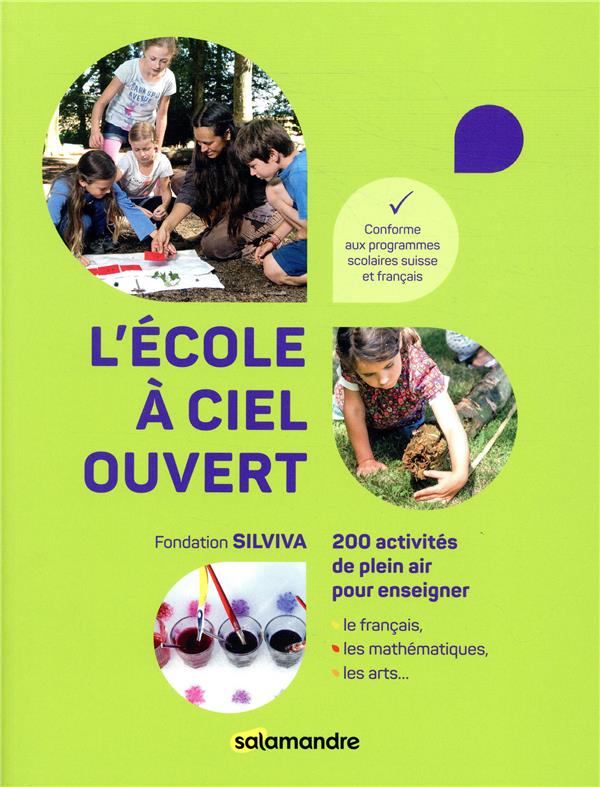
Emilie Lagoeyte and Cindy Chapelle, authors of the book Passeur de nature, invite adults to become "nature guides" and bring nature into everyday life step by step. The idea is to reconnect gradually, for anyone who has lost regular contact with nature, and to offer markers for the role in school and family settings.
Think of it as learning a new habit, much like the small routines described in learning together daily. The first level is daily: offer a moment of undirected play in a green space, letting children roll in the grass, climb trees or put their hands in the soil, which also supports gross motor skills.
Step by step, week by month
Each week, plan a nature outing for observation and discovery: a forest walk, gardening time, birdwatching, collecting stones, identifying edible plants or a little river fishing. Each month, organise a green weekend within an hour of home, in a regional or national park. Once a year, take a full immersion holiday in nature, and for rainy days at home you can try tie dye t shirts with natural plant dyes.

Bringing nature into the home and the school day
You do not need a forest to start. A balcony, a windowsill, a courtyard or a nearby park is enough to grow a few plants, watch insects or simply sit outside and listen. These small rituals sit naturally alongside the everyday routines you already manage, such as the household tasks that give children real, hands-on work. They also echo the parent child relationship research showing how shared everyday moments strengthen family bonds.
At school, teachers can take a lesson outside, create a small garden or start a regular outdoor session. Families can support this by sending suitable clothing and asking what outdoor time is planned. The goal is not a perfect adventure but a repeated one.
It also helps to accept a little mess and a little risk, because exploration is how children learn. If you want more ideas for shared activities, look at music and creativity activities and other simple ways to spend time together without screens, much like the resourcefulness behind making a LEGO set.

Making outdoor time a family habit
The most reliable way to reconnect children with nature is to make it ordinary rather than exceptional. Pick a fixed time each day, however short, and protect it. A walk after school, ten minutes in the garden or a snack eaten outside all count, and repetition matters more than duration.
Involve children in choosing the outing, and let them get bored at first: boredom often turns into observation. Keep a simple record of what you notice through the seasons, which also connects well with seasonal changes and babies and the rhythms of the year.
Finally, model the behaviour yourself. Children copy what they see, so put your phone away outdoors and get your hands dirty too. Over time, these small habits become the family culture that carries the bond with nature forward.
My hands-on take
In our home, the change started small. I stopped treating outdoor time as a reward for finishing everything else and simply put it in the day, right after school, before homework and screens. Some days it is a proper walk; most days it is twenty minutes in a nearby patch of grass where my children dig, collect stones and argue about who found the best stick.
What surprised me most was the boredom phase. The first few times, they asked to go back inside. I resisted, and within a week they were finding things to do on their own. I also had to accept mud, wet socks and the occasional scraped knee. It is messier than staying in, but calmer evenings and better sleep have made it worth it.
Frequently asked questions
Why do children seem bored by ordinary life?
Overstimulation from fast screens, constant noise and packed schedules makes slow reality feel dull by comparison. Regular contact with nature helps restore tolerance for a calmer pace.
Do we need to live in the countryside?
No. A balcony, courtyard, local park or school garden is enough to begin. What matters is repetition and permission to explore, not the size of the space.
What can schools do to help?
Some schools already take lessons outside or run outdoor sessions, and forest kindergartens show the model. Families can support this by sending suitable clothing and asking about outdoor time.
Is a little risk acceptable outdoors?
Yes, within reason. Climbing, digging and getting dirty are how children learn about their bodies and the world, so supervision should allow exploration rather than prevent it.
Product Reviews
 Best Toys for Dogs With High Prey Drive |
Best Outdoor Toys for 3-4 Year Olds |
Best Outdoor Toys for 6 Year Olds |
Best Harness for Poodle |
Best LEGO Sets for Adults |
Best Travel Toys for 4 Year Olds on Airplane |
Best Toy Stores in Washington DC |
Best Potty Training Toys |
Best Toys for Tripod Dogs |
Maillot equipe de france







