


The Rebel Girls journal is a fill-in activity book designed to give every girl the right to explore her potential outside gender stereotypes. It is the companion volume to the bestselling bedtime-story collection by the same authors, and this time the girl herself becomes the heroine of the page.
With pens, coloured pencils and stickers in hand, she is invited to express big ideas in a graphic, playful and personal way. Across more than 200 pages, she can celebrate her achievements, own her ambitions, love her body and plan her adventures.

Quick takeaways
- A feminist fill-in journal for girls aged 8 to 15, with over 200 pages.
- Around 100 activities built on headline prompts and illustrations to complete.
- Themes include rights, fears, ambitions, body image, money and inspiration.
- English stickers such as "No means no" and "I can do it" at the back.
- Diverse illustrations that avoid pink-and-glitter clichés.
- Works as a companion to the authors' bestselling bedtime-story collection.
Who Created the Rebel Girls Journal
The book comes from Francesca Cavallo and Elena Favilli, whose titles have appeared on the New York Times bestseller list and have been translated into more than 40 languages. Their earlier collection told the stories of women who marked history — scientists, athletes, politicians and artists — and this journal hands the pen to the reader so she can record her own exceptional acts.
The two authors shaped it so that girls can explore every facet of their identity and give themselves permission to be fully themselves, away from stereotypes. It pairs naturally with the kind of everyday encouragement described in tender ads dad, where small gestures build a child's confidence.
A Companion, Not a Sequel
You do not need to have read the first book to use this one, although the two work well side by side. The journal simply picks up the same spirit and turns it into blank space for the reader's own voice.

What Is Inside the Journal
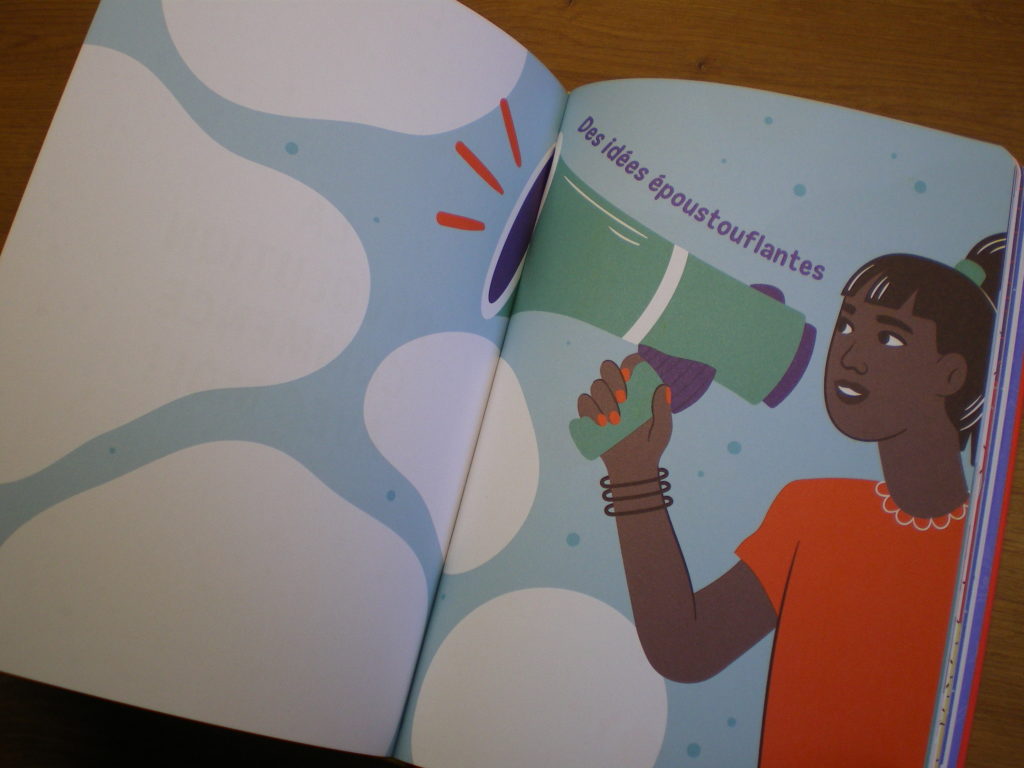
Each double page offers a headline prompt and an illustration in which a girl can write. The prompts cover varied themes such as "My rights", "My fears", "My best jokes", "My inventions", "My dream" or "The rebel women who inspire me". Pages can be filled with words, drawings, stickers or colouring.
Girls can write down the rules that make no sense to them, detail their strategy for saving money, colour in quotations or draw the people they would love to meet. The book is fairly thick, with over 200 pages, and covers many aspects of a girl's potential.
Prompts That Open Real Conversations
Some pages invite her to write her own declaration of human rights, say what she no longer wants to receive as gifts, or build her rebel-girl playlist. These are the kinds of openers that make a parent's job easier, much like the honest approach in conscious parents, which values listening over lecturing. For bilingual families, these prompts pair well with tips to learn English, and active girls may also benefit from knowing about a hip sprain.
| Feature | Detail | Why it helps |
|---|---|---|
| Page format | Headline prompt plus illustration | Gives a clear starting point without dictating the answer |
| Themes | Rights, fears, jokes, inventions, dreams, inspiration | Covers identity from many angles |
| Ways to fill it | Words, drawings, stickers, colouring | Suits different ages and moods |
| Extras | English phrase stickers at the back | Reinforces simple, powerful messages |
| Artwork | Diverse skin colours and body shapes | Broadens her sense of who matters |
| Age range | 8 to 15 years | Grows with the reader |
Stickers, Illustrations and Diversity
Stickers are available at the end of the book, with English phrases such as "No means no" and "I can do it". The illustrations are lovely, deliberately moving away from pink and glitter, and they represent diversity through skin colours and body shapes.
That visual choice matters: a girl who sees many kinds of faces on the page is more likely to accept many kinds of people in her life. It also quietly reinforces the message that her worth is not tied to an outfit or a colour palette.
A Journal to Give as a Gift
The book was given to a daughter for her tenth birthday, which sits comfortably in the recommended 8 to 15 age range. It is available in cultural centres, bookshops and online retailers. For a child who prefers making things to reading them, it can sit alongside the hands-on ideas in independent play and keep her busy without a screen.

How to Use It at Home
There is no correct order and no deadline: a girl can dip in, choose a page that matches her mood and leave the rest for later. Younger readers may want an adult nearby to read the prompts aloud, while older ones will happily take the book to their room and keep it private.
Resist the urge to check what she has written. A journal only works if it belongs to its owner, and the sense of ownership is exactly what builds the confidence the book is aiming for.
Making It a Shared Ritual
Some families keep a copy for themselves and fill in the same prompt side by side, which turns a solo activity into a conversation. Others use a finished page as a starting point for a weekend project, from a small saving plan to a drawing session. The same spirit of shared making appears in Christmas tree drawings, where a child's own artwork becomes part of the family display.

Why This Kind of Journal Matters
Girls receive a steady stream of messages about how they should look, behave and ambition. A journal that asks them to name their rights, their fears and their dreams gives them a private place to push back and to decide for themselves.
It also gives parents a low-pressure tool: instead of starting a heavy conversation, you can simply leave the book on the table and let curiosity do the work. That gentle approach mirrors the reflective tone of travels without parents, where a child's feelings are taken seriously rather than dismissed.
Encouraging a Wider View
Because the prompts celebrate scientists, athletes and artists alike, they widen a girl's sense of what is possible. Pairing the journal with stories about real families and real roles, such as the reflections in father's role, helps her see that ambition and care are not opposites. For families who also deal with recurring health worries, the same steady, reassuring tone can be found in our piece on so many tonsillitis.

Practical Tips for Parents
Keep a small box of pens, coloured pencils and spare stickers next to the journal so it is always ready to use. Let her choose when and where to write, and avoid turning it into homework or a reward chart.
If she stalls on a prompt, offer a concrete example from your own life rather than an instruction. And if a page touches something difficult, follow her lead and stay curious.
When to Step Back
Some pages will stay blank for months, and that is fine. The value lies in knowing the space is there whenever she needs it, which is the same principle behind hiking routes Madrid: the route is planned, but the child sets the pace.
My hands-on take
I handed this journal to my daughter on her tenth birthday, and the first thing she did was flip straight to the page about the rebel women who inspire her. She filled it in with names I had not expected, then spent a long time on the page about rules that make no sense to her. I had to bite my tongue and let her write.
What I noticed over the following weeks is that she treated the book as private property, which is exactly what I wanted. She dipped in and out, sometimes for two minutes, sometimes for half an hour, and she never once asked me what to put. If you are buying it as a gift, my only practical advice is to add a decent set of coloured pencils and a few extra stickers, because the ones at the back run out faster than you would think.
Frequently asked questions
What age is the Rebel Girls journal suitable for?
The book is recommended for girls aged 8 to 15. Younger readers may enjoy it with an adult nearby, while older ones can use it independently and keep it private.
Is it a reading book or an activity book?
It is an activity book to complete, not a story to read. Each double page gives a prompt and an illustration, and the reader fills the space with words, drawings, stickers or colour.
Do we need the original bedtime-story collection first?
No. The journal stands alone, though it works well alongside the earlier book, which tells the stories of women who marked history.
Are the stickers in English?
Yes, the stickers at the back carry short English phrases such as "No means no" and "I can do it". The rest of the prompts are designed to be filled in by the girl herself.
Product Reviews
 Best Toys for Dogs With High Prey Drive |
Best Outdoor Toys for 3-4 Year Olds |
Best Outdoor Toys for 6 Year Olds |
Best Harness for Poodle |
Best LEGO Sets for Adults |
Best Travel Toys for 4 Year Olds on Airplane |
Best Toy Stores in Washington DC |
Best Potty Training Toys |
Best Toys for Tripod Dogs |
Maillot equipe de france







