


This emotions memo was built to change how we approach feelings, moving from avoidance to understanding. It breaks the process into seven steps so adults and children can welcome emotions fully and then use them in relationships and everyday decisions.
Emotional skills authors Mikolajczak, Quoidbach, Kotsou and Nelis note that during an emotional episode we tend to focus first on the trigger, a negative avoidance process (“what do I do to escape the danger?”), rather than on our needs, which belong to an approach process (“what do I do to meet them?”).

Identifying needs is hard because it is unfamiliar reasoning. We usually look for the cause outside ourselves, which quickly finds a culprit but leaves us with no grip on the emotion.
Quick takeaways
- Describe the situation as a camera would, without interpretation
- Locate the sensation in the body before naming the emotion
- Write down the judging inner voice and treat thoughts as thoughts
- Name the feeling and its intensity to make it discussable
- Compare what you did with what you wanted to do
- Ask which need the emotion is pointing to, then pick a workable solution
Step 1: Observations, like a camera
The first step asks a simple question: how could I describe this situation objectively, as a camera would film the scene without adding subjectivity? This is harder than it sounds, because our first account of events is usually already an interpretation.
Sticking to what a camera could record keeps the facts separate from the story we build around them. That separation matters later, when we look for brain development style explanations of what is happening rather than blame, much like the bedtime struggles that make more sense once you see the pattern. It also helps to pack a summer bag with the same neutral, practical eye.
Practising this with children helps too: ask them what happened, then what they thought happened, and let the difference show.
Why it comes first
Without a clear observation, every later step inherits the distortion. A neutral description gives the rest of the memo something solid to stand on.
Step 2: Sensations in the body
Next, notice the intimate, inner, personal sensation that arises: discomfort, oppression, a sense of panic, contraction, tension. Then locate it: where in the body does it sit, and how does it manifest?
Bodily signals often arrive before words do, which is why they are a reliable entry point for learning to walk through new emotional territory at any age. Children especially need help finding words for what their body is telling them.
Naming a sensation without judging it lowers the pressure to act immediately. It also builds the vocabulary children carry into later life, much like the words they gain from children's vocabulary books. Just as familiar childhood ice creams anchor memories, simple routine books help children name everyday feelings.

| Step | Question to ask | Useful for |
|---|---|---|
| Observations | What would a camera film? | Separating facts from interpretation |
| Sensations | Where is it in my body? | Spotting feelings early |
| Thoughts | What does my inner voice say? | Catching automatic judgements |
| Emotions | What do I feel, how strongly? | Naming and sharing |
| Actions | What did I do, what did I want? | Seeing patterns |
| Needs | What is really important here? | Regaining influence |
| Solutions | What can I actually do now? | Deciding with the means available |
Step 3: Thoughts and the inner voice
Ask what the small inner voice is saying, the one that tends to judge, bring everything back to itself, criticise self and others, exaggerate, ruminate and see things in black. Which automatic defensive or offensive thoughts switch on and feed each other?
Thoughts are not facts, and writing them down makes that visible. A child might say “nobody likes me” after one difficult breaktime; putting it on paper lets you examine it together.
This step pairs well with calm activities, such as board games that give hands something to do while a conversation unfolds.
Step 4: Emotions and their intensity
Now name the feeling plainly: how do I feel, and how intense is it? Giving the emotion a name and a rough intensity turns a vague wave into something you can talk about.
For children, games and stories make this step concrete, and simple Transformers toys or favourite figures can act out a feeling safely. The aim is not to rate the emotion perfectly but to notice that it rises and falls.
Adults benefit from the same honesty: saying “I am irritated, quite strongly” is more useful than pretending nothing is there.

Step 5: Actions, done and wanted
Ask what you actually did, and then what you wanted to do. The gap between the two is often where the real information sits.
Children show this constantly: a shove on the playground may be the wanted action they could not express in words. Helping them separate impulse from choice is part of the slow work of growing up and learning to repair.
No judgement here, just observation. The point is to see the pattern before deciding whether to keep it.
Step 6: Needs and the message
This is the heart of the memo: what is really important to me in this situation? Which fundamental need is this emotion speaking about, and what message does it carry?
Looking inward rather than outward for the cause is unfamiliar, but it restores influence over the emotion. A need for rest, safety, recognition or connection can be met in many ways, which is why naming it opens options.
This step also builds patience, echoing the message of learning to walk gently rather than rushing the process.
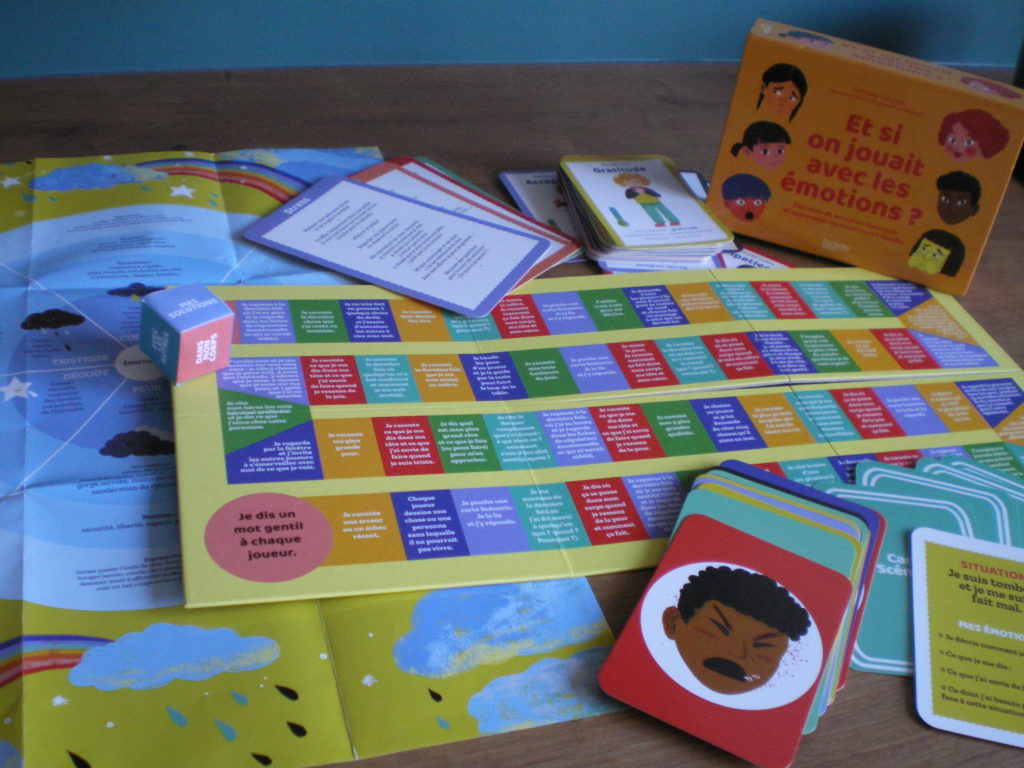
Step 7: Solutions that fit the moment
Finally, ask which solutions could feed your decisions, and which ones you could actually implement in this situation with the means available. A workable solution beats a perfect one you cannot carry out.
Involving children in choosing the solution makes them actors rather than recipients. A small ritual, a drawing, a plan for next time: the form matters less than the ownership.
For families who like to prepare, keeping a few board games or quiet activities on hand gives the last step somewhere to land.

My hands-on take
I started using this memo on myself before trying it with my children, and the first surprise was how often I jumped straight to the culprit. Someone had been rude, the day had been badly organised, the traffic was to blame. The camera question stopped me short more than once.
With the children, I keep it short. We usually manage the observation, the sensation and the feeling, and the needs step often comes later, at bedtime or in the car. What has changed is the tone: fewer interrogations, more curiosity. I still forget the memo on hard days, which is fine. It is a reference to return to, not a test to pass.
Frequently asked questions
Is this memo only for adults?
No. The same seven steps work with children, provided the questions are simplified and adapted to their age. Younger children often need the body and emotion steps first, with words added gradually.
Why focus on needs instead of the trigger?
The trigger explains what set the emotion off, but it usually sits outside your control. Needs belong to you, so identifying them gives you something you can actually act on.
How long does one pass through the memo take?
In a calm moment it can be a few minutes of reflection; in a heated one, it may be better to use only the first steps and return to the rest later. The memo is a guide, not a rigid procedure.
Does naming an emotion make it stronger?
In practice, naming a feeling and its intensity tends to make it more manageable because it becomes something you can talk about. The goal is to welcome the emotion, not to amplify or suppress it.
Product Reviews
 Best Toys for Dogs With High Prey Drive |
Best Outdoor Toys for 3-4 Year Olds |
Best Outdoor Toys for 6 Year Olds |
Best Harness for Poodle |
Best LEGO Sets for Adults |
Best Travel Toys for 4 Year Olds on Airplane |
Best Toy Stores in Washington DC |
Best Potty Training Toys |
Best Toys for Tripod Dogs |
Maillot equipe de france







