


Talking to children about death is one of the hardest conversations a parent can face, and many of us put it off simply because we do not know where to start. A well-chosen picture book can act as a gentle mediator, carrying the words we struggle to find while giving a child something concrete to look at and hold.
The two albums below were written with real tenderness and restraint. Each one follows a child trying to make sense of a loss, and each one opens a door to the questions children really ask.

Quick takeaways
- Picture books give children a safe way into a frightening subject.
- Expect incomprehension, waiting, anger and acceptance, in any order.
- Use clear words; avoid "gone to sleep" and "lost".
- Answer only the question asked, then pause.
- Build a memory ritual the child can choose and repeat.
- Seek professional support if distress is intense or long-lasting.
A small mole waiting for her brother
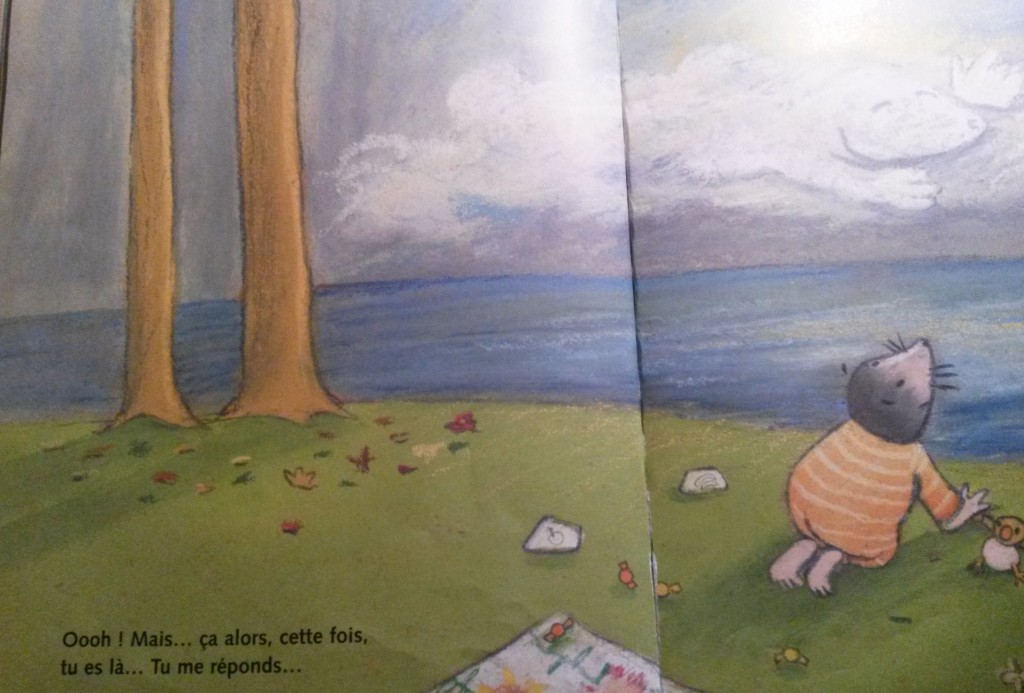
In Où es-tu parti ? by Laurence Afano, a little mole learns that her older brother has died in an accident. She keeps expecting him to come back, notices that her mother and father are sad, and cannot understand why or how her brother went up into the sky.
She wants to play with him, but he never appears. Her need for him is so strong that it turns into anger, and she throws all his belongings on the floor. Eventually she sees her brother in the clouds and understands that he has not forgotten her, and that she will not forget him either.
The stages a child may pass through
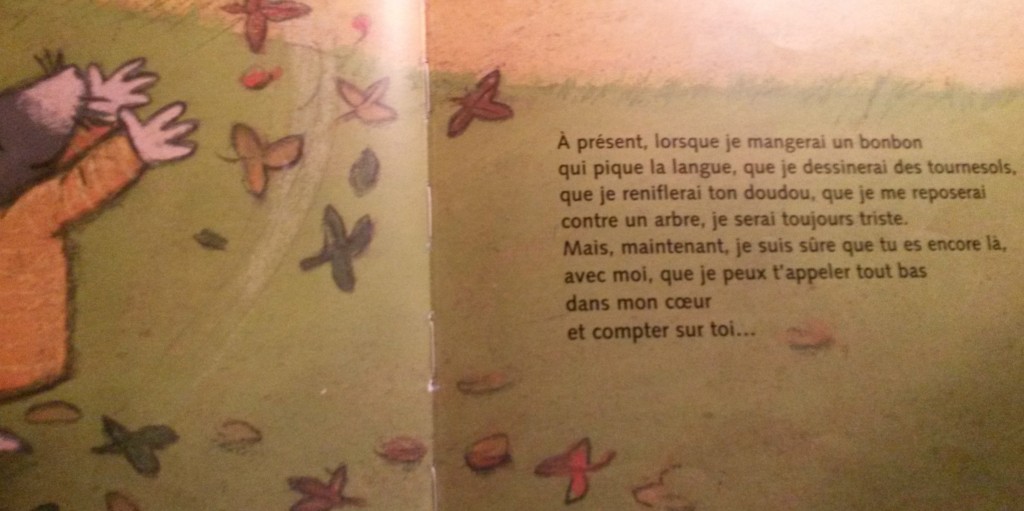
The story gently maps the steps children and adults can move through: incomprehension, waiting, anger, and finally acceptance, symbolised by a little treasure box kept at the bottom of the heart. If your child is also working through big feelings, psychosexual development and other emotional milestones are worth understanding alongside grief.

A grandmother, a grey sky and a warm hand
Temps gris by Pierre Bertrand and Sibylle Delacroix is told from the point of view of a little girl whose grandmother has gone. The weather is rainy throughout, mirroring what the whole family feels, and small physical details carry the emotion: grandmother's hand was cold, while mummy's hand is warm.
The book closes on a simple, powerful line: one day I will go too, but not today. That sentence gives a child room to hold both truths at once, that loss is real and that life is still here.
Using the story to talk about death in general
This album is a natural springboard for explaining that every living thing dies, that the subject frightens us because we cannot control it and do not know when it will happen, and that in the meantime life is full of surprises, cuddles, adventures and new experiences. Above all, the people we loved and who loved us stay in our heart like a treasure, like a box of sunshine. Just as 4D ultrasounds can offer a first glimpse of new life, stories like this help families hold beginnings and endings together.

| What to look for | Why it helps | How to use it |
|---|---|---|
| A child protagonist | The child can project feelings safely | Ask what the character might be feeling |
| Concrete images | Makes an abstract idea picturable | Point at the pictures and let your child talk |
| Room for anger | Shows that rage is allowed | Name the anger without correcting it |
| A memory symbol | Offers somewhere for grief to go | Make a real box, drawing or photo together |
| A hopeful ending | Reassures without denying the loss | Re-read it whenever your child asks, much like master builders return to a favourite build |
Why stories help more than explanations
A child hearing an abstract explanation about death often has nothing to picture. A story gives the idea a shape, a character and an ending, which is exactly what makes it bearable. The child can ask about the mole or the little girl instead of about themselves, which lowers the pressure on everyone.
Reading together also creates a calm, close moment, and children often raise their real questions a few pages in rather than at the start. Keep the book around afterwards; many children ask for the same story again and again, and repetition is part of how they process it. The same principle applies to other developmental stages, such as when you notice child's personality traits shaping how your child reacts to sad news.

Words to use and words to avoid
Simple, honest language works best. Say that the person's body stopped working and could not be fixed, and avoid euphemisms such as "gone to sleep" or "lost", which young children take literally and can find frightening at bedtime.
Answer the question that was actually asked, in one or two sentences, then wait. "I don't know" is a perfectly good answer to questions about what happens after death, as long as it is followed by what you do believe or hope. Children cope better with a parent who is sad but steady than with one who pretends nothing has changed.
Keeping routines steady
Grief unsettles a child, so ordinary rituals become anchors: the same bedtime, the same meals, the same cuddles. If a new baby has just arrived and the household is already stretched, guidance on baby's nursery adaptation shows how much predictability supports a child's sense of safety.
Rituals that help a child remember
Both books end on memory rather than on absence, and that is the part you can turn into something the child can do. A small box of keepsakes, a photo in the bedroom, a drawing, a candle on a birthday or a tree planted in the garden all give grief somewhere to go.
Let the child choose. Some want to talk about the person every day, others prefer to keep it private, and both are normal. Marking anniversaries in advance also helps, because a child who knows that a difficult day is coming feels less ambushed by it. If you are navigating other sensitive family topics at the same time, articles such as children who flirt and contraceptives after childbirth show how openly naming a subject usually makes it easier.
When to look for more support
Most children move through grief in waves and gradually return to ordinary life. Seek extra help if a child's distress is intense or lasting, if sleep and eating stay badly disrupted, if they refuse school or friends for weeks, or if they talk about wanting to join the person who died.
Talk to your doctor, your school or a child bereavement service; asking early is not an overreaction. And look after yourself too, because children read our faces far more closely than they listen to our words. Parents who are managing a great deal at once, from weekly pay worries to family illness, often find that their own support makes the biggest difference to the child. If you are also supporting a child with additional needs, such as Down Syndrome, it can help to control visits so that well-meaning relatives do not overwhelm an already stretched family.



My hands-on take
I first read a book like this with my own child long after the loss it described, and I remember being surprised by how quickly the questions came once the pages were open. What helped most was not preparing a speech but staying quiet for a moment after each page and letting my child lead. Some evenings we read three pages and stopped; other times we read the whole thing twice.
The practical lesson I took away is to keep the book visible on the shelf rather than hidden away for a serious occasion. When it sits among the other stories, a child can bring it over on an ordinary afternoon, which is often when the real talking happens. I also learned to answer briefly and then wait, because the silence after my answer was usually where the next question was forming.
Frequently asked questions
At what age can I read these books to a child?
Both albums suit roughly pre-school to early primary years, but the right moment depends on the child rather than the birthday. Read it yourself first and judge whether the images and length fit your child's attention.
What if my child cries while we read?
That is usually a good sign that the story is doing its job. Stay close, let the crying happen, and say simply that it is sad and that you are both allowed to feel it.
Should I read the same book repeatedly?
Yes, if the child asks. Repetition is how young children make sense of difficult material, and each reading often brings out a slightly different question.
Do I have to have an answer for every question?
No. Saying that you do not know, and explaining what you believe or hope, is honest and teaches your child that uncertainty can be talked about.
Product Reviews
 Best Toys for Dogs With High Prey Drive |
Best Outdoor Toys for 3-4 Year Olds |
Best Outdoor Toys for 6 Year Olds |
Best Harness for Poodle |
Best LEGO Sets for Adults |
Best Travel Toys for 4 Year Olds on Airplane |
Best Toy Stores in Washington DC |
Best Potty Training Toys |
Best Toys for Tripod Dogs |
Maillot equipe de france







