


Sibling conflict is one of the most common sources of daily friction in family life, and knowing when to step in and when to hold back is genuinely hard. The right response shifts with the circumstances, the children's ages and the way they usually handle their disagreements.
A useful approach is to sort children's clashes into three levels, each calling for a different dose of adult involvement. This framework draws on the work of Haïm Ginott and of Faber and Mazlish, and it gives parents a simple mental map instead of a single rule.

Quick takeaways
- Sort clashes into three levels: disagreements, disputes and aggression.
- For disagreements, listen from a distance and let children negotiate.
- Step in as a neutral mediator when a dispute nears violence or a falling-out.
- Stop aggression immediately and restate the no-hitting, no-insulting rule.
- After a conflict, look at emotions, needs and environment to prevent repeats.
- Avoid comparisons and overcrowding that push children into competition.
Level one: disagreements and squabbles
Disagreements are the everyday stuff of family life: bickering, small differences, the kind of friction children often call "chicanes". At this level, your role can be limited to listening from a distance while staying attentive enough to notice whether things are tipping into something more serious.
Leaving children to manage a disagreement themselves is often the wisest move. Think how frustrating it would be for adults if a mediator stepped into every couple's argument to stop the anger, uninvited. Children deserve the same room to practise negotiating, and the chance to build the kind of self-improvement in children that only comes from handling small clashes alone.
That does not mean never intervening. If an older child is hurting a baby brother or sister, you step in. Nor should one child be allowed to become the family scapegoat. A useful, well-measured intervention sounds like this: "I get the feeling C. isn't having as much fun as you are; a game is when everyone enjoys it. C., you have the right to say stop. If you need me, I'm here."
Level two: disputes and near-misses
Disputes are quarrels and altercations that sit on the edge of violence, or of a lasting falling-out. Here the adult can step in as a mediator, guided by the belief that the children are capable of finding a solution that feels fair to everyone.
Sometimes children ask for an adult's arbitration directly. When that happens, be fully present, with no screen and no multitasking; ask each child questions; show sincere interest in everyone involved; and listen to each account without judgement or preconceptions, such as automatically siding with the youngest because they are younger. Then ask what might help solve the problem.
Stay light on the steering wheel
The rule is to intrude as little as possible into the process. If the children are stuck, offer a solution in the form of a question: "Would you agree to let me suggest a solution too?" Often, simply asking questions during a dispute is enough to unblock it. Keeping the environment calm helps too, much as a predictable routine settles a child during baby's medical check ups or any stressful moment, and the same steady presence helps when early daycare separations stir up big feelings. Skin troubles such as molluscum contagiosum can also make children touchier than usual.

| Level | What it looks like | Your role |
|---|---|---|
| Disagreement | Bickering, small differences, "chicanes" | Listen from a distance, stay attentive |
| Dispute | Quarrels, near-violence, hurt feelings | Mediate with questions, stay neutral |
| Aggression | Insults, blows, a real fight | Stop it, restate the rule, then explore causes |
| Prevention | Daily atmosphere and environment | Reduce crowding, avoid comparisons |
Level three: aggression and physical conflict
With aggression, children are in hand-to-hand conflict. This is the acting-out stage, in words and/or gestures, which can escalate into a fight or a full-blown battle, with insults and blows. It is urgent to intervene, say "Stop!" and restate the non-negotiable rule: hitting and insulting are strictly forbidden.
Not reacting to physical or verbal aggression legitimises it and makes it look normal in children's eyes, as though it were not serious. A firm, immediate stop protects everyone and keeps the boundary clear.
Then look for the cause
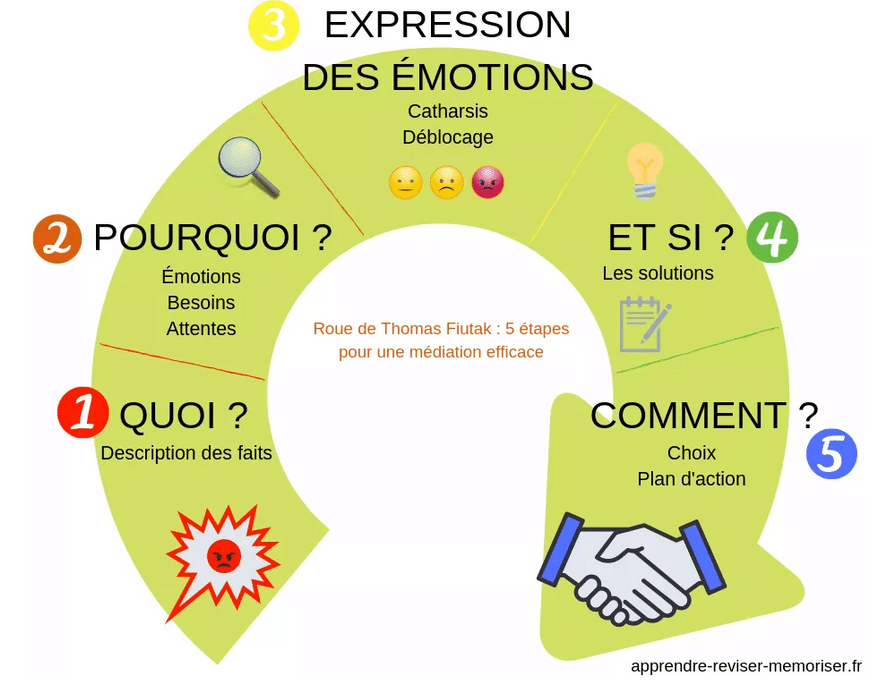
In a second step, you can reason in terms of emotions, needs, attachment, environment or skills to identify where the aggression came from. This is the positive-education principle: look for the motivations behind actions, equip children with emotional resources such as calming down and resolving conflict, and adjust the environment to avoid conditions that spark violence. That might mean reducing overcrowding or avoiding comparisons that put children in competition. The same preventive logic applies to movies to educate children about respect, and to choosing outdoor toys that leave room for everyone to play. A little wooden house can also offer a calm space for pretend play.
A quick guide to each level
Keeping the three levels in mind makes it easier to respond in proportion rather than reacting to every squabble with the same intensity. The table below summarises what each level looks like and what your role can be.
It also helps to remember that the goal is not to eliminate conflict but to help children build the skills to handle it. Over time, that means fewer emergencies and more negotiated solutions. Families who plan shared activities, from short Christmas stories to a simple board game, often find that structured togetherness reduces friction.
Building a calmer family atmosphere
Prevention does much of the work. Limiting promiscuity, avoiding comparisons that set children against each other, and making sure each child gets some individual attention all reduce the conditions in which conflict flares. A predictable rhythm to the day, much like the one that helps when preparing for flying pregnant or any big change, gives children a sense of security.
It also helps to notice what children are playing with. Shared toys that invite cooperation rather than competition, such as a good set of outdoor toys for 4 year or a box of building bricks, tend to produce fewer clashes than toys that only one child can use at a time.
Finally, model the language you want to hear. When you name feelings, ask questions and stay neutral, children copy that tone. Keep the rules short and clear, and let children see you repair after your own moments of impatience.

My hands-on take
In my own home, the three-level idea changed how I react. I used to jump in at the first raised voice, which usually made both children turn on me instead of working it out. Now I wait through the bickering, and I only step in when someone is close to tears or a hand is raised.
What helped most was learning to ask questions instead of delivering verdicts. "What would be fair here?" gets a far better response than "Who started it?" I still get it wrong on tired evenings, but the children now say "stop" themselves more often, and that small shift has made our days noticeably calmer.
Frequently asked questions
Should I always let my children sort out their own arguments?
No. Small disagreements are best left to them, but disputes that near violence or leave one child isolated need your mediation. Aggression always calls for an immediate stop.
How do I mediate without taking sides?
Be fully present, ask each child questions, listen without preconceptions and avoid siding with the youngest by default. Then ask what might help solve the problem.
What should I say when one child is being picked on?
Name what you notice and give the child a right to speak up: "I get the feeling C. isn't having fun; a game is when everyone enjoys it. C., you can say stop."
Why does reacting to aggression matter so much?
Staying silent makes aggression look normal and acceptable to children. A firm stop keeps the rule clear, and a later conversation about emotions and needs addresses the cause.
Product Reviews
 Best Toys for Dogs With High Prey Drive |
Best Outdoor Toys for 3-4 Year Olds |
Best Outdoor Toys for 6 Year Olds |
Best Harness for Poodle |
Best LEGO Sets for Adults |
Best Travel Toys for 4 Year Olds on Airplane |
Best Toy Stores in Washington DC |
Best Potty Training Toys |
Best Toys for Tripod Dogs |
Maillot equipe de france







