


The mental load of children is a real concern, and holidays are the moment to ease it rather than add to it. Many parents mean well when they plan catch-up sessions or impose the traditional holiday workbook, but the pressure can do more harm than good.
Anxiety-filled talk about "learning loss" and poor school rankings tempts us to fill every day with stimulating activities. Yet the risk is sliding into overstimulation, where a child has too much to process and simply saturates.

This article looks at what overstimulation does, why simple summer pleasures matter, and how free play protects children's development and lightens their mental load.
Quick takeaways
- Holidays are for recovery, not catch-up sessions or compulsory workbooks.
- Good intentions can tip into overstimulation and cognitive overload.
- Overstimulation brings fear, stress, exhaustion and lost confidence.
- Children prefer simple, free activities such as outdoor play and cycling.
- Free, self-directed play builds cooperation, resilience and independence.
- Rebalance the week so unstructured time is the default.
Where the pressure on children comes from
With alarming headlines about pupils falling behind and disappointing results in international rankings, it is easy to feel we must load children with activities to catch up. We plan programmes to finish the holiday workbook and keep young minds "switched on" for weeks.
The trouble is that this good intention can tip into hyperstimulation. Modern societies tend to assume, often unconsciously, that children only learn when an adult delivers knowledge or when an activity is formal and supervised. Free play and informal chats between children can then look pointless, even like wasted time.
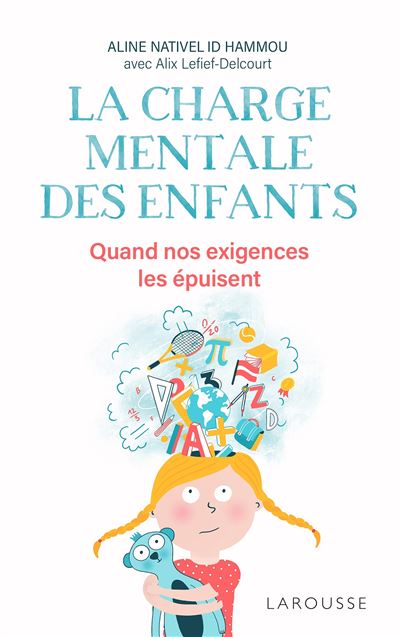
In her book on children's mental load, Aline Nativel Id Hammou warns that too many stimuli can have the opposite effect to the one hoped for. The child has too much to identify, analyse, memorise and sort, which creates a global overload that can lead to saturation. It helps to remember that every child reacts differently to the stimuli on offer, as any parent watching parental gaze will notice.
What overstimulation actually looks like
Being overstimulated, concretely, means having no respite and allowing yourself no pause, always hunting for new experiences in order to build skills. Most of the time children do find interest in the activity proposed, but they are unable to manage it all qualitatively on a cognitive level.
The result is misunderstanding, fatigue, irritation, edginess and enormous frustration. Nativel Id Hammou lists the consequences: fear of not coping, fear of failing, fear of no longer being loved, fear of disappointing, fear of school and fear of others.
When the brain has no room left
Add intense stress and a permanent state of alert, a slow and insidious loss of self-confidence, and exhaustion. Learning difficulties follow because there is "no more room" in the brain, the well-known cognitive overload. Family life suffers too, with a degraded parent-child relationship and a tense atmosphere at home. A calm home rhythm, much like the rest a parent needs around baby sleep hours, supports everyone better than a packed schedule. As our pediatrician reminds us, we are the mirror our children reflect themselves in, so our own calm matters. For more support, these TED Talks on parenting are worth watching.

| Aspect | Structured summer | Free-play summer |
|---|---|---|
| Main driver | Adult-led programme | Child-led choices |
| Workbook | Daily catch-up pages | Left closed |
| Play time | Supervised activities | Unsupervised outdoor play |
| Adult role | Instructions and rewards | Presence and safety |
| Likely outcome | Fatigue and frustration | Rest and confidence |
The simple joys of summer last a lifetime
A UK study of 1,500 children aged five to eleven asked them to rank their summer activities by preference. Most children preferred simple, free activities such as playing outside with friends or riding a bike.
Playing outdoors, whether in the public park or the garden, was voted the favourite activity. Other simple pleasures made the top ten: making mud cakes, climbing trees and feeding animals, ducks in particular.
Child psychologist Dr Linda Papadopoulos says summer memories last a lifetime, and parents can learn a great deal from what children say in this study. The lesson is to protect those small, unglamorous moments rather than replace them with structured programmes. Even a shared kitchen afternoon, trying a pretzel recipe together, counts as connection rather than formal learning.
Free play at the heart of child development
Dr Peter Gray, an American specialist in the study of play, explains that through play all young mammals develop physical and mental capacities crucial to survival. They learn to cooperate, and humans are social mammals.
Scientists have run experiments depriving young mammals of the chance to play. As they develop, they are emotionally and socially handicapped: they tend to overreact with fear in a new environment, explore it less and adapt less well. They have also not learned to read the social signals of their peers.
It is no surprise, then, that the mammal with the most developed brain, the one with the most to learn from birth to adulthood, is the one that plays most. Human young are the mammals that play most naturally. Gray regrets that since the 2000s children have had almost only supervised activities outside school, where adults give instructions and rewards. In nature, play is necessarily self-controlled and self-directed, and that self-directed quality is exactly what gives it its primitive educational power. Through play children learn they can control their lives. A simple toy used freely, like the ones in this guide to learning toys for toddlers, supports that autonomy far better than a worksheet. Giving the baby his own space to play freely matters just as much.
More free play, less structured activity
Gray argues that removing free play deprives children of the chance to practise independence, negotiate rules and manage boredom on their own terms. The adult-led calendar, however well intentioned, leaves little space for that.
This does not mean abandoning all structure. It means rebalancing the summer so that unstructured time is the default and activities are the exception. Quiet, open-ended play materials help here, much like the options in this selection of quiet toys that let a child settle without direction.
Practical ways to lighten the load
Skip catch-up sessions and let the holiday workbook stay closed. Offer a loose rhythm with plenty of outdoor time, friends and unhurried mornings. Keep formal learning light and child-led, and resist the urge to fill every gap. If you are expecting another baby, the same calm logic applies to preparing siblings, as these thoughts on the pregnant belly suggest.
Building a calmer holiday rhythm
Start by auditing the week: how many activities are adult-directed, and how many hours are genuinely free? Aim for the free ones to dominate. Protect outdoor play as a fixed appointment, not a reward.
Let children be bored sometimes; boredom is the doorway to self-directed play. Keep screens as one option among many rather than the filler for every pause. Reading together, cooking, or simply pottering in the garden all count.
Finally, watch your own mental load. A rested parent models the calm the child needs, and small rituals, like a bedtime story from a maths stories collection or a quiet cuddle, close the day gently.

My hands-on take
I used to be the parent who printed a summer schedule and bought the workbook before the last school bell rang. The first week looked productive; by the second, my child was snapping at everything and I was nagging about pages. What finally changed things was leaving one whole day blank on purpose. No plan, no outing, just the garden and a friend.
That day was quieter than any worksheet session we ever had. Now I keep the workbook on a shelf and let it be chosen, not assigned. I still plan a few things, but I protect the empty hours first, because those are the ones my child talks about afterwards.
Frequently asked questions
Should children do a holiday workbook?
Not under pressure. A workbook can be one optional activity, but imposing daily pages adds mental load. Free play and rest support learning just as well over the summer.
Is boredom bad for children?
No. Boredom is often the doorway to self-directed play, which is where children learn to manage their own time and interests.
How do I know if my child is overstimulated?
Signs include irritability, fatigue, frustration and fear of failing. Reducing scheduled activities and protecting free time usually helps.
Does free play really teach anything?
Yes. Through self-directed play children practise cooperation, negotiation and emotional regulation, skills that formal activities rarely teach as directly.
Product Reviews
 Best Toys for Dogs With High Prey Drive |
Best Outdoor Toys for 3-4 Year Olds |
Best Outdoor Toys for 6 Year Olds |
Best Harness for Poodle |
Best LEGO Sets for Adults |
Best Travel Toys for 4 Year Olds on Airplane |
Best Toy Stores in Washington DC |
Best Potty Training Toys |
Best Toys for Tripod Dogs |
Maillot equipe de france







