


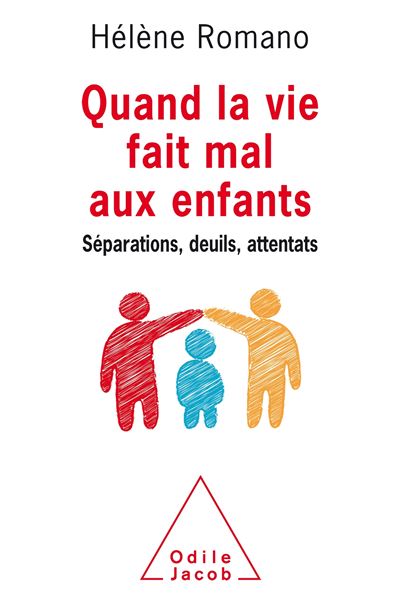
Children and grief are a subject many adults avoid, yet every family eventually faces it. According to psychotherapist Hélène Romano, mourning begins the moment a loss is announced, and it is not an illness but an adapted, deeply personal psychological reaction shaped by earlier resources, culture, religion, the circumstances of the death and the support that follows.
Between the announcement and the moment a bereaved person manages to tame the absence and adjust to it, a great deal of time is needed, depending on the type of death, the bond with the deceased and the help available. Children move through grief in fits and starts, with wellbeing followed by deep distress, and their imagination protects them from total collapse.

Quick takeaways
- Grief is a normal, personal reaction, not an illness, and it begins at the announcement of the loss.
- Children grieve in waves, with imagination acting as protection against collapse.
- Talking about death does not cause it; naming feelings helps children more than silence.
- Secretly replacing a dead pet deprives a child of a real and useful experience.
- Rituals have an emotional and relational function, and children can take part at any age.
- Explaining what will happen and offering a small role helps a child feel included.
What Grief Really Is
Grief is the inner work every bereaved person, adult or child, carries out unconsciously to face the relational break caused by losing someone close. It is a normal reaction rather than a pathology, and it depends on past resources, cultural and religious frames of reference, the context of the death and the support that comes afterwards.
In Western societies the stage model of grief is widely circulated, but it fits poorly with people from other cultures and was never meant to define a "good" or "successful" mourning. There is no single correct timetable, and a child's grief in particular tends to arrive in waves rather than in a straight line.
Factors that shape how grief unfolds
Certain circumstances are considered decisive: a very young age, earlier psychological vulnerabilities, deaths where the body cannot be seen because it is too damaged or cannot be found, deaths by suicide, and situations where the person witnessed the death. Knowing these factors helps adults understand why one child may need more time and more reassurance than another.
Children Need Words for Their Emotions
Many children admit they do not want to show their sadness, often for fear of making the people around them even sadder. Putting words on a child's emotions and recognising their pain matters far more than protecting them with silence, and talking about death does not cause it. A child who is quietly struggling may also show it through behaviour that looks like happy childhood worries or through sudden clinginess.
Consider the goldfish that dies and is secretly replaced by an identical one. The intention is kind, but children are rarely fooled, and the swap deprives them of their own mourning and of a real lesson about life. Watching the fish stop moving is a shock, yet it is also a chance to explain simply that when someone is dead, they no longer move and no longer suffer.
The little ceremony that follows, such as burying the fish in a matchbox in the nearest park, carries real weight. It teaches the importance of ritual and lets the child give attention to something they loved. There is no rush to find a replacement; the priority is time to mend, with feelings named out loud.

| Step | What to do | Why it helps |
|---|---|---|
| Prepare | Explain what will happen, who will be there and what they may see | Gives the child a mental map |
| Offer a choice | Let them decide whether to attend or how to take part | Respects their pace |
| Give a role | A drawing, a flower, a quiet moment of remembrance | Creates belonging, not just watching |
| Stay close | Answer questions simply and repeat answers calmly | Reassurance over information |
| Follow up | Check in in the days and weeks afterwards | Grief returns in waves |
The Function of Funeral Rituals
For Romano, children's participation in mourning rituals is necessary, whatever their age, and she regrets that involving children in funeral ceremonies is far from accepted in Western societies. A ritual is the set of customary ceremonies within a community, passed on in codified form and carrying a specific meaning through gestures, words and actions.
Rituals serve an emotional and relational function: they gather people, give shape to a shared loss and offer a frame in which feelings can be expressed without chaos. Excluding a child does not spare them the loss; it can leave them alone with an event everyone else is living together. Everyday family life, such as the routines described in parenting education and the time adults spend explaining things, is often where this sense of belonging is built. Much like the predictable rhythm of new set releases, familiar routines can give a child a steady point of reference.
Preparation helps. Explaining beforehand what will happen, who will be there and what the child may see gives them a map. Offering a role, however small, allows them to take part rather than simply watch, and letting them choose whether to attend respects their own pace.
Accompanying a Child's Imaginary World
A child's grief is fed by what they imagine and invent to make sense of a death, and this inner life protects them from total collapse. Adults can accompany it with kind words that neither impose a truth nor deny feelings: "You imagine that…", "You tell yourself that…", "You wish that…", "That is what you are saying to yourself."
This gentle mirroring lets a child feel heard without being corrected. It also keeps the door open for questions, which often return weeks later, sometimes at bedtime or in the car. Simple, honest answers repeated calmly are more useful than one long explanation.
Play remains one of a child's main languages for processing loss, and quiet activities such as the ones in rainy day activities can give space for drawing, building or storytelling about the person who died. Building with bricks, much like the cost to make LEGO sets, offers a calm, repetitive focus that can help a child settle. If a child's distress seems to affect their speech, sleep or daily functioning over time, it is reasonable to seek advice, in the same way a parent would consult about speech therapist concerns, or think about familiar comforts like the industrial ice creams that once brought them joy.
Supporting Siblings and Different Ages
Children of different ages understand death differently, and siblings may react in opposite ways at the same moment. A younger child may ask the same question repeatedly, while an older one may withdraw or try to take care of the adults. Both responses are normal, and both need recognition rather than correction. If a younger child retreats into fantasy, it can help to know whether an imaginary friend is a healthy comfort.
Keeping routines steady gives children a sense of safety while the family adjusts. Meals, school and familiar play continue alongside the sadness, and small comforts matter, from a favourite toy to the simple reassurance of being held. Parents who look after their own grief, and who accept help, are better able to stay available for their children.
It also helps to remember that grief is not a problem to be solved quickly but a relationship to be carried over time. Anniversaries, photos and shared memories give children a way to keep the bond alive, and adults who speak the deceased person's name show that remembering is allowed. Some children may also struggle to see photos clearly, so it is worth checking signs of color blindness.

My hands-on take
When my own family faced a death, the hardest part was deciding what to tell the youngest children. We chose to explain simply, in short sentences, and to let them ask whatever they wanted, even the awkward questions. One of them asked whether the person was cold, and we answered honestly without adding detail nobody had requested. What struck me was how much calmer they seemed once the facts were plain.
We also gave each child something small to do at the ceremony, and I still think that helped more than any speech. Afterwards, the questions came back at odd moments, often at bedtime, and I learned to keep my answers short and steady rather than trying to close the subject. Looking back, the silence I had originally planned would have been far heavier for them than the truth.
Frequently asked questions
Can attending a funeral traumatise a child?
There is no evidence that a prepared, supported child is harmed by attending. What tends to be harder is exclusion combined with silence, so explanation and presence matter more than avoidance.
At what age can a child take part in rituals?
Participation is described as necessary whatever the age, but the form changes. A very young child may simply be present and held, while an older child can be told more and given a small role.
Should I hide my own sadness from my child?
Children often hide their sadness to protect adults, and adults do the same. Showing feelings in a contained way gives children permission to express their own.
What if my child does not want to talk about it?
Silence is not necessarily a problem. Offer quiet company and open questions, and let the conversation return when the child is ready.
Product Reviews
 Best Toys for Dogs With High Prey Drive |
Best Outdoor Toys for 3-4 Year Olds |
Best Outdoor Toys for 6 Year Olds |
Best Harness for Poodle |
Best LEGO Sets for Adults |
Best Travel Toys for 4 Year Olds on Airplane |
Best Toy Stores in Washington DC |
Best Potty Training Toys |
Best Toys for Tripod Dogs |
Maillot equipe de france







