


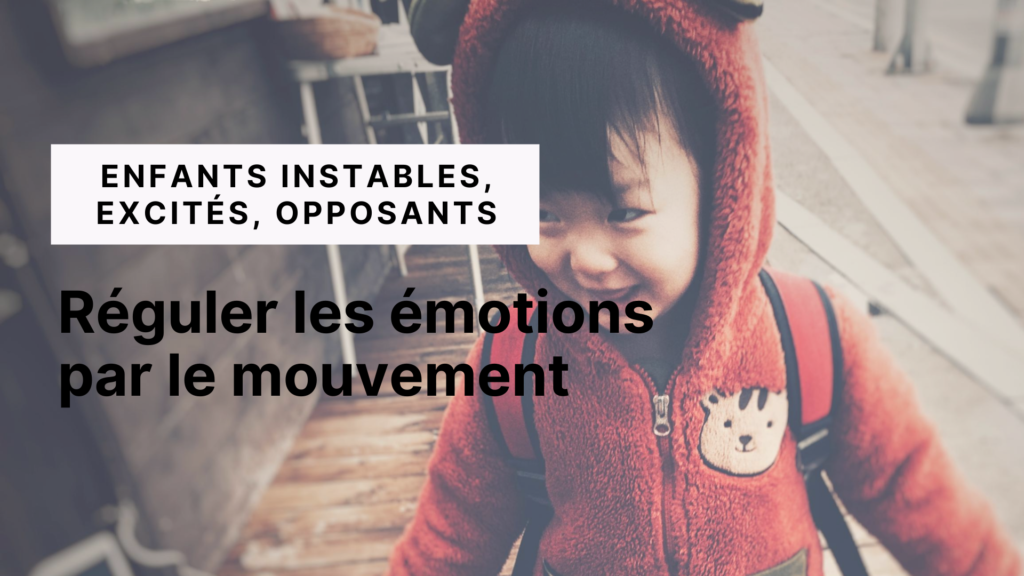
Regulating emotions through movement is a gentle, playful way to help children who are restless, overexcited or oppositional. The idea is simple: by changing how fast, how strong or how softly we move and touch, children become aware in their bodies of what is shifting inside them.
The games below come from a therapeutic approach built on modulating speed and force, plus caring touch. They work just as well at home on a rainy afternoon as they do in a calm moment after a tantrum.

Quick takeaways
- Change speed, force and touch to help children feel emotions in the body
- Name body parts kindly during slow lotion games
- Use guessing games with a soft ball to build body awareness
- Vary breath strength with ping-pong ball challenges
- Rock, ride and bounce to teach rhythm and self-awareness
- Use silly signals and cushion dares to practise impulse control
Why the body comes before the words
Young children often cannot explain what they feel. Their nervous system reacts first, and the explanation comes much later, if at all. Movement games give them a physical experience of calm and excitement that they can actually notice.
When you slow a rocking motion or soften your touch, you are showing the body a different pace. This is the same patient, repetitive comfort many families look for in books about routines, where predictability helps a child settle. The goal is not to stop the energy but to help the child feel it rise and fall.
This matters especially with a child who pushes back. Opposition is often a sign of overwhelm, and a playful challenge respects that without a power struggle.
Lotion and soft-touch games
Warm some lotion in your hands and apply it slowly, naming each body part with kindness: “Now I'll put lotion on your hands, your lovely soft little hands. Here's a thumb, here's your index finger, and here's a little finger.” Move on to the feet and marvel at those five toes, exactly the right number.
The pace is the point. Rushing turns it into a chore; lingering turns it into connection. This kind of gentle attention is close to what new parents learn about the postpartum period, when touch and calm matter as much as practical care. It also echoes the everyday patience behind letting him choose his own clothes.
The guessing game
Take a soft ball of cotton, a piece of batting or a brush and pass it over your child's skin. Tell them to close their eyes and say where they felt the touch, then swap roles so they touch you. Guessing keeps attention in the body, and the swap gives them a sense of control—much like the small party favor toys that reward turn-taking.
| Game | Main skill | What to watch for |
|---|---|---|
| Lotion naming | Calm, body awareness | Keep the pace slow |
| Soft-touch guessing | Attention, trust | Swap roles often |
| Blowing the ball | Breath control | Vary the strength |
| Boat and horse | Rhythm, regulation | Follow the child's cues |
| Cushion challenge | Impulse control | Celebrate effort loudly |
Blowing games for breath control
Sit face to face on the floor with a ping-pong ball or a party blower between you. Take turns blowing to reach the other person's knee or foot, then set small challenges: blow the ball off a cushion, or make it move without letting it fall.
Vary the strength of the breath on purpose. A long slow blow calms, a sharp quick one excites, and the child learns to feel the difference. These short, focused games fit easily into a routine, much like the little rituals in outdoor play ideas that give a day its shape.
If your child loves a challenge, add a playful target and cheer every attempt. The breath does the regulating work while the game keeps them willing.
Rocking, riding and rhythm
Play boat on the water: sit facing each other, legs apart with your feet touching, hands on each other's wrists, and rock while singing “Row, row, row your boat.” Change the tempo, sometimes slow, sometimes fast, with wide deep movements or short ones.
Then try horse riding at home, with your child on your back, moving from walk to trot to gallop with more or fewer bounces. Rhythm games like these build the same steady beat children enjoy in classic children's literature, where repetition is comforting rather than boring. For more playful ways to keep the beat, try these online games.
Reading the signals
Watch your child's face as the pace changes. If they light up, keep going; if they tense, slow down. Letting them call “faster” or “slower” turns the game into a lesson in self-awareness, much like the values we learned about patience and listening.
The cushion challenge
Have your child sit with their feet slipped under a large cushion. On your signal, they kick the cushion into the air. React with exaggerated wonder: “Look at that! What strength! Can you do it with two cushions?”
Add a silly signal such as “beaver” or “fuzzy,” and slip in decoy words like “otter” or “badger” to practise impulse control before the real one. Then add a third cushion, always admiring their power and adding a friendly dare. Let them choose their own signal and make a few false starts.
This playful challenge channels energy much like a good superhero toy does, giving strength a clear and safe outlet. Finish with a big “Hurray! Fantastic!”
The wrapped-up gift
One parent wraps the child in a blanket while the other is called in: a wonderful gift is waiting to be unwrapped. The second parent opens it with real enthusiasm and declares, “Yes, what a marvellous gift!”
The surprise and the delight land in the body as much as the words. It is a small reminder that connection, not correction, is what settles a child after a hard moment. Families who enjoy building together often find the same calm in shared projects, from LEGO sets for adults to a simple puzzle on the floor.

My hands-on take
I tried the cushion challenge first because it needed nothing but a cushion and a silly voice. My son kicked it once, laughed, and immediately asked for two. The decoy words were the real test: he caught himself twice before shouting the right signal, and I could see him enjoying the effort of holding back.
The lotion game was slower to win him over, but naming each finger in a quiet voice settled him in a way that a screen never does. What I learned is that these games are not about tiring a child out. They are about giving the body a small, safe experience of going from fast to slow, and letting the child notice it happen.
Frequently asked questions
What if my child refuses to play?
Start with the calmest option, like lotion or soft touch, and keep it short. Invitation works better than instruction, and you can try again another day.
Can these games help an oppositional child?
Yes, because they offer playful challenges instead of demands. The child keeps a sense of control while the body does the regulating work.
How long should a session last?
A few minutes is usually enough. Stop while it is still fun, and repeat often rather than playing for a long stretch.
Do I need special equipment?
No. Lotion, a soft ball, a cushion, a blanket and a ping-pong ball cover almost everything described here.
Product Reviews
 Best Toys for Dogs With High Prey Drive |
Best Outdoor Toys for 3-4 Year Olds |
Best Outdoor Toys for 6 Year Olds |
Best Harness for Poodle |
Best LEGO Sets for Adults |
Best Travel Toys for 4 Year Olds on Airplane |
Best Toy Stores in Washington DC |
Best Potty Training Toys |
Best Toys for Tripod Dogs |
Maillot equipe de france







