


Parenting disagreements in a blended family can quietly harden into a permanent conflict if nobody names them early. Two adults arrive with different habits, different histories and often a child who remembers how things used to be. The good news is that most clashes over rules and discipline can be defused before they take root.
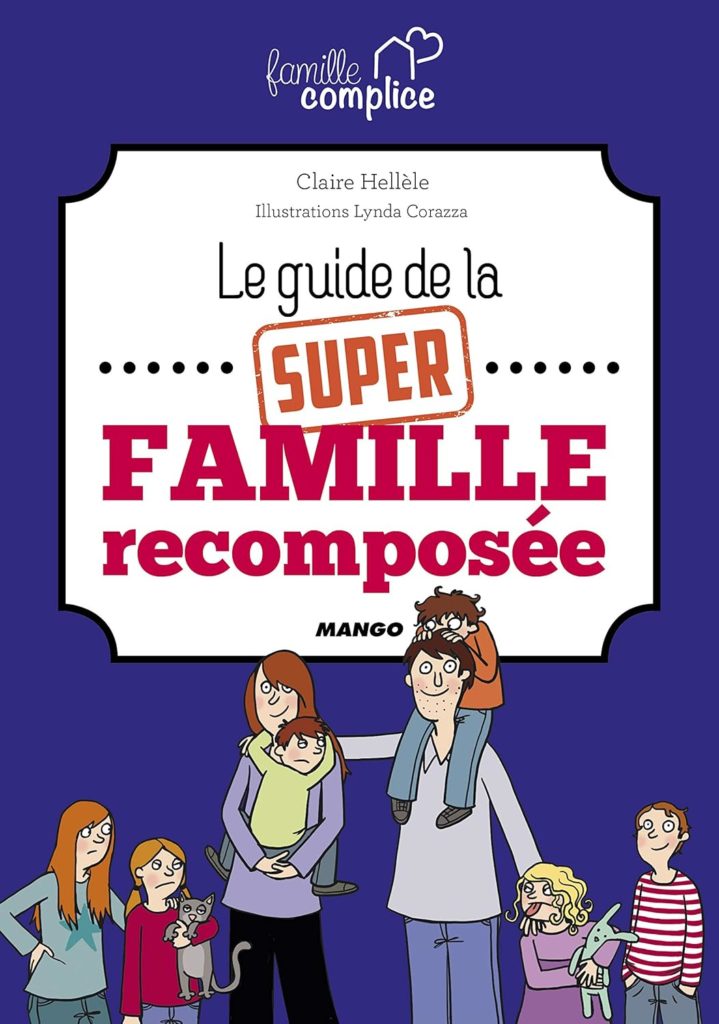
What follows draws on the communication advice of family author Claire Hellèle and turns it into practical steps you can use at home. The aim is not to agree on everything, but to stop differences from turning into a standing battle that wears down the couple and the children alike.

Quick takeaways
- Talk about discipline and routines before a crisis forces the conversation.
- Use a short pause: “I’ll discuss it with your other parent and get back to you.”
- Never criticise the other adult in front of the child; raise it privately.
- Announce any rule change together, with the stepparent visibly present.
- Accept concessions and let go of the picture of the “ideal” family.
- Seek outside help early if the conflict starts threatening the couple.
Anticipate the touchy subjects and agree on shared values
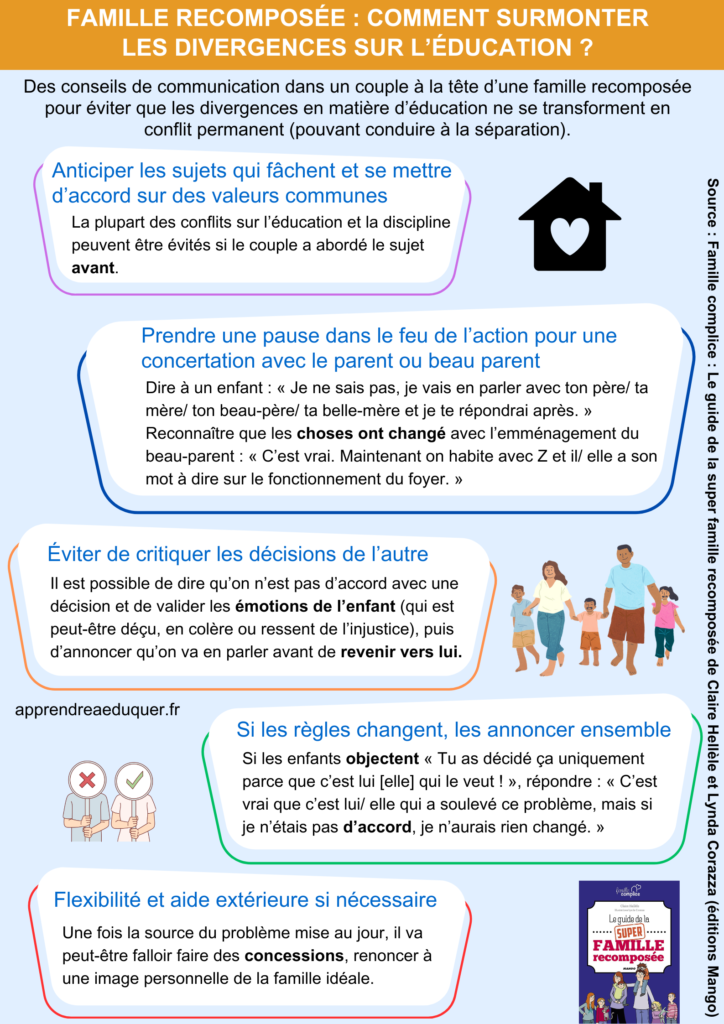
Most conflicts about education and discipline can be avoided if the couple has talked about them beforehand. That sounds obvious, yet at the start of a relationship everyone is absorbed in the couple itself, assumes problems will be handled as they come, and nobody wants to raise the awkward topics. Hellèle insists this is one of the best things you can do to prepare the future of your family, and therefore of your couple.
In practice, that means sitting down while things are calm and asking direct questions: what does bedtime look like, who handles homework, how are screens managed, what happens when a child is rude? You do not need identical answers, only a shared baseline you can both defend. If you are still choosing everyday equipment for the children, browsing toys for four or toys for eighteen can be a low-pressure way to start talking about play, routines and limits.
Pause in the heat of the moment and consult the other adult
Hellèle suggests a simple sentence to use with a child: “I don’t know, I’ll talk it over with your father, your mother, your stepfather or your stepmother, and I’ll answer you afterwards.” This can feel difficult for a parent who has run things solo for years before the family blended, especially if the child retorts that nobody else’s opinion was ever needed before.
You can acknowledge that honestly and name what has changed since the stepparent moved in: “That’s true. Now we live with X, and they have a say in how the household runs.” The pause buys you time and prevents a decision taken in irritation from becoming a precedent. It also signals to the child that the adults are a team, not two competing authorities.

| Situation | What to avoid | What to do instead |
|---|---|---|
| Child asks for a decision you are unsure about | Answering alone on the spot | Pause and consult the other adult first |
| You disagree with the other adult’s choice | Undermining them in front of the child | Validate the child, then discuss it privately |
| A house rule is changing | Letting the stepparent announce it alone | Announce it together, parent speaking |
| Child says “you only did it for them” | Justifying yourself defensively | Confirm the idea, restate your own agreement |
| Conflict keeps returning | Repeating the same argument | Consider a mediator or outside support |
Avoid criticising the other adult’s decisions
Avoiding criticism does not mean swallowing your disagreement. You can tell the child you are not comfortable with a given decision, validate their emotions — disappointment, anger, a sense of injustice — and then say you will discuss it with the other adult before coming back to them. Hellèle’s advice is to raise it privately, listen to the reasons behind the other adult’s choice, recognise the good intention, and only then explain how you would have handled it. “It isn’t a competition,” she writes; you are looking together for the best way forward.
Look behind the outburst
Aggression in a child or teenager often hides an unexpressed need. Hellèle describes a stepfather who commented on his stepdaughter’s falling grades and got an explosion in return: the girl was hurt that her father saw her only through her marks and had hoped her stepfather would support her and see her beyond them. Clumsiness and misunderstanding are not always avoidable, but good communication about emotions, intentions and motives can repair them.
When the rules change, announce them together
Suppose one of your discussions leads to a change in a house rule. In the early years of a blended family, you will probably let the biological parent state the new rule, but make sure the stepparent is standing beside them while they do it. For example: “Until now I haven’t asked you to help clear the table, but from now on nobody leaves the kitchen until the dishes are done and the counter is wiped.”
If the children, quick as ever, object that “you only decided that because he or she wants it,” do not get defensive: “It’s true that he or she raised the issue, but if I didn’t agree with it, I wouldn’t have changed anything.” A united front matters more than who had the idea. If evenings are the flashpoint, phrases to sleep can help you build a calmer shared bedtime script.
Flexibility, concessions and outside help when the couple is at risk
Hellèle stresses flexibility: once the source of the problem is out in the open, you may have to make concessions and give up a personal picture of the ideal family. That image is often the real obstacle, because each adult is quietly measuring the household against a model nobody else can see.
When conversations keep circling, an outside mediator, a counsellor or a parenting support group can help you hear each other again. Reading widely helps too — TED Talks parenting offer short, structured perspectives you can watch and discuss together. And if tension is affecting a younger child’s behaviour, resources such as managing child fatigue or molluscum contagiosum treatment remind you that some difficulties are ordinary and solvable rather than signs of failure.
Small everyday habits that protect the couple
Beyond the big conversations, small routines keep disagreements from accumulating. Agree that neither adult corrects the other in front of the children, that disagreements wait for a private moment, and that whoever speaks first speaks for both. Keep the couple’s own time protected, since a blended family is built on the pair as much as on the children.
It also helps to notice what is going well, not only what needs fixing. A shared activity, a game chosen together from a list such as screen free toys or toys under fifty, gives everyone something neutral to enjoy. If you are furnishing a new shared home, even a browse through toy stores Fort Worth or toy stores San Diego can turn into a relaxed family outing rather than another negotiation.

My hands-on take
In my own experience, the single most useful habit was the deliberate pause. Early on I would answer a request instantly, then discover my partner had a completely different view, and the child learned quickly that asking twice got two answers. Once we started saying “let me check with the other one and I’ll tell you tonight,” the daily friction dropped noticeably.
The second habit was announcing changes together. We once changed the after-dinner routine and made the mistake of letting only one of us explain it; the objection came within seconds. The next time we stood side by side and said the same thing, and although the children grumbled, nobody argued about who was behind it. It is not magic, but it keeps small disagreements from becoming the family’s permanent weather.
Frequently asked questions
Should a stepparent discipline their partner’s child?
There is no universal rule, but the couple should decide together what authority the stepparent holds and state it clearly. In the early years, it often works best for the biological parent to announce decisions with the stepparent visibly beside them.
What if my child says the stepparent shouldn’t have a say?
Acknowledge that things really were different before, then explain simply that the household has changed and the stepparent now has a voice in how it runs. Avoid debating it in the heat of the moment.
How do we handle a rule change without a backlash?
Announce it together, keep the wording short and concrete, and expect the “you only did it for them” objection. Confirm the idea came from the stepparent while restating that you agree with it.
When should we look for outside help?
When the same disagreement keeps returning without moving forward, or when it starts threatening the couple itself. A mediator or counsellor can help you hear each other before positions harden.
Product Reviews
 Best Toys for Dogs With High Prey Drive |
Best Outdoor Toys for 3-4 Year Olds |
Best Outdoor Toys for 6 Year Olds |
Best Harness for Poodle |
Best LEGO Sets for Adults |
Best Travel Toys for 4 Year Olds on Airplane |
Best Toy Stores in Washington DC |
Best Potty Training Toys |
Best Toys for Tripod Dogs |
Maillot equipe de france







