


Fostering children's contribution to household chores works best when we treat discipline as teaching rather than correcting. Jane Nelsen, who developed the concept of positive discipline, points out that one meaning of the Latin root of "discipline" is "to teach" — and teaching has never meant criticising, lecturing or punishing.
In her words, teaching is an act full of encouragement and kindness that gives young people the skills they need to build healthy self-esteem. That single shift in perspective changes how we ask for help around the house.

Quick takeaways
- Treat discipline as teaching, not correcting or punishing
- Move through four stages: observe, help, try with support, do alone
- Recognise effort with specific thanks and described actions
- Show and name expectations to avoid misunderstandings
- Keep chores realistic for age and ability
- Make tasks playful and co-build a family responsibilities plan
The four stages of learning a chore
Before a child can take on a task alone, they move through a gradual sequence. First, the child watches the parent do the chore while the adult explains in simple terms what they are doing and why. Next, the adult does the task with the child's help, once the child has observed it several times, understood its purpose and has the motor skills to join in. The adult puts the work into words again and states clearly what they expect.
Then comes the stage where the child performs the task with the adult's help, trying it out under a kind, encouraging eye while the adult reminds them of the instructions — adapting support so it is neither too much nor too little. Finally, the adult simply observes the child doing it alone, because the child now feels confident enough to start on their own.
Why the order matters
Skipping straight to "do it yourself" often leads to frustration on both sides. Moving through each stage gives children the skills and the confidence they need, much like the patient build-up described in baby's first outings. Just as timing and readiness shape big milestones, and an imaginary friend can support growing independence, steady practice builds real capability.

Pillar 1: recognise and value effort, however small
This is the principle of positive reinforcement — not rewards, and certainly not money for chores, but full attention and genuine signs of recognition. Thank the child specifically ("you cleared the table, thank you so much"), add a warm "well done", or name what it took ("that took real patience").
Describing what was actually done works well: "You took the plates off the table, put them in the dishwasher and rinsed the glasses — it's a pleasure to see the table cleared." Expressing positive emotion ("it makes me happy to see that…") lands far better than reproach. If something is left undone, you can still use positive language: "The table is cleared and the dishwasher is running; there's just a quick wipe needed for the crumbs. I'll do it this time and leave it to you next time."
Children who feel seen for their efforts are far more willing to try again, even after a setback such as the ones covered in children dealing with disappointment. These small everyday moments build lasting confidence, and if relatives interfere in care, keep your approach consistent.
| Stage | Who does the task | What the adult does |
|---|---|---|
| 1 | Adult | Explains simply what and why |
| 2 | Adult with child's help | Names expectations, welcomes help |
| 3 | Child with adult's help | Encourages, reminds, adapts support |
| 4 | Child alone | Observes with confidence |
Pillar 2: spend time teaching how it's done
For a child, "tidy the kitchen" may honestly mean "stack the plates in the sink". Showing and naming your expectations prevents misunderstandings between adults and children. If you worry that children or teens will forget the instructions, display them as pictograms or drawings in a visible spot — small hearts or colourful doodles can brighten up a reminder sheet.
Anticipating situations also helps. When my daughter and her friend wanted to make "potions" in her room, I said yes but asked them to confirm they would clean up any mess themselves and leave the room as tidy as before. Naming expectations in advance and checking the children understood them builds responsibility and reduces later conflict.
Make the routine visible
A simple chart on the fridge keeps everyone on the same page, much like a packing list helps you remember everything for children's summer. Just as with choosing nipple creams, clear guidance makes everyday decisions easier.

Pillar 3: keep expectations realistic
Age and ability matter. A task that is reasonable for a teenager may be overwhelming for a younger child, and asking too much too soon invites resistance. Match the chore to what the child can genuinely manage, then stretch the responsibility gradually as their skills grow.
Realistic expectations also mean accepting a "good enough" result at first. A child learning to fold laundry will not produce perfect stacks, and that is fine — the point is participation and progress, not precision.

Pillar 4: turn obligatory tasks into enjoyable moments
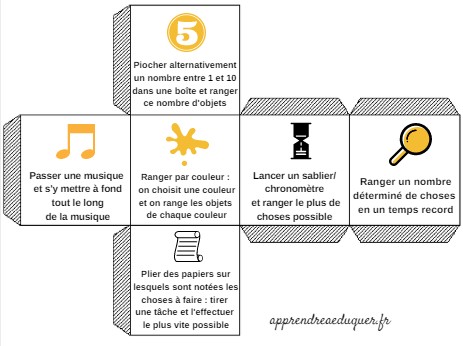
Playful parenting makes a real difference. Put on upbeat music during cleaning, do role-play while sorting laundry — as a robot, an airline pilot or a cosmonaut — set friendly challenges, work together as a team, or sort by colour and shape.
And since children imitate us more than they listen to our advice, it helps to reframe chores as acts that meet our own needs. Instead of "I have to take the bins out", try "I choose to take the bins out because it feeds my need for a clean, welcoming home and my need to contribute to the family's health."
That modelling matters, just as it does when you take the baby on a and show them how to prepare carefully.

Pillar 5: co-build a responsibilities plan everyone accepts
In positive discipline, the Family Meeting is the moment to discuss the problems a family faces and find solutions that satisfy every member. A shared schedule of responsibilities, built together and accepted by all, aims at a win-win outcome rather than an adult decree.
When everyone has a say, the plan feels fair and children are more likely to honour it. Keep the tone collaborative and revisit the schedule as circumstances change.
Keep the spirit light
Cooperation grows when the atmosphere is warm, much like the relaxed mood of a few days at grandparents'.
Building cooperation that lasts
None of these pillars works in isolation. Recognition, teaching, realistic expectations, playfulness and shared planning reinforce one another, and progress is rarely linear. Some weeks a child will pitch in eagerly; other weeks they will resist, and that is normal.
The goal is not a spotless house but a growing sense of belonging and capability. Over time, children who are taught rather than scolded come to see contributing at home as part of family life, not a punishment.
My hands-on take
In our home, the turning point was stopping the nagging and starting to teach. I remember asking my son to "tidy the kitchen" and finding the plates simply stacked in the sink — not defiance, just a different picture of what tidying meant. So we walked through it together, step by step, and I described out loud what I was doing and why.
What surprised me most was how much a specific thank-you changed things. Instead of a vague "good job", I started naming exactly what he had done, and he began offering to help without being asked. We still have off weeks, and I still remind myself to keep expectations realistic. But treating chores as teaching moments, not battles, made the whole house calmer.
Frequently asked questions
Should children be paid for chores?
No. Positive discipline favours recognition and encouragement over money or rewards. Specific thanks and described effort build lasting motivation better than payment.
What if my child does a chore badly?
Accept a "good enough" result at first and focus on participation and progress. Adjust your support so it is neither too much nor too little, and refine skills over time.
How do I stop forgetting to explain tasks?
Display instructions as pictograms or drawings in a visible place. Naming expectations in advance and checking understanding reduces conflict later.
Does this approach work for teenagers too?
Yes. Teens respond well to co-built schedules and genuine recognition. A shared responsibilities plan everyone accepts keeps cooperation fair and sustainable.
Product Reviews
 Best Toys for Dogs With High Prey Drive |
Best Outdoor Toys for 3-4 Year Olds |
Best Outdoor Toys for 6 Year Olds |
Best Harness for Poodle |
Best LEGO Sets for Adults |
Best Travel Toys for 4 Year Olds on Airplane |
Best Toy Stores in Washington DC |
Best Potty Training Toys |
Best Toys for Tripod Dogs |
Maillot equipe de france







