


Overstimulated children are a common feature of modern Western life, and the cause is not the child but the environment. A child's nature has not changed, yet the world around them now delivers a constant stream of stimuli: television, smartphones, social media, text messages, after-school activities, shrinking sleep hours, early school enrolment, talking toys and educational programmes for babies.
A young child is affected by details that an adult, less sensitive or seeing things from a different perspective, barely notices. Human beings adapt well to their environment, but our nature has limits, and when those limits are pushed the consequences can be undesirable.

Quick takeaways
- Overstimulation comes from the environment, not from the child's nature.
- Too much stimulation smothers the innate thirst to learn.
- Overstimulated children grow bored of ordinary, slower reality.
- Change the adult approach before trying to change the child.
- Protect free play, nature, routines, silence and beauty.
- Presence and bond matter more than sensory excess.
What overstimulation does to a child
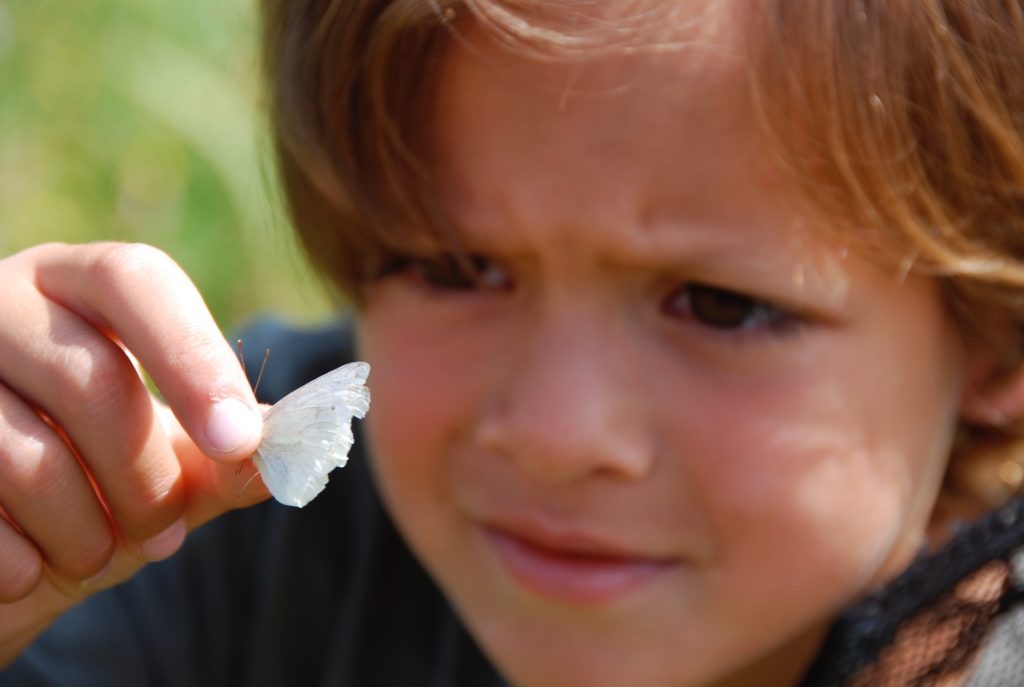
The drive to know is what pushes children to learn, not the wish to collect adult approval or good marks. Overstimulation replaces that natural momentum and wears down the sense of wonder that sits at the base of curiosity and learning. Children who are overstimulated grow used to wanting ever more stimulating surroundings.
They dislike staying still and crave distractions and ever more intense sensations. Their innate thirst to learn is smothered, and they may end up seeking entertainment through means that are more or less appropriate, sometimes going as far as vandalism. A child's mind becomes accustomed to a reality that does not exist in everyday life.
Distraction instead of attraction
When that mind turns to slower content and focuses on ordinary reality, it can no longer see beauty in the everyday and becomes bored. Such children become distracted, and distraction is the opposite of attraction. Children who have not yet entered this spiral stay naturally curious, whatever their intellectual potential, if we avoid handing them ready-made answers and let them discover the world at their own pace through spontaneous activity.
Change the approach, not the child
What has to change to counter the loss of wonder is not children or teenagers but our approach to their education. We can stop imposing activities and trying to make children more performant, and start appreciating them as they are, with their own tastes and rhythm. As Einstein is said to have remarked, a problem cannot be solved with the modes of thought that created it.
Children who have lost the capacity to marvel need caring adults to help them recover their natural curiosity and enthusiasm. That recovery is less about adding stimulation than about removing excess and making room for slower, richer experience, much as learning to walk works better when nobody rushes the child. The same unhurried spirit applies to everyday upsets, such as hiccups in babies, which pass more calmly when met with patience rather than fuss.
| Element | Overstimulating environment | Wonder-friendly environment |
|---|---|---|
| Toys | Flashing, noisy, battery-driven | Simple, open-ended, silent |
| Schedule | Packed with activities | Long stretches of free time |
| Screens | Constant background presence | Screen-free pauses and silence |
| Materials | Plastic, clutter, bright noise | Wood, wool, greenery, daylight |
| Adult role | Directing and performing | Present, attentive, unhurried |
Arrange environments that favour wonder
Setting up environments that favour wonder means respecting children's sensitivity, their spontaneous gestures, the innate curiosity that drives discovery, their personal rhythms and the stages of their growth. It means long stretches of free play and exploration, frequent contact with nature, and rituals and routines that bring stability and a sense of time.
It also means screen-free pauses and times of silence. Surround children with beauty: natural elements such as wood, wool, greenery and daylight, and simple toys that do not flash or make noise. A plain cardboard box often offers more genuine play than a battery-powered gadget.
Beauty is also relationship
Beauty is also the love and comfort of parents, the smile of a brother or sister, the kindness of a friend, a lush garden offering varied and colourful fruit and vegetables. Simple, open-ended materials support this, and a few well-chosen learning toys can carry a child through hours of quiet discovery.
Rethink family relationships
Instead of working hard to provide an excess of sensory stimulation during the early years, it is better to pay more attention to the modes of interaction between child and adult. Simply being present and establishing a bond of trust does more than any packed schedule.
This is where the home environment matters most. A calm corner with a few foam block toys or a small set of wooden pieces invites deep, repetitive play rather than passive consumption. Time in nature helps too; even a nearby park or a short walk can reset a child's attention, and families who seek out natural places to swim or wander give children exactly the slow, sensory-rich contact they need.
Shared rituals, unhurried meals and stories read aloud build the same bond, and even maths stories can become a calm, curious moment rather than a drill. Choosing unconventional princess stories can spark the same quiet wonder. The goal is not to fill time but to protect it.

What to keep and what to remove
In practice, protecting wonder is a matter of editing. Keep the toys that invite the child to act and imagine; remove or store the ones that act for them. Keep routines predictable so the day feels safe; remove the background noise of screens and constant commentary.
Keep long, empty afternoons; remove the urge to schedule every hour. Keep beauty in the room, in natural materials and light; remove clutter that competes for attention. Parents who model slowness, who notice a bird or a changing leaf aloud, teach wonder more effectively than any programme, and small daily choices like choosing toys for babies that leave room for the child's own initiative make a real difference.
My hands-on take
I noticed the change in my own home when I stopped filling every quiet moment. For a while I thought a bored child was a problem to solve, so I added another activity, another toy, another screen. The result was a child who could not settle and who asked for more the moment anything ended.
What helped was subtraction. I cleared most of the flashing toys into a cupboard, kept a basket of wooden blocks and a box of fabric, and let afternoons stay empty. The first few days were restless, and I had to resist the urge to rescue the boredom. Then something shifted: my child began building, sorting, telling stories, and noticing things on walks again. I did not need a new method, only the patience to leave space.
Frequently asked questions
How can I tell if my child is overstimulated?
Signs include difficulty staying still, craving ever more intense sensations, boredom with ordinary life and a short attention span. These children are saturated rather than lazy, and their natural curiosity has been stifled.
Should I remove all toys and activities?
No. The aim is to edit rather than eliminate. Keep open-ended toys and a few meaningful activities, and remove the constant noise, flashing devices and over-filled schedules that compete for attention.
Why is free play so important?
Free play lets children discover the world at their own pace and follow their own curiosity. It protects the sense of wonder that underpins learning, rather than replacing it with the wish to please adults or collect approval.
Does nature really help?
Frequent contact with nature offers slow, rich sensory experience without overload. It gives children beauty, rhythm and quiet attention, which are exactly what an overstimulated mind needs to recover.
Product Reviews
 Best Toys for Dogs With High Prey Drive |
Best Outdoor Toys for 3-4 Year Olds |
Best Outdoor Toys for 6 Year Olds |
Best Harness for Poodle |
Best LEGO Sets for Adults |
Best Travel Toys for 4 Year Olds on Airplane |
Best Toy Stores in Washington DC |
Best Potty Training Toys |
Best Toys for Tripod Dogs |
Maillot equipe de france







