


Breaking the cycle of educational abuse is possible, and it is never too late to start. One common belief says that parents who were mistreated will inevitably become mistreating parents, but this is false, and believing it only adds guilt to an already heavy load.
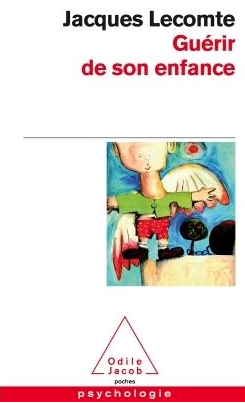
What actually helps is knowledge: knowing which conditions make repetition less likely gives parents who were hurt in childhood a real map instead of a fear. The points below come from the work of Jacques Lecomte on healing from childhood, including a long-running study of mothers considered at high risk.

Quick takeaways
- Being mistreated in childhood does not make you a future abusive parent.
- Self-reflection and empathy are protective skills you can practise.
- A supportive partner and a network of friends make a measurable difference.
- One reliable adult in childhood, a resilience tutor, can change a life.
- Therapy in adulthood can break the belief that repetition is inevitable.
- Remembering the violence clearly, without minimising it, is part of healing.
Why the “abused child, abusive parent” idea is wrong
The idea that mistreated children automatically become mistreating parents is a received idea, not a rule. Jacques Lecomte, in his book on healing from childhood, lists several elements that make it easier to stop the transmission of mistreatment from one generation to the next: a strong capacity for self-reflection, empathy, a supportive partner, a network of friends, and a caring institutional framework.
That last point matters more than parents often realise. Effective child protection services, laws that forbid violence against children and a public network of parenting support all change the conditions in which a family lives. A parent does not have to do this work alone, and the wider environment can either cushion the risk or add to it.
Knowing this has a practical effect: it turns a vague fear into a set of things you can actually influence, from how you talk to yourself to who you keep around you.
What the Minnesota mother-child study found
Lecomte cites a study of children and families at high risk, run at the University of Minnesota since 1975 by Egeland and colleagues. In this mother-child project, 47 mothers who had suffered various kinds of abuse in childhood took part, and the researchers looked at what distinguished those who broke the cycle from those who repeated it.
The findings are concrete rather than abstract. The mothers who did not repeat the pattern shared a small number of common characteristics, and each of them is something a parent can recognise, seek out or build over time. None of them requires being a perfect parent or having had a happy childhood.
Stable, supportive relationships
Compared with mothers who reproduced the mistreatment, those who broke the cycle described their relationship with their husband or partner as more satisfying and felt better emotionally supported. In most cases this partner was the child’s father and was involved in the child’s care.

| Factor | What it looks like | How to build it |
|---|---|---|
| Self-reflection | Thinking about your own reactions | Journaling, therapy, honest talks |
| Empathy | Understanding others’ motives | Listening before correcting |
| Supportive partner | Emotional support, shares care | Agree on care tasks together |
| Social network | Friends you can rely on | Keep contacts, ask for help |
| Resilience tutor | One adult who supported you | Name them, be one for a child |
| Clear awareness | Precise memory of the abuse | Speak about it, don’t minimise |
A resilience tutor in childhood
The mothers who broke the cycle also reported more often that someone had given them emotional support when they were children: foster parents, a relative, one of their own parents, or sometimes a teacher. This figure is often called a resilience tutor, and it shows that a single reliable adult can change the direction of a childhood.
For parents today, this cuts two ways. It is worth naming and remembering the person who was there for you, because that memory is a resource. And it is worth asking who could play that role for your own child, whether that is a grandparent, a neighbour, a coach or a teacher.
Children also need room to play and to be children, which is why simple things like open ended toys or a few good tummy time toys for the youngest matter: a calm, playful daily life is part of the emotional support a child receives.
The role of psychotherapy in adulthood
Following psychotherapy as an adult was another common trait among the mothers who broke the cycle. During therapy, one of the most important steps may simply be learning that you will not inevitably mistreat your child, because that belief alone can shape how a parent reacts under stress.
Therapy is not a luxury or an admission of failure; it is a place to look at your own history with someone trained to help you do it. For a parent carrying a difficult childhood, it can also be a way to separate what happened to you from what you want to pass on.
Daily parenting questions, from how to help baby pass gas to choosing a first children’s bicycle, are easier to handle when your own emotional load is being looked after. Practical worries and old wounds tend to arrive at the same time, and support for both is legitimate.

A clear awareness of the violence suffered
The mothers who did not reproduce the mistreatment were very aware of their past and remembered it precisely. They spoke about it with a lot of emotion, and they were generally very articulate about how they wanted to raise their children. They recognised the effects the mistreatment had on them, and the potential effects on their own behaviour as a mother.
This is the opposite of minimising or excusing what the parents did. Clear sight is not resentment: it is simply refusing to call violence something else, so that it does not get repeated by habit or by default.
That same clarity helps with ordinary decisions. Knowing your own limits makes it easier to think about raising a child without falling back on “that’s just how I was raised”, and to notice when a child’s behaviour, such as the love for dad stage, is normal development rather than a problem to be corrected.
Building the conditions, one by one
None of these conditions is a verdict on your past. A partner, a friend, a therapist, a supportive institution and an honest memory of your childhood are all things that can be found or strengthened, even if they were missing before.
It also helps to keep the wider picture in view. Children’s wellbeing depends on health, sleep, play and attention as much as on discipline, and parents who look after those basics are already doing protective work. Learning about mumps symptoms or infant botulism is part of the same protective instinct.
And when you choose what comes into the home, from outdoor toys to a simple wooden house, you are also shaping the atmosphere your child grows up in. Small, repeated choices are how a different cycle gets built.

My hands-on take
What struck me most when I first read about this was how unglamorous the protective factors are. There is no single heroic act, just a partner who shares the night feeds, a friend who answers the phone, a therapist who keeps the appointment every week. When I started paying attention to my own reactions instead of just reacting, I noticed how often I repeated a tone of voice I had sworn I would never use.
Naming that out loud, first to myself and then to someone I trusted, changed more than any resolution I had made. I also started looking for the small supports I could give my child: a calm bedtime, a familiar adult to talk to, room to play. None of it fixes the past, but it does make the present steadier.
Frequently asked questions
Does being abused as a child mean I will abuse my child?
No. The idea that mistreated children inevitably become mistreating parents is false, and research on high-risk families shows that many mothers broke the cycle. What matters is the conditions around you, not a fixed destiny.
What is a resilience tutor?
It is an adult who gives a child emotional support during a difficult childhood, such as a foster parent, a relative, a teacher or a neighbour. The mothers who broke the cycle often reported having had one.
Is therapy really necessary?
It is not the only path, but psychotherapy was common among the mothers who did not repeat the pattern. One key step is learning that you will not inevitably mistreat your child.
Can I break the cycle if my partner is not supportive?
A supportive partner helps, but it is one factor among several. Friends, a therapist, a teacher for your child and parenting support services can all provide part of what is missing.
Product Reviews
 Best Toys for Dogs With High Prey Drive |
Best Outdoor Toys for 3-4 Year Olds |
Best Outdoor Toys for 6 Year Olds |
Best Harness for Poodle |
Best LEGO Sets for Adults |
Best Travel Toys for 4 Year Olds on Airplane |
Best Toy Stores in Washington DC |
Best Potty Training Toys |
Best Toys for Tripod Dogs |
Maillot equipe de france







