


Emotion cards for kids and adults can be as simple as a small printable booklet that folds into an accordion, slips into a pocket and opens like a tiny book when feelings run high.
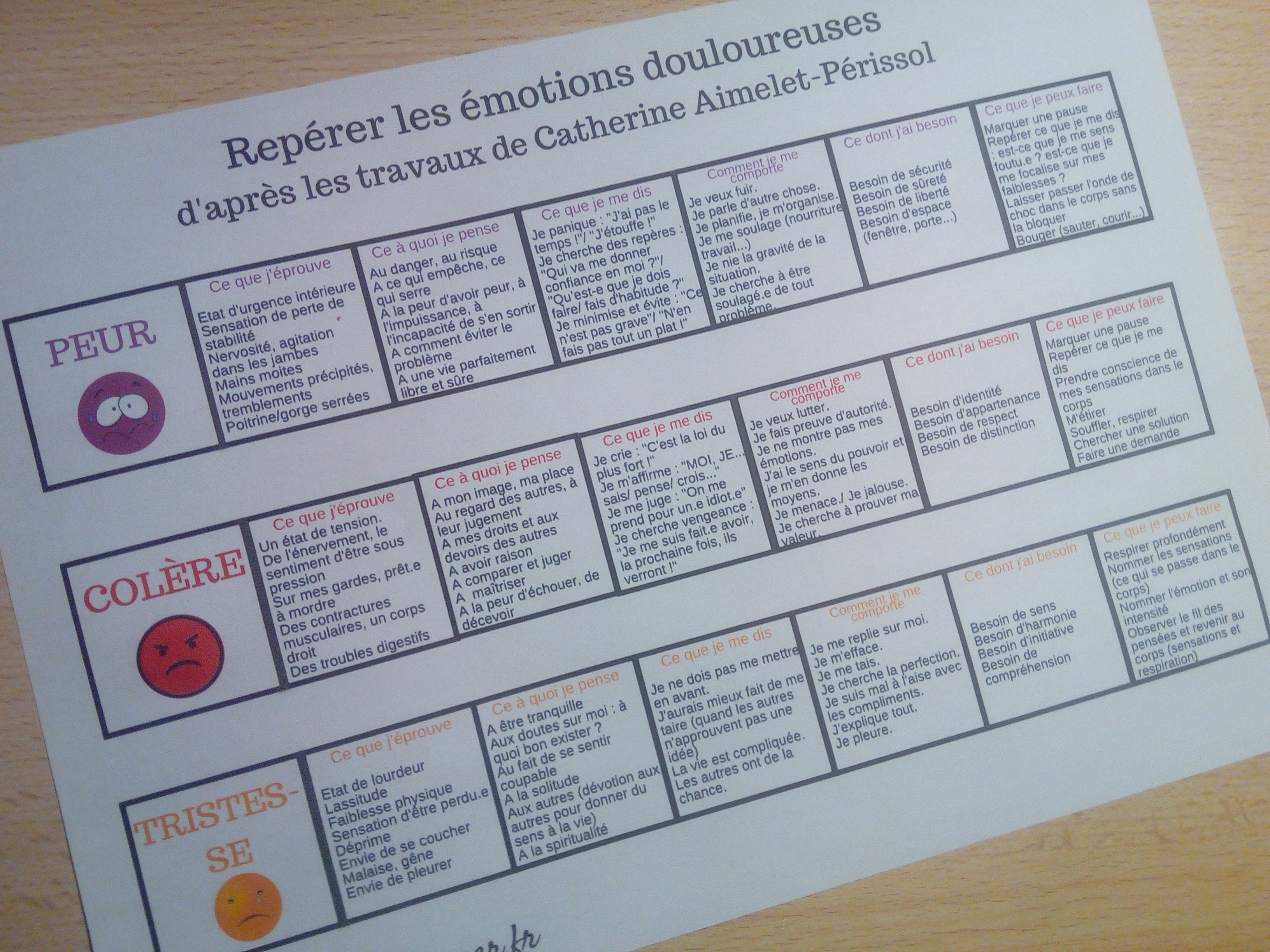
These booklets are built around the work of Catherine Aimelet-Périssol, author of a book on emotions, and they offer short reminders of what anger, fear and sadness feel like, plus a few steps for calming the body.

The aim is not to erase difficult feelings but to notice them early, name them and respond with a little more choice.
Quick takeaways
- Self-awareness means noticing sensations, emotions and the thoughts attached to them.
- Naming a feeling, such as admitting you are aggressive, already loosens its grip.
- Each booklet covers anger, fear and sadness plus a few regulation ideas.
- Print, cut and fold accordion-style with the cover in front so it opens like a book.
- They suit adults and children but work best inside a wider emotional education.
- Introduce them gradually rather than handing them over out of the blue.
Why self-awareness comes before regulation
Self-awareness is the keystone of emotional competence: it means noticing your sensations and your emotions, and also noticing the thoughts that come with them. Daniel Goleman, author of Emotional Intelligence, puts it plainly: anyone blind to what they feel is at the mercy of those feelings.
There is a useful distinction between being aware of an emotion and wanting to change it, yet in practice the two travel together. Admitting that you are being aggressive is already a step away from being aggressive.
Goleman also suggests that people who can identify what they feel, by reading body sensations and putting words to them, steer their lives better and see more clearly how their choices affect their couple, work and friendships. If you want to build that vocabulary slowly, choosing a book to share at bedtime is an easy place to start.
What the little booklets contain
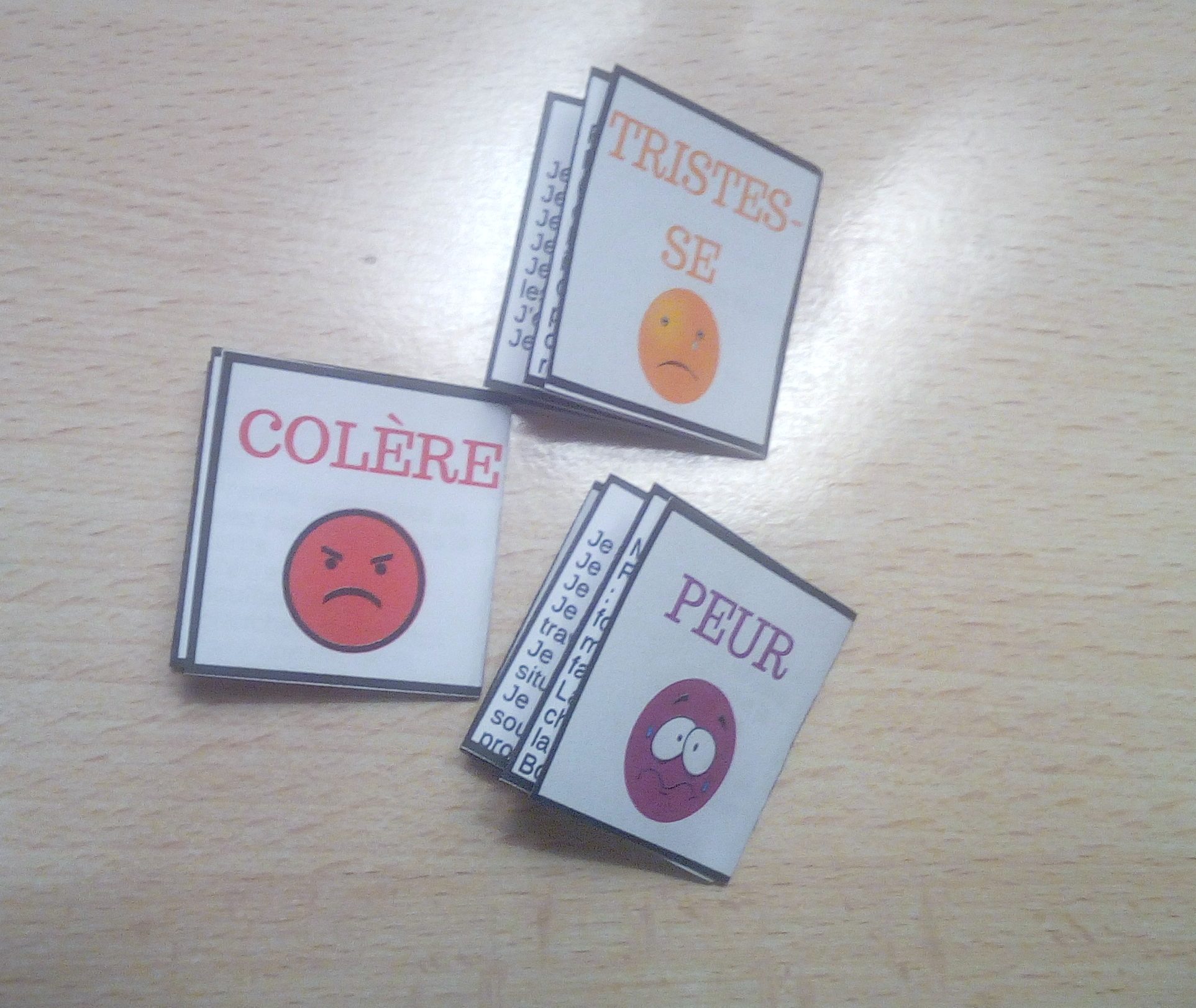
Each booklet is a condensed reminder of the elements that characterise painful emotions such as anger, fear and sadness, followed by a few ideas for emotional regulation. You print the page, cut it out and fold it accordion-style with the cover in front, so it opens like a small book and reveals each step of identification as you read.
Because they are small and sturdy once folded, they work as a pense-bête, a memory aid that stays available rather than being filed away on a shelf. They are meant for adults and children alike, and they become unnecessary once someone knows the dimensions of emotions and the regulation techniques well.
For children, handing over a booklet out of the blue rarely works. It finds its place inside a broader emotional education that develops seven emotional and relational skills, and it pairs well with playful tools such as sensory toys for toddlers that help a child settle their body first. As with stories and books, the booklet works best when shared, and it can sit alongside the questions raised in questions about sports when a child needs to name what they feel after a game.

| Emotion | What to notice in the body | A regulation step to try |
|---|---|---|
| Anger | Heat, tight jaw, raised voice, clenched hands | Pause, breathe out slowly, name the anger before speaking |
| Fear | Fast heartbeat, shallow breathing, tension in the stomach | Ground yourself, look around, describe what is actually happening |
| Sadness | Heaviness, tears, low energy, withdrawn posture | Let it be named, seek company, allow time without rushing |
| Any feeling | Thoughts that arrive with the sensation | Say the feeling out loud, then choose one small next step |
| After the storm | What helped and what did not | Note it on the booklet for next time |
How to fold and use them day to day
Print on ordinary paper, cut along the lines, then fold back and forth along each crease so the cover ends up in front. Press the folds firmly; a booklet that opens smoothly is far more likely to be picked up in a moment of frustration.
Keep one in a kitchen drawer, one in a school bag and one in the car. When a child is upset, wait for the first wave to pass, then open the booklet together and read one page only. The same goes for adults: reading the anger page while you are angry is a very different exercise from reading it on a calm Sunday.
Older children often enjoy decorating the cover, which makes the object theirs. Pairing the booklet with a calm-down corner, alongside a few toys for three year olds or a soft cushion, gives the ritual a physical home.

Building an emotional education routine
Emotional education works best in small, repeated moments rather than in one long lecture. Name your own feelings out loud during the day, use the booklet pages as a shared vocabulary, and let children hear you say that you were afraid and what you did about it.
Stories carry a lot of this work without any teaching tone. Books by Benji Davies offer gentle situations where a character feels something big and finds a way through, which gives a child a safe distance to talk about their own anger or sadness. When relatives interfere in the baby's care, keeping this shared vocabulary steady helps everyone stay on the same page.
Television and films can serve the same purpose if you watch together and comment. Even a sitcom episode can open a conversation about jealousy or embarrassment, much as a LEGO set review might open a conversation about patience and frustration during a build. The same curiosity works with outdoor toys, where turn-taking and losing a game become easy openings for naming feelings. Keep the tone curious rather than corrective.
When the booklets are not enough
These supports are deliberately modest. If a child's distress is intense, frequent or tied to school refusal or sleep problems, a booklet is not a treatment and should not be presented as one. Speak to your doctor or a child mental health professional.
For parents, the same applies: recognising that you are overwhelmed is useful, but ongoing anger or anxiety deserves proper support. You can also prepare for stressful moments in advance, the way you would plan toys for flights before a long journey, so that tiredness does not decide the tone of the day.
Used lightly and regularly, the booklets remain what they were designed to be: a small, always-available reminder that feelings can be noticed, named and handled with a little more care.

My hands-on take
I made my first set of these booklets on a rainy afternoon, printed them slightly too small and spent ten minutes refolding the creases until the cover sat properly in front. The first one went into my own bag rather than my child's, which turned out to be the right order: I was the one who needed the reminder about what anger does to my jaw and my voice.
What changed at home was not dramatic. We started reading one page together after a tantrum rather than during it, and the booklet became a calm ritual instead of a punishment. My child now sometimes fetches it alone and points at the sadness page without saying anything, which is more than I expected from a folded piece of paper.
Frequently asked questions
Who are these emotion booklets designed for?
They are written for both adults and children. Adults can use them as a quick reminder of what anger, fear and sadness involve, while children benefit when the booklets are introduced inside a wider emotional education rather than on their own.
How do you assemble a booklet?
Print the page, cut it out, then fold it accordion-style along the creases with the cover in front. It opens like a small book, revealing each step of emotional identification as you read through it.
Can I give a booklet to a child straight away?
It is usually difficult to introduce them out of the blue. They work better once a child has some shared vocabulary for feelings and when an adult reads a single page together with them after the first wave of emotion has passed.
Do these booklets replace professional help?
No. They are simple memory aids for everyday emotional awareness. If distress is intense, frequent or affecting sleep and school, speak to a doctor or a child mental health professional.
Product Reviews
 Best Toys for Dogs With High Prey Drive |
Best Outdoor Toys for 3-4 Year Olds |
Best Outdoor Toys for 6 Year Olds |
Best Harness for Poodle |
Best LEGO Sets for Adults |
Best Travel Toys for 4 Year Olds on Airplane |
Best Toy Stores in Washington DC |
Best Potty Training Toys |
Best Toys for Tripod Dogs |
Maillot equipe de france







