


The cooperation dice is a playful parenting tool designed to make children more willing to join in with household tasks such as tidying up and cleaning. Instead of relying on punishments or rewards, it draws on a fresh view of discipline in which shared closeness, humour and empathy do the work.
The idea is simple: chores become a game you play together, not a battle you win. Playful parenting is a chance to strengthen the bond between parents and children rather than building more walls between them.

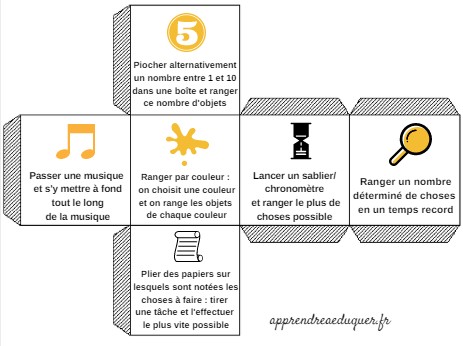
Below you will find the six prompts from the dice, ready to print and use, plus practical advice for making the game work in your home.
Quick takeaways
- The cooperation dice turns chores into a shared game rather than a battle.
- Six prompts: counting, music, colour sorting, timer, record time, folded tasks.
- Let your child pick the prompt to build a sense of control.
- Keep sessions short and end on a positive note.
- Model cheerful tidying; your tone sets theirs.
- Skip rewards and pressure; let fun be the payoff.
Why Playful Parenting Beats Punishments
Many families fall back on punishments or sticker rewards when chores stall. The cooperation dice offers a third path: shared intimacy, the simple act of doing something together, combined with humour and empathy. When a task feels like a game, children are far more likely to join in without a fight.
This approach does not deny that tidying has to happen. It changes the mood around it. Rather than standing over a child and issuing orders, you crouch down and play alongside them. The message shifts from "you must" to "let's".
Connection Before Correction
Playful parenting is about reinforcing the link between parents and children instead of erecting more walls. A giggle shared over a silly sorting game does more for cooperation than a lecture about mess. If you are rethinking how you guide behaviour, it is worth asking good actions rewarded at all, or whether connection does the job better.
How to Use the Cooperation Dice
Print the dice prompts and keep them somewhere visible, such as the kitchen fridge or the door of the playroom. When it is time to tidy, pick a prompt together rather than assigning one. Letting your child choose gives them a sense of control and makes buy-in much more likely.
Keep sessions short and end on a high note. The goal is a habit of cooperation, not a spotless room in one afternoon. A few minutes of focused, cheerful tidying beats a long, resentful clear-out.
Make It a Routine
Try using the dice at the same moment each day, perhaps before dinner or before bath time. Predictable rituals reduce resistance, and as motherhood changes priorities, small routines help everyone stay calm. If your child is still very young, pair the game with simple toys that hold attention, such as the learning toys that reward hands-on play, and keep the tidy-up zone small. These little rituals also build excitement for the places to visit you dream of exploring together.
| Prompt | What to do | Best for |
|---|---|---|
| Counting draw | Draw 1-10, tidy that many objects | Number practice |
| Music tidy | Tidy at full speed for one song | High-energy kids |
| Colour sort | Pick a colour, gather all of it | Younger children |
| Sand timer | Clear as much as possible before time | Focus building |
| Record time | Tidy a set number in record time | Older children |
| Folded tasks | Draw a written task, do it fast | Readers |
The Six Dice Prompts
Each face of the dice offers a different way to tidy. Draw a number between one and ten from a box and put away that many objects. Play music and tidy at full speed for the whole song. Sort by colour by choosing one colour and gathering every object of that shade.
Turn over a sand timer or start a stopwatch and clear as much as possible before it runs out. Tidy a set number of things in record time. Or fold small papers with tasks written on them, draw one, and complete it as fast as you can.
Adapt to Your Child
Younger children respond well to the music and colour games, which need no counting. Older children often enjoy the timer challenges and the folded-paper draw. If you want more ideas for asking children to help without nagging, look at making towers together as a calm shared activity that builds the same cooperative habit.
Setting Up for Success
Prepare the space before you start. Clear a single zone, remove obvious hazards, and make sure everything has a home. A child who does not know where things belong will lose momentum fast. Label boxes with pictures for pre-readers.
Model the behaviour you want. If you tidy cheerfully, your child copies the tone. If you sigh and complain, they learn that chores are a punishment. Keep your own energy light, even when the room is a disaster.
Keep the Mood Playful
Humour is the secret ingredient. A silly voice, a pretend race or a dramatic countdown turns work into play. For families who like a themed challenge, a seasonal game such as children sleep routines on Twelfth Night shows how a little ritual can anchor cooperation. And if you are curious about how play shapes development, the way learn to speak step by step mirrors how children learn to help, one small step at a time. The same playful spirit carries over to outdoor toys, and busy parents can lean on apps for breastfeeding to keep daily routines running smoothly.

Common Pitfalls to Avoid
The biggest mistake is turning the game into a test. If your child loses interest, do not scold or force it. Pack the dice away and try again another day. Pressure kills play.
Avoid dangling rewards for every task. The point is intrinsic cooperation, not a transaction. Keep prizes out of it and let the fun itself be the payoff.
When It Does Not Work
Some days children are simply tired or dysregulated, and no game will fix that. Read the room. On those days, tidy together quietly or postpone. If you are weighing up how much structure a young child needs, a look at six month old toys can remind you that attention spans grow gradually. Patience, not pressure, is what builds the habit.

My hands-on take
In our home, the music prompt was the one that stuck. The first time I put on a song and said we would tidy until it ended, I expected resistance. Instead, my child raced around the room laughing, and we finished before the chorus. We now use it most evenings, and the mood around tidying has changed completely.
The folded-paper draw was less popular at first, because reading slowed things down. We adapted it by drawing pictures instead of words. What I have learned is that the dice is not magic on its own; the warmth you bring to it is what makes children want to join in. Keep it light, keep it short, and let them choose.
Frequently asked questions
What age is the cooperation dice for?
It works best with children old enough to understand simple rules, roughly preschool and up. Younger children can join the music and colour games, which need no counting.
Do I need to print the dice?
Printing makes it easy, but you can also write the six prompts on slips of paper and draw them from a bowl. The game matters more than the format.
Should I reward my child for tidying?
The tool is designed to avoid rewards and punishments. The fun of the game is the motivation, which builds genuine cooperation over time.
What if my child refuses to play?
Do not force it. Try again another day, or tidy together quietly. Pressure undermines the playful spirit the game depends on.
Product Reviews
 Best Toys for Dogs With High Prey Drive |
Best Outdoor Toys for 3-4 Year Olds |
Best Outdoor Toys for 6 Year Olds |
Best Harness for Poodle |
Best LEGO Sets for Adults |
Best Travel Toys for 4 Year Olds on Airplane |
Best Toy Stores in Washington DC |
Best Potty Training Toys |
Best Toys for Tripod Dogs |
Maillot equipe de france







