


Collective life for children is genuinely difficult, especially for the youngest ones, and it helps to say so plainly. Many families rely on daycare or preschool, yet the daily reality of a large group asks a lot of a small person who is still learning to manage their own rhythm, emotions and body.
This is not a reason to feel guilty. It is a reason to make informed, conscious choices and to look closely at what a child actually experiences during those long hours away from home. Understanding the demands of group settings can change how we respond to a child who resists going, or who asks to stay home.

Quick takeaways
- Collective life is genuinely demanding for young children, especially the youngest.
- Group care is often driven by economic need, not by children's needs.
- Adapting to an institution is not automatically a sign of good development.
- A child's refusal to go can be a legitimate signal, not manipulation.
- Honouring small contributions helps children feel valued and relax.
- Respectful guidance builds empathy; punishment and humiliation erode it.
Why group settings ask so much of young children
Young children are not empty vessels waiting to be socialised. They are born with social skills, a deep wish to connect with others, and a strong need to belong and to feel valued. Those needs are among their most primary ones, and they are already present long before any structured group appears.
Being asked every day, for six to eight hours, to take part without deviation and to cooperate inside an institutional environment is a demanding work task for a small child. It is not a neutral pastime. It requires constant self-regulation, and it leaves little room for the individual pace a child naturally follows.
This does not mean group care is harmful in itself. It means the quality of adult guidance, both at home and in institutions, is what allows children to develop their full potential for interaction, empathy and cooperation. Inadequate guidance, by contrast, erodes that potential.
The real reasons behind early group care
It is worth asking honestly why very young children are placed in collective structures so early. In practice, the driving motive is often economic: families need childcare to return to the labour market. That reality is sometimes wrapped in talk about the benefits of socialisation and early stimulation.
Daycare and preschool are not gifts handed down to children. They are the offer a society makes to parents who need care solutions, and they also train children early for a working life oriented towards productivity. Naming this is not a judgement on parents or on early childhood professionals.
What matters is choosing with open eyes, based on information that is as objective as possible, rather than on slogans. A family that understands the trade-offs can decide what fits its child, its schedule and its values, and can adjust when something is not working. Practical questions about sports and children and about why a child takes hours can help parents weigh these trade-offs with real information.

| Situation | Habit to avoid | Better approach |
|---|---|---|
| Morning drop-off | Rushing past a child's distress | A calm, predictable goodbye |
| Daily rhythm | Imposing an adult schedule | Respecting the child's natural pace |
| Child's help at home | Treating it as invisible | Thanking them for real contributions |
| Conflict or mistake | Threats, humiliation, blackmail | Clear limits and calm words |
| Motivation | Punishment-and-reward systems | Recognition and shared routines |
Questioning the “well adapted” argument
People often say that children who attended daycare adapt better to school than those who stayed with their mothers. It is worth pausing on that claim. Adapting to an institutional setting that takes little account of children's and adults' needs is not automatically a quality.
Being conditioned to social life as it might look fifteen years later has never been good for children, whether we consider their emotional, social, physical or spiritual health, or simply their wellbeing. Development happens anyway, at each child's own pace and according to individual choices.
There is no need to pile on extra demands in the name of “helping” the majority of children flourish. They will grow and develop autonomously. What they need is respectful adult support, not pressure to perform cooperation before they are ready.
When a child refuses to go
It is entirely normal for some children not to want to go to nursery or preschool, or to beg to stay home with their parents. If collective life is genuinely hard, that resistance makes sense. It is information, not manipulation.
Recognising this can help parents respond with empathy, even when they cannot give the child what they are asking for: more family time, a gentler rhythm, or avoiding group care altogether. An empathetic answer acknowledges the difficulty instead of denying it, and it helps to remember that the baby needs his own space to feel secure.
Small adjustments help too. A calm morning, a predictable goodbye, and space to decompress afterwards all respect the child's physiological rhythm. The goal is not to make the child love an exhausting day, but to make the load lighter and the relationship stronger.
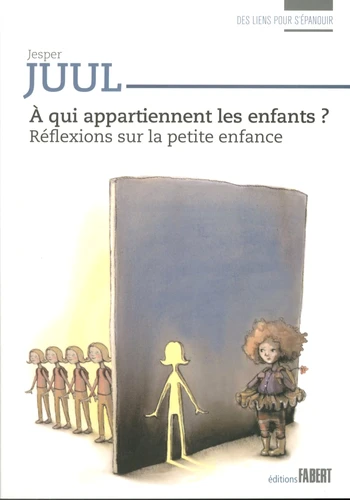
Building strong bonds without imposed group life
Children are competent people from birth. What shapes their social development is the quality of adult guidance, so it is worth investing in a warm, respectful framework at home. One simple practice is to honour a child's successes and contributions to family life.
That can mean thanking them for small and large services, even ones we take for granted, such as setting the table. It can also mean occasional small pleasures: a symbolic gift or a favourite dish, even if it is not perfectly balanced. The child feels valued and can relax before the week ahead, especially when you know how to manage fatigue.
What to avoid in daily guidance
Certain habits destroy the potential we are trying to nurture: ignoring a child's physiological rhythm, physical violence such as smacking or ear-pulling, verbal mistreatment such as blackmail, threats or humiliation, and rigid punishment-and-reward systems. Replacing these with respect and clear limits builds trust far more effectively, and outings such as trips to the snow become easier too.

My hands-on take
I remember the mornings when my child clung to my leg at the door and I told myself it was just a phase. Reading about how demanding group life really is changed how I handled those moments. I stopped rushing and started naming the difficulty out loud: “I know it's a lot of people today.” That small acknowledgment seemed to loosen something.
At home, I began thanking my child for tiny things I had always taken for granted, like putting shoes by the door. It felt almost silly at first, but the effect was visible: shoulders dropped, voices softened. I also became more honest with myself about why we used care at all, and that honesty made our evenings calmer and more connected.
Frequently asked questions
Is daycare bad for young children?
Not necessarily. The quality of adult guidance matters more than the setting itself. Group care is demanding, so it is worth watching how your child experiences it and adjusting where you can.
Why does my child cry at drop-off?
Crying often reflects how heavy group life feels, not a flaw in your child. A calm, predictable goodbye and space to decompress afterwards can make the transition gentler.
Can I build social skills without daycare?
Yes. Children are born with social skills and a wish to connect. Warm adult guidance, everyday cooperation at home and time with other children all nurture empathy and interaction.
Should I feel guilty about using childcare?
No. Most families need care to work. The useful move is to make conscious, informed choices and to keep the relationship at home strong and warm.
Product Reviews
 Best Toys for Dogs With High Prey Drive |
Best Outdoor Toys for 3-4 Year Olds |
Best Outdoor Toys for 6 Year Olds |
Best Harness for Poodle |
Best LEGO Sets for Adults |
Best Travel Toys for 4 Year Olds on Airplane |
Best Toy Stores in Washington DC |
Best Potty Training Toys |
Best Toys for Tripod Dogs |
Maillot equipe de france







