


Childhood potential is the idea that every child arrives equipped to become, learn and adapt to almost anything. Rather than a fixed quantity of intelligence handed out at birth, this potential shows up as spontaneous dispositions that adults can either nourish or quietly shut down.
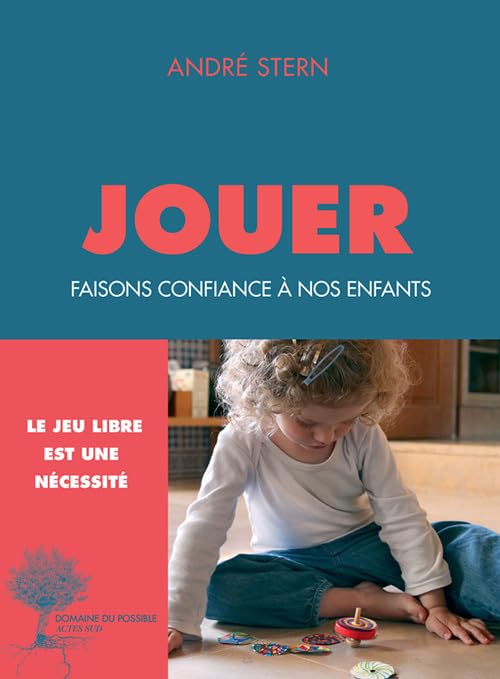
André Stern, author of a book about never having gone to school, describes the child as a bundle of potential. He points to four natural tendencies — play, enthusiasm, the language of the heart, and the exploration/attachment system — as the engine behind everything a child learns.

This article walks through each one and translates it into practical, everyday parenting.
Quick takeaways
- Every child is born with broad potential, not a fixed amount of intelligence
- Free, uninterrupted play is the most powerful learning tool children have
- The brain develops where it is used with genuine enthusiasm
- Children's openness to others can be protected or eroded by adult attitudes
- Secure attachment is the launchpad for confident exploration
- Respect is an attitude, not a program, and it starts with the adult
The Four Natural Dispositions Behind Childhood Potential
Stern argues that all human beings are born with a setup that lets them become anything, learn anything and adapt to anything. This setup is not a curriculum; it lives in four spontaneous dispositions that children show without being taught.
The first is play. Children have a powerful pull toward it, and free play is the most powerful learning tool humans have. They do not need to be interrupted because "it is time to learn" — the play is the learning. The second is enthusiasm, the fuel that grows the brain through use. The third is what Stern calls the language of the heart, an openness that ignores the -isms adults carry. The fourth is the exploration/attachment system, where feeling safe is what makes wandering possible.
Keeping these four in view changes how you read a child's day. A morning of building and rebuilding a tower is not a break from development; it is development.

Free Play Is the Most Powerful Learning Tool
Children do not simply play — they are their games. When a child makes a paper plane fly, they are the plane and the air at once. Dismissing play as unimportant therefore means telling the child they are unimportant, which is why free play deserves real respect rather than a tolerant smile.
Practically, this means protecting unstructured time and resisting the urge to convert every game into a lesson. If you want inspiration for open-ended building, look at the range of foam block toys or browse ideas for pool games children that let rules emerge from the players themselves. For quiet moments, a collection of great books can spark the same self-directed discovery.
What free play looks like at home
It is loud, repetitive and often messy. A child may sort, stack and re-sort the same pieces for an hour, which is exactly the kind of self-directed repetition that builds understanding. Adults can support it by offering materials and then stepping back, much as they would when rebuilding your life after a major change.

| Disposition | What it looks like | How parents can support it |
|---|---|---|
| Play | Absorbed, self-directed games | Protect free time, avoid interrupting |
| Enthusiasm | Intense, shifting passions | Notice and feed interests |
| Language of the heart | Openness beyond prejudice | Model respect, avoid stereotypes |
| Attachment | Returning for comfort, then exploring | Consistent, empathetic responses |
| Emotional expression | Anger, jealousy, frustration | Accept feelings, set limits on behavior |
Enthusiasm Grows the Brain That Uses It
Intelligence is not carved in stone, and Stern notes that the brain develops where it is used with enthusiasm. Brain-training drills such as puzzles or screens do not do the job, because the ingredient that matters is genuine excitement, not repetition under duress.
Children enthuse about everything because they have not yet built the adult hierarchy that ranks activities by income and prestige. A bug on the pavement can outrank a piano lesson. Your role is to notice what lights them up and feed it, rather than ranking it.
Enthusiasm is described as the only infinite resource on Earth: every time you use it, it grows. That is a hopeful idea for parents of a child who seems to flit between passions — the flitting is the growth.
The Language of the Heart and the Attachment System
Children open up to everyone, beyond racism, sexism and ageism. Through this language of the heart they can change an adult's life, because they love people for who they are rather than for a stereotype. That openness is worth protecting from the casual prejudices children hear around them.
The attachment system explains why. To explore, a child first needs to attach securely. From around nine to twelve months, babies use each caregiver as a base for exploring and return for comfort, like an aircraft returning to its carrier. As attachment specialist Nicole Guédeney puts it, attachment far from interfering with exploration actually stimulates it.
When a caregiver's responses are consistent and empathetic, the child builds trust, a sense of personal value and healthy self-esteem. When responses are rejecting, absent or unpredictable, insecurity hardens into mistrust of new situations. Parents also need to accept their child's uncomfortable feelings — anger, jealousy, frustration — because a child who is never allowed to express fear may grow into generalized anxiety.

Toward an Ecology of Childhood: Respect and Kindness
Stern regrets the harsh way society looks at children, which often slides into a lack of respect. Most adults, he observes, watched these spontaneous dispositions being blocked in their own childhood, which is why so many carry a wounded inner child.
His answer is not a method but an attitude: unfailing kindness and respect. He criticizes ageism that keeps children out of many places and confines them in tight schedules and spaces. Respect begins with recognizing that the baby needs his own space. If you want to reflect on how deeply these attitudes run, consider the debate around hypersexualization of childhood or the way controversial parenting issues divide adults.
Respect also means practical care: a calm bedtime routine, attention to small discomforts such as cream dry skin, and patience with everyday transitions like pacifier common questions. For children who seem unusually intense, read about children with genius and how to support them without pressure.
My hands-on take
I have tested the "protect the play" idea more than once. My instinct when a child is deep in a game is to interrupt with something useful — a question, a snack, a suggestion. Each time I stopped myself, the game deepened and the child came back to me later with something they had figured out alone.
The attachment point landed harder. I noticed that on days when I answered small requests consistently, my child wandered further and tried more. On rushed days, the wandering shrank. Nothing scientific about it, just what I saw. Now I treat those small, boring, repetitive responses as the groundwork for everything else.
Frequently asked questions
What is childhood potential in simple terms?
It is the idea that children are born able to learn, become and adapt to a great deal, rather than arriving with a fixed amount of intelligence. The potential shows up as natural tendencies that adults can support or suppress.
Does free play really matter more than structured lessons?
Free play is described as the most powerful learning tool humans have, because children fully inhabit their games. Structured activities have their place, but they should not crowd out unstructured time.
Why is secure attachment linked to exploration?
A child who feels safe returns to a caregiver for comfort and then ventures out again. Consistent, empathetic responses build the confidence that makes exploration possible.
Should I let my child express anger and frustration?
Yes. Accepting uncomfortable feelings helps a child learn to regulate them. Suppressing anger or fear can lead to exaggerated outbursts or lasting anxiety.
Product Reviews
 Best Toys for Dogs With High Prey Drive |
Best Outdoor Toys for 3-4 Year Olds |
Best Outdoor Toys for 6 Year Olds |
Best Harness for Poodle |
Best LEGO Sets for Adults |
Best Travel Toys for 4 Year Olds on Airplane |
Best Toy Stores in Washington DC |
Best Potty Training Toys |
Best Toys for Tripod Dogs |
Maillot equipe de france







