


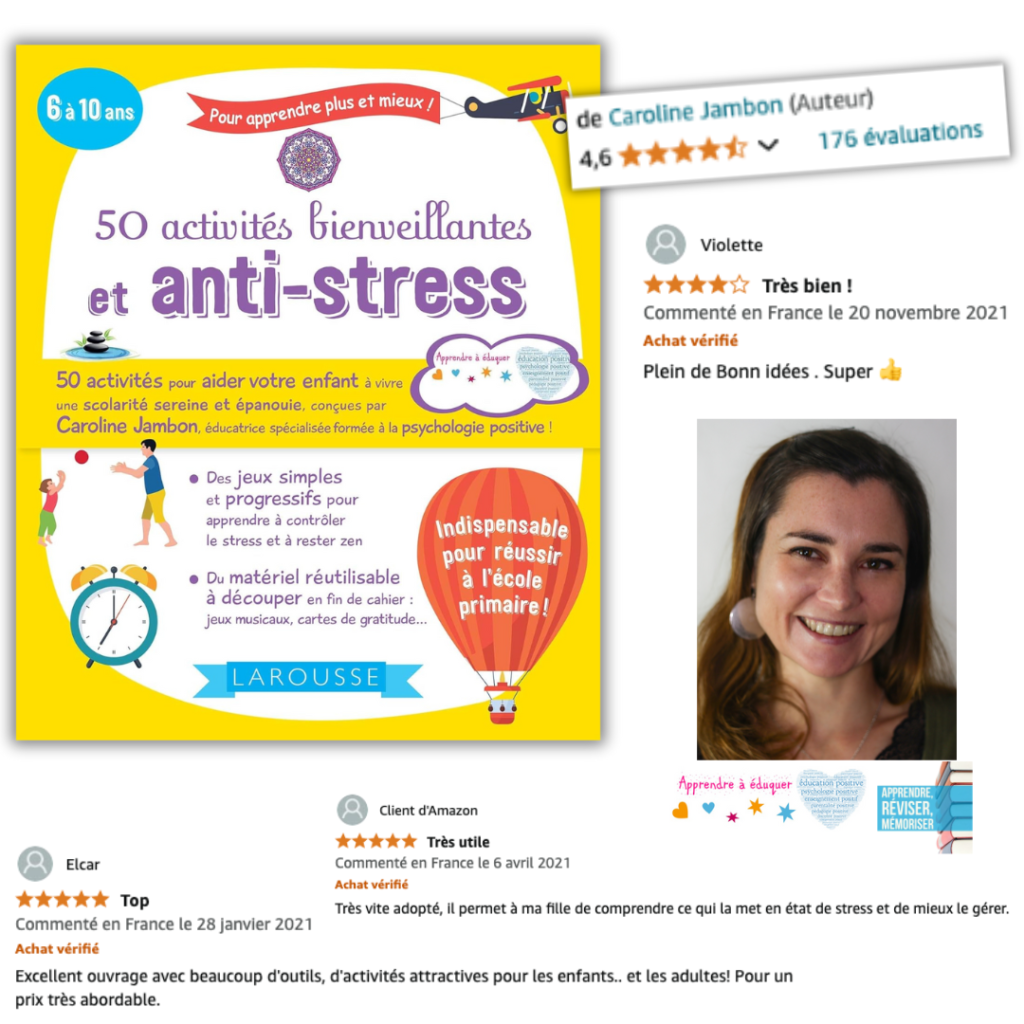
Calming activities for kids give children concrete strategies to handle stress, and they work best when the same tools are used at school and at home. This collection of more than fifty activities is designed for children from around eight years old, and most of them can also be offered to teenagers up to fifteen.
The goal is practical: relaxation exercises for the body, plus fill-in tools such as a chart for reformulating negative thoughts or confidence labels. The activities draw on mindfulness, visualization, emotional intelligence and positive psychology, and they cover everyday life habits too, like sleep, food, nature outings and a calmer bedtime.

Quick takeaways
- Calming activities suit children from about 8 to 15 years old.
- Start by teaching children to name stress in the body and the mind.
- Use short body-based relaxation and mindfulness exercises daily.
- Replace negative thoughts with balanced, encouraging phrases.
- Prepare for tests and performances with simple organizing tools.
- Build family rituals for mornings, bedtimes and gratitude.
Understanding Stress Before Calming It
Before any exercise, children need a simple way to understand what stress is. The first part of the collection gives a few theoretical elements so children can name what happens inside them, without turning it into a science lesson.
Two visual tools support this step. A stress curve helps a child evaluate their own level of stress, while a stress flower maps how stress shows up in the body through sensations and in the head through thoughts. This vocabulary is what makes the later activities useful, because a child who can say "my shoulders are tight" can then act on it.
Parents sometimes underestimate how much daily pressure children carry, in the same way adults carry their own load, and the same is true of the neck pain many grown-ups feel after tense days. Giving children words early is a gentle way to prevent stress from staying invisible.
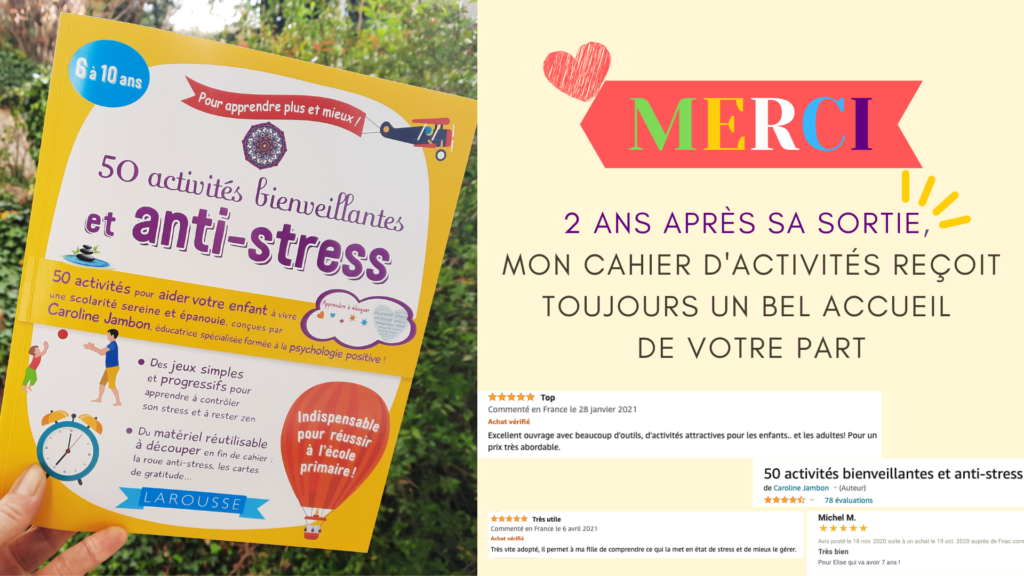
Using the Body to Reduce Stress
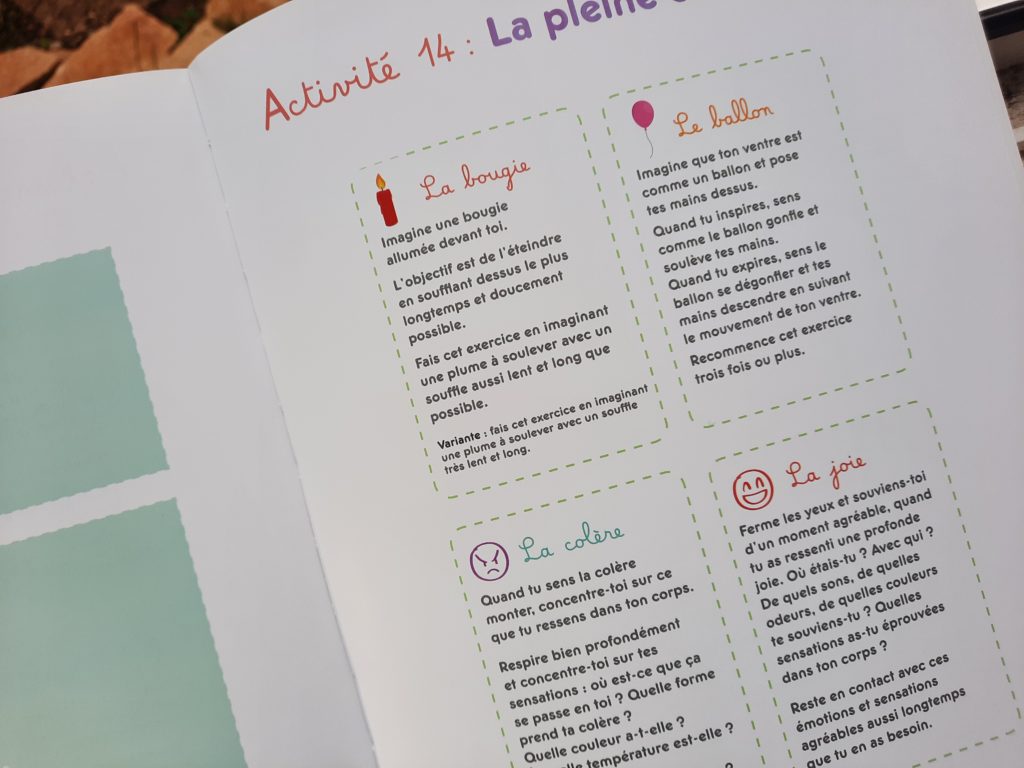
The second part focuses on the body, with relaxation exercises children can do almost anywhere. Mindfulness cards teach them to return to their sensations and to the present moment, which is a skill that transfers easily from the classroom to the living room.
These body-based tools are short and concrete, so they fit into a busy day without a big setup. A child who learns to breathe and notice their body can use the same move before a swimming lesson or during pool games when excitement runs high. The same calm approach helps at baby's medical check ups and other new situations.
Everyday Habits That Slow Stress
The collection also includes activities around life habits that help limit stress before it appears. A wheel of good habits links sleep and food, and there are ideas for nature outings and a stress-free bedtime. These are not quick fixes but small routines that add up, and they matter just as much as the exercises themselves. Calm routines also pair well with classroom prize box toys used as gentle rewards.

| Part | Focus | Example tool |
|---|---|---|
| 1 | Understanding stress | Stress curve and stress flower |
| 2 | Using the body | Mindfulness cards and relaxation |
| 3 | Transforming thoughts | Negative-thought chart, confidence labels |
| 4 | School preparation | Neuroscience-based organizing activities |
| 5 | Family life | Emotions weather report, love tank, routines |
Transforming the Thoughts That Feed Stress
The third part turns to thoughts, because stress is often fueled by what a child tells themselves. A fill-in chart helps children learn to reformulate negative thoughts into something more balanced, and confidence labels give them ready-made encouraging phrases to keep close.
This is where emotional intelligence and positive psychology come in. The aim is not to deny a feeling but to question the thought behind it, which is a skill that serves children well beyond school, for example when they face a big change or a new sibling arrives, a moment covered in postpartum care advice for the whole family. The same calm approach helps when you smear after sun on a child after a sunny day.
A poster of encouraging phrases can hang in a bedroom or near a desk, so the words are visible when a child needs them. Small reminders like this work better than long speeches, especially for children who are still learning to identify what they feel.

Getting Ready for Tests, Performances and Oral Exams
The fourth chapter is dedicated to school, with activities inspired by neuroscience to help children learn better, prepare well and organize efficiently. The focus is on effective preparation for a test, a challenge or an oral presentation, rather than on last-minute cramming.
These tools go beyond school life. The same anti-stress activities make sense for the many everyday pressures children meet at some point: moving house, a theater performance, a sports competition, public speaking, or leaving for summer camp or a school trip.
For families preparing a big transition, practical planning helps too, whether it is packing the right toys for flights or thinking through how a younger sibling will cope with a change of routine. The point is to give children a sense of control over what is coming.
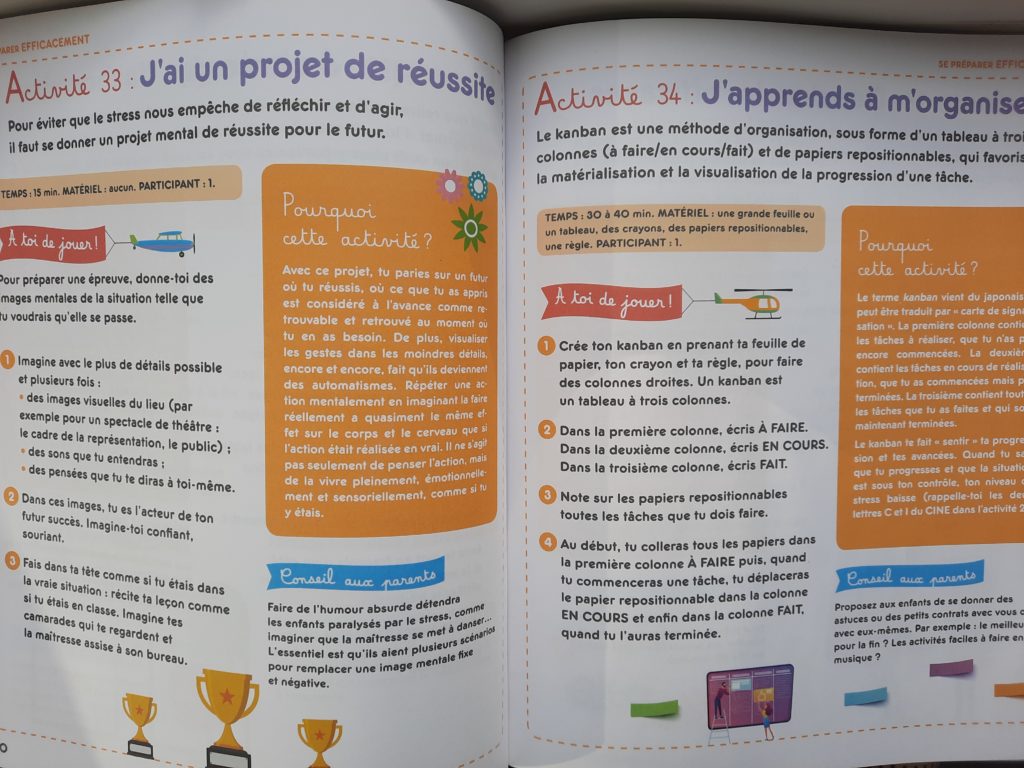
Building Calm Together as a Family
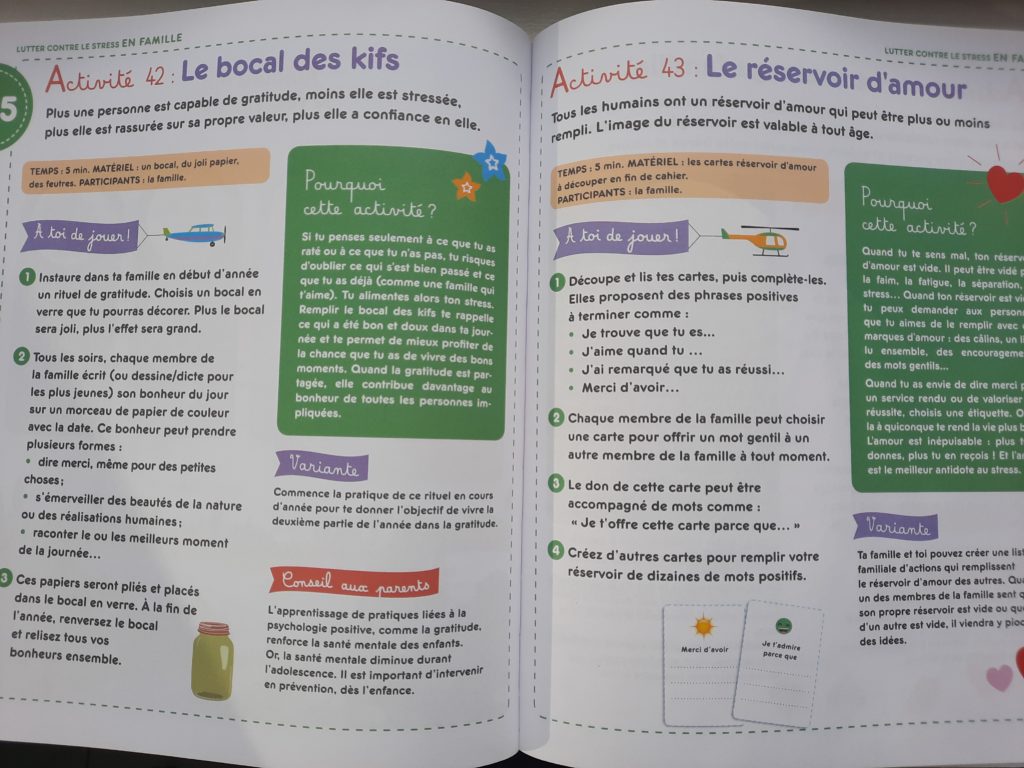
The last part is devoted to family life, with activities to do together. The weather report of emotions and the love tank are simple rituals that help everyone name feelings and cultivate gratitude and positive emotions at home.
There are also picture prompts to set up a morning routine and lower the stress level before leaving for school, plus rituals for a more serene bedtime. These routines reduce friction at the two most tense moments of the day, and they work alongside the small habits that support rest, much like the ones discussed around mother's sleep after a baby arrives. For families preparing for a new arrival, it also helps to plan ahead, as explored in going to work or to the birth of your child.
Detachable resources at the back of the book make these activities easy to start: the stress curve, the stress flower, the mindfulness cards, the encouraging-phrase poster and the love-tank cards for the whole family. Everything is ready to use, which lowers the barrier for busy parents. Parents of toddlers can also draw on ideas to improve gross psychomotor skills at home.

My hands-on take
I started using these ideas at home with my own children after a stretch of tense school mornings. What worked best was not the big exercises but the tiny rituals: naming the feeling at breakfast and doing one short breathing exercise before leaving. My child began to say "my tummy feels tight" instead of melting down at the door, which changed the whole mood of the day.
The love tank and the encouraging phrases also stuck. We keep a few written phrases on the fridge, and my children now reach for them when something goes wrong at school. I have learned to keep it light and short, and to let them choose the activity rather than imposing it, because ownership is what makes these tools last.
Frequently asked questions
What age are these calming activities for?
They are designed for children from around eight years old, and most can be offered to teenagers up to fifteen. Younger children can join the family rituals with adult support.
Do I need special materials?
No. The activities use simple relaxation exercises and fill-in tools, and the book includes detachable resources such as cards and a poster. You can recreate most tools on paper at home.
Can these activities help outside school?
Yes. They apply to moving house, a theater performance, a sports competition, public speaking, or leaving for camp or a school trip. The skills transfer to many everyday stressful moments.
How do I start without overwhelming my child?
Pick one or two activities and repeat them until they feel familiar. Family rituals for mornings and bedtimes are often the easiest entry point.
Product Reviews
 Best Toys for Dogs With High Prey Drive |
Best Outdoor Toys for 3-4 Year Olds |
Best Outdoor Toys for 6 Year Olds |
Best Harness for Poodle |
Best LEGO Sets for Adults |
Best Travel Toys for 4 Year Olds on Airplane |
Best Toy Stores in Washington DC |
Best Potty Training Toys |
Best Toys for Tripod Dogs |
Maillot equipe de france







