


The Matilda Effect is a children's novel by Ellie Irving about a twelve-year-old girl who loves science, builds inventions nonstop, and refuses to accept an unfair loss. The title comes from the feminist theory of the same name, which describes how women's contributions to science are often denied or credited to male colleagues.
That idea sits at the heart of a fast, funny story that also works beautifully as a read-aloud. Below you will find a full summary, what my daughter and I enjoyed, and how to get the most out of the book at home.

Quick takeaways
- A feminist science adventure about a twelve-year-old inventor and her astrophysicist grandmother.
- Fast, funny plot with escapes, a hot-air balloon and a Nobel ceremony finale.
- Introduces real scientists, including Edison, Berners-Lee and Rosalind Franklin.
- Includes simple experiments and portraits of overlooked women scientists.
- Works brilliantly as a read-aloud for children around eight and up.
- Expect spontaneous tinkering on the kitchen table afterwards.
What the story is about
Matilda is twelve and adores science. Her heroes are Leonardo da Vinci and Marie Curie, and she spends her days imagining and building inventions of every kind. When she loses a science competition, she is furious, all the more so because she lost simply for being a girl.
What she then learns about her grandmother does not calm her down either. The older woman, a former astrophysicist, once discovered a planet, and an unpleasant character named Professor Smocks took the credit. Matilda decides he must not get away with it, or win a Nobel Prize.
So she takes her grandmother along on a wild, epic journey by boat and hot-air balloon, hidden from her parents, all the way to Sweden. If your child loves a heroine who takes charge, this pairs well with stories about importance of play and the freedom to tinker.
Why the book keeps children hooked
The plot is both far-fetched and genuinely scientific, and it holds children's attention. I read it to my daughter and she always wanted one more chapter, because the author knows how to build suspense.
It covers two completely crazy days, carried by the intelligence of this twelve-year-old inventor. She and her grandmother escape from a retirement home in a laundry basket, save a man from drowning in the Channel, fly over Paris in a hot-air balloon with a famous actor, befriend an internationally wanted jewel thief, look after a poisoned lion, and finally slip into the Nobel Prize ceremony to expose the theft and set things right.
My daughter, eight at the time, loved this reading full of twists, laughter and solidarity. It is the kind of book that quietly builds speech therapist style language skills too, since children hang on every word. For more playful language practice, try these English games, and curious builders may enjoy our science toys.

| Element | What children get | Good for |
|---|---|---|
| Story | Wild two-day chase across Europe | Ages 8 and up |
| Science | Inventors and inventions woven in | Curious builders |
| Role models | Women scientists past and present | Broadening horizons |
| Activities | Volcano, egg and exploding bag | Rainy afternoons |
| Tone | Direct address and humour | Reluctant readers |
Science, role models and clever ideas
Through Matilda's passions and the models she looks up to, readers meet portraits of great scientists such as Thomas Edison, Tim Berners-Lee and Emily Cummins. There are ideas by the thousand, like the moment Matilda patches a hole in a parachute with tissues and chewing gum.
The story also shows the importance of solidarity: the ending reveals how the free kindness of Matilda and her grandmother earns them the support they need to complete their journey. That message lands gently, without preaching.
A heroine who talks to the reader
I liked the book because the heroine is as mischievous and generous as she is inventive. The tone is genuinely pleasant, since she speaks directly to readers with friendly winks and asides.
Children who like building and experimenting may also enjoy foam block toys and other open-ended materials that let them test ideas the way Matilda does.
Extra material: forgotten scientists and experiments
After the story, the author offers portraits of little-known women scientists who nonetheless contributed greatly to history, including Rosalind Franklin, Tu Youyou and Deepika Kurup. A few experiments are described as well, such as making a volcano, an egg, or an exploding bag.
That closing section turns the book into a springboard. A child who finishes the novel has names to look up and simple activities to try, which is exactly what keeps curiosity alive after the last page.
If you read this book to your children, or simply hand it to them, expect them to fetch the toolbox and start tinkering on the kitchen table with whatever they find, a situation we lived through ourselves. Keep fidget toys and small parts out of reach of younger siblings during these sessions.

How to use the book at home
Treat the novel as a shared project rather than a solo read. Read a chapter aloud, then let your child retell it in their own words, and try one of the experiments from the back of the book on a rainy afternoon.
Talk about fairness: ask why Matilda lost the competition, and whether that has ever happened to them. These conversations connect naturally to broader questions about how we treat children, from how we prioritize to how we model respect at home. Everyday parenting moments, such as talking about masturbation, can also become opportunities to build trust and openness.
The book is available in libraries, bookshops and online, and there is an edition adapted for dyslexic readers. For a child who prefers making things to reading, you might balance screen-free time with outdoor toys active afternoons. Even small choices, like which bathroom a parent uses with a child, can spark wider conversations about respect and care.
My hands-on take
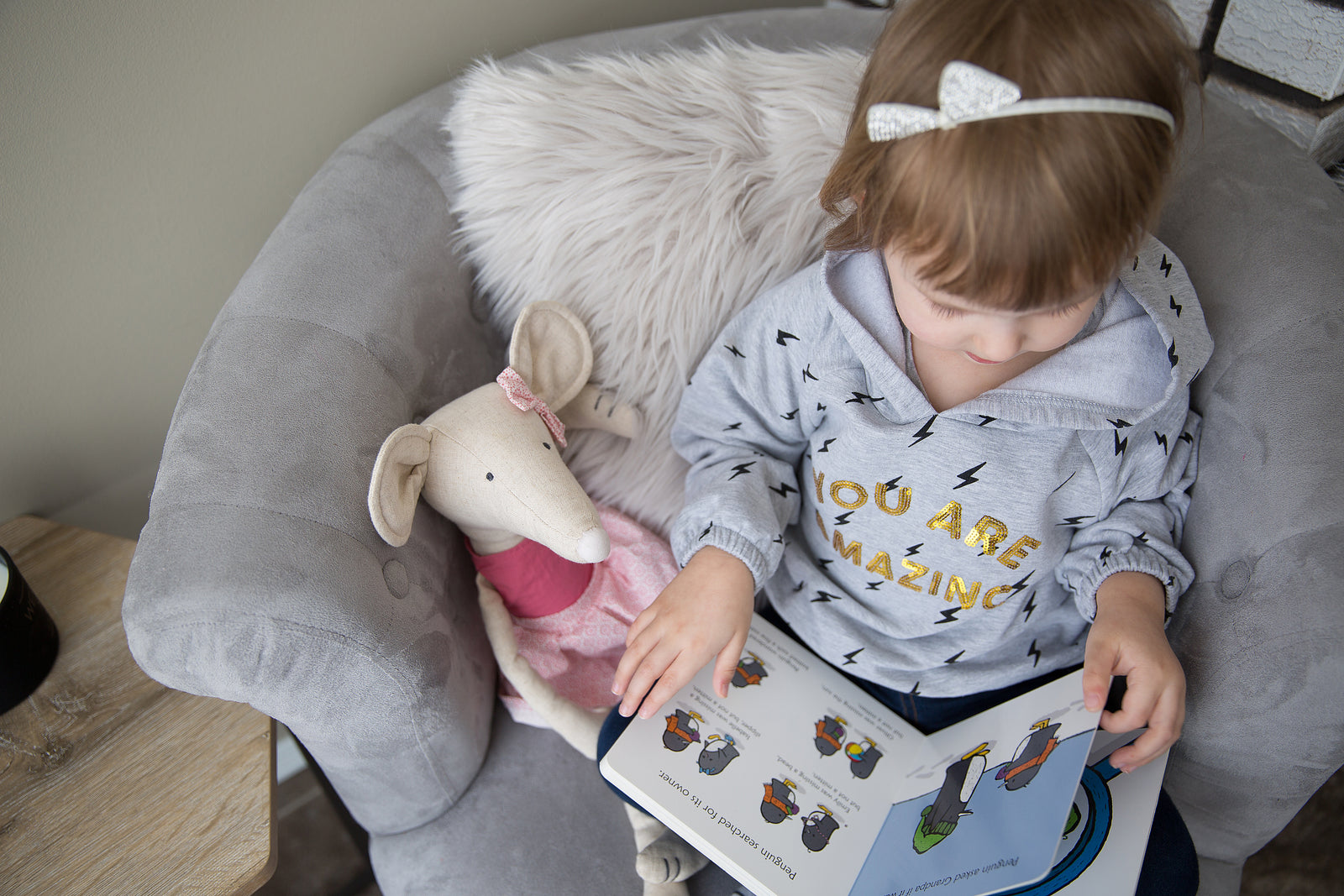
We read this one over several evenings, and the requests for one more chapter became a nightly ritual. What struck me most was how quickly my daughter moved from listening to doing: within a day she was taping cardboard and asking whether she could test an idea at the kitchen table.
My advice is to keep a shoebox of scrap materials nearby before you start the book, because the urge to build arrives fast. We also paused to talk about the unfair competition scene, which opened a surprisingly good conversation about fairness at school.
Frequently asked questions
What age is The Matilda Effect suitable for?
It works well as a read-aloud from around eight, and as an independent read for slightly older children who are comfortable with longer chapters. The humour and pace keep younger listeners engaged.
Is it really a feminist book?
Yes, but gently. It uses the story of a girl denied credit to show how women's work is sometimes overlooked, and it adds portraits of real women scientists at the end.
Does it include activities to do at home?
It describes a few simple experiments, such as making a volcano or an exploding bag. They use basic household materials and are best done with an adult nearby.
Is there an edition for dyslexic readers?
Yes, an adapted version exists alongside the standard edition. It is worth checking with your bookshop or library if that format suits your child.
Product Reviews
 Best Toys for Dogs With High Prey Drive |
Best Outdoor Toys for 3-4 Year Olds |
Best Outdoor Toys for 6 Year Olds |
Best Harness for Poodle |
Best LEGO Sets for Adults |
Best Travel Toys for 4 Year Olds on Airplane |
Best Toy Stores in Washington DC |
Best Potty Training Toys |
Best Toys for Tripod Dogs |
Maillot equipe de france







