


The AME tool is a simple three-step method for accompanying children's emotional crises, designed for children aged six or seven and older. It comes from the work of Hélène Mathieu, who presents the acronym in her book on developing emotional intelligence from childhood to adolescence.
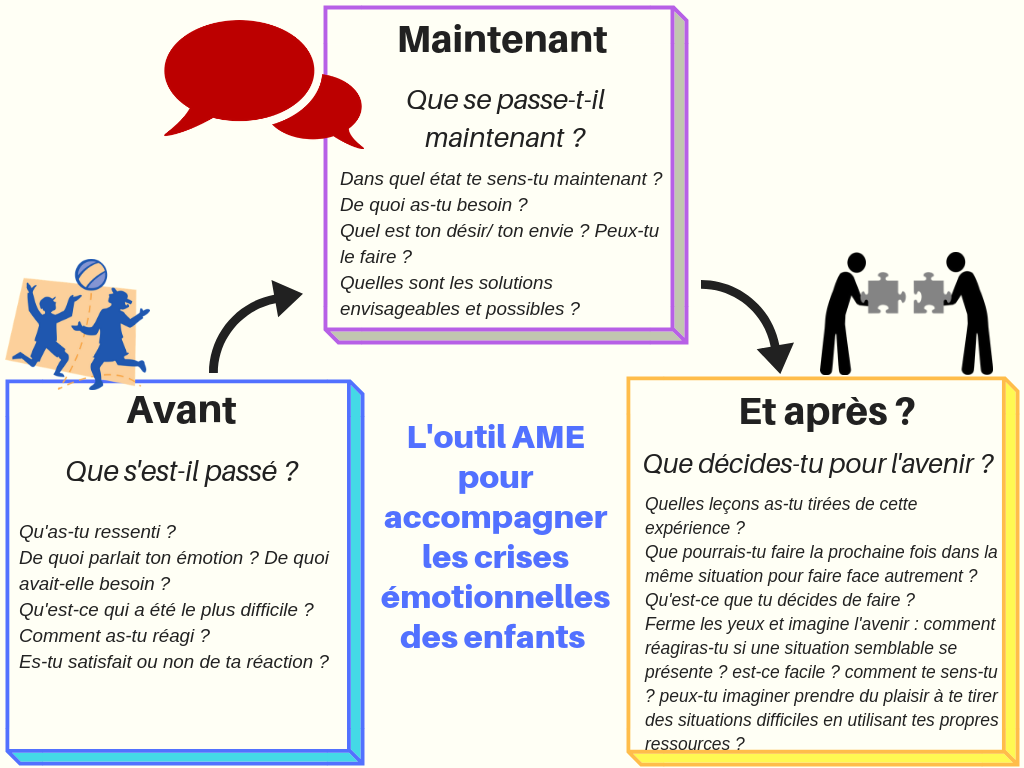
AME stands for three moments in time: Avant (before), Maintenant (now) and Et après (and after). Each phase has its own purpose, and each comes with a small set of questions you can ask your child once the storm has passed.

The idea is not to lecture or to fix the emotion for your child, but to guide them through understanding what happened, reconnecting with the present, and planning how to handle a similar situation next time.
Quick takeaways
- AME stands for Avant, Maintenant and Et après: before, now and after.
- Use the tool after the crisis, once your child is calm enough to reflect.
- The first phase names the emotion, the facts and the reaction without blame.
- The second phase returns to the present and identifies needs and possible solutions.
- The final phase sets a plan and invites your child to imagine handling it next time.
- Keep questions short and stop when your child has had enough.
Why Talk After the Crisis, Not During It
A crisis is not the moment for reflection. When emotions are running high, a child's thinking brain is largely offline, and questions feel like an interrogation. The AME tool is meant to be used afterwards, once calm has returned and your child is ready to look back.
This timing matters because the goal is to help children build emotional intelligence over time, not to win an argument in the moment. Sitting down together after the storm, when everyone is settled, turns a difficult episode into a learning opportunity rather than a punishment.
If your child is still very young, keep the conversation short and concrete. The same principle of naming feelings and revisiting events gently also supports children in other daily transitions, such as the routines described in a day at kindergarten.
A for Avant: What Happened?
The first phase is about welcoming the emotion that emerged. You talk about the facts you both observed, the thoughts that came with them, and the actions your child took. The aim is understanding, not blame.
Useful questions include: What happened? What did you feel? What was your emotion telling you, and what did it need? What was the hardest part? How did you react, and are you satisfied with that reaction?
These questions help a child connect an emotion to a need, which is a skill that grows with practice. The same patient, observant approach is useful when you bathe little ones or handle other everyday moments where children test limits and express big feelings. Gentle, curious conversations also help when you explain skin bumps or talk through a favorite monster story.
Keeping It Gentle
Let your child answer at their own pace, and accept "I don't know" as a valid answer. You can offer a guess and let them correct you, which often opens the door to more honest reflection.
| Phase | Purpose | Example questions |
|---|---|---|
| Avant (Before) | Welcome the emotion and review the facts | What happened? What did you feel? How did you react? |
| Maintenant (Now) | Return to the present and create distance | How do you feel now? What do you need? What solutions exist? |
| Et après (After) | Plan the future and rehearse a response | What did you learn? What will you do next time? |
| All three | Build emotional intelligence over time | Keep it gentle, short and free of blame |
M for Maintenant: Coming Back to the Present
The second phase brings your child back to the here and now, creating a little distance from the event that triggered the crisis. This distance is what allows reflection to happen without reliving the upset.
Ask: How do you feel now? What do you need? What is your wish or desire, and can you do it? What solutions can you imagine, and which ones are actually possible?
This is also a natural moment to think about the environment around your child. A calm, predictable space helps, and small practical choices, like the swimsuits to match you pack for summer outings or the toys you bring along, can reduce friction before it starts.
Naming Needs Out Loud
When a child can say "I need a break" or "I need a hug," they have a tool they can use without you. Praise the attempt, even when the wording is clumsy.
E for Et après: Planning for Next Time
The final phase looks to the future. Together you organise what comes next and agree on an appropriate response to the event. This turns reflection into a decision your child owns.
Ask: What lessons did you take from this experience? What could you do next time in the same situation to cope differently? What do you decide to do?
Then invite your child to close their eyes and imagine the future: how would you react if something similar happened? Is it easy? How do you feel? Can you imagine enjoying getting through a hard situation using your own resources?
This mental rehearsal is powerful because it prepares the brain for the next real moment. Pair it with practical supports, such as children's apps that teach calming or breathing, so the plan has somewhere to live. As you guide these conversations, remember not to take away the adult's authority in front of the child, and let go of unrealistic body expectations along the way.

Making the Tool Part of Family Life
The AME tool works best when it becomes familiar rather than reserved for emergencies. Mention it casually after small upsets, so the three steps feel like a normal way to talk rather than a formal procedure.
You can also use it on yourself out loud, modelling how an adult reflects on a frustrating moment. Children learn far more from what they see than from what they are told, a principle that runs through much of parenting, from values in teaching to how we handle our own mistakes. The same steady approach helps when you assess a child's cough without panic.
Keep the questions short, avoid turning them into a checklist, and stop when your child has had enough. The goal is a habit of reflection, built slowly over many small conversations.

My hands-on take
I started using these three questions with my own child after a meltdown over a broken drawing, and the difference was mostly in my tone. When I asked "what did you feel?" too soon, I got a shrug. When I waited until we were both calm and asked it while we tidied up, the answers came.
The part that surprised me was the last phase. Asking "what will you do next time?" felt almost too simple, but my child came up with a plan I would never have suggested, and it stuck. I now keep the three words in mind as a quiet reminder for myself as much as for them.
Frequently asked questions
What age is the AME tool for?
It is designed for children aged about six or seven and older, once they can reflect on events and put feelings into words. Younger children can still benefit from simplified versions of the questions.
Should I use it during the crisis?
No. The tool is meant for after the crisis, when calm has returned. During the storm, focus on keeping your child safe and offering comfort, then revisit the event later.
What if my child refuses to answer?
That is normal and not a failure. Offer a guess and let them correct you, or simply drop it and try again another time. The habit matters more than any single conversation.
Is this a discipline method?
Not really. It is a reflection tool that helps children understand their emotions and choose responses, rather than a system of rewards and punishments.
Product Reviews
 Best Toys for Dogs With High Prey Drive |
Best Outdoor Toys for 3-4 Year Olds |
Best Outdoor Toys for 6 Year Olds |
Best Harness for Poodle |
Best LEGO Sets for Adults |
Best Travel Toys for 4 Year Olds on Airplane |
Best Toy Stores in Washington DC |
Best Potty Training Toys |
Best Toys for Tripod Dogs |
Maillot equipe de france







