


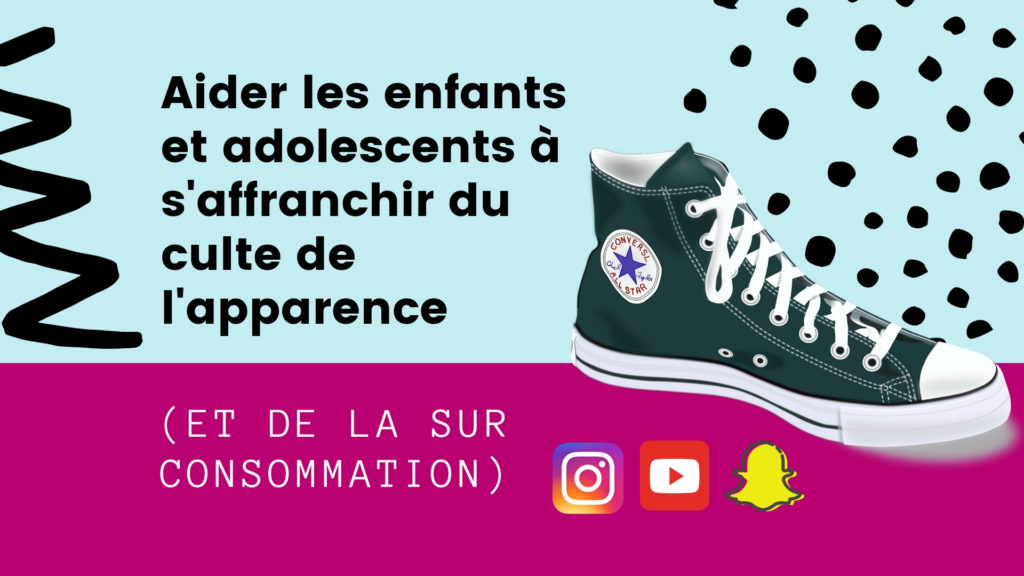
Helping children and teenagers break free from the cult of appearance and overconsumption starts with understanding how much marketing shapes their choices. Brands build a strong emotional bond with young people, who believe they are choosing freely while communication, marketing and advertising experts pull the strings.
This is especially striking for anything tied to "look": clothes, shoes, accessories, hair products and makeup. Targeted ads, product placement in favourite series, celebrities and influencers, brand-made games and hashtags all push children to treat their appearance as their core value.

The good news is that parents can take the lead early and offer a different message: your value lies in your gifts, skills, kindness and curiosity, not in what you wear.
Quick takeaways
- Explain how marketing and influencers shape the "free" choices young people make.
- Offer concrete alternatives: renting, second-hand, swapping, bartering and upcycling.
- Use films, books and role models that celebrate character over appearance.
- Welcome the need to belong before discussing budget, ethics or values.
- Shift the focus from having to being through passions, projects and volunteering.
- Build daily media literacy instead of one-off lectures about ads.
Find alternatives to the existing offer
Alternatives are numerous and within most families' reach: renting clothes, buying fewer items, shopping second-hand at flea markets, garage sales or thrift shops, swapping and bartering, exchanging with friends, or upcycling. With online tutorials, you can make lovely things even without strong sewing skills.
Choosing this kind of consumption lets you explain your motivations to your children and make them sensitive to the ecological and ethical side of how clothes are made. It turns a shopping habit into a conversation about where things come from and who made them.
Make it visible, not preachy
Children learn far more from what they see than from a lecture. When a repair, a swap or a second-hand find becomes normal family life, the lesson settles in quietly. A simple car games moment on a long drive, for instance, is a good time to chat about why you chose a hand-me-down jacket instead of a new one.
Encourage the values that matter to you
Several resources help children question the dictatorship of appearance. Body Positive and Body Neutrality influencers offer alternative role models, as do films and cartoons with strong female characters who also have moral qualities, such as Brave or the heroines of Miyazaki's animations, with a special mention for Princess Mononoke. Books retracing the lives of famous women, whether scientists, athletes, artists, politicians or authors, are another rich source.
These resources work for boys too, helping them flourish outside values of strength and seduction. Even more stereotyped characters, princesses and superheroes, are an opportunity for discussion: what do children think of them, would they like to resemble them, and why? Could these characters be happier if they freed themselves from certain codes?
In parallel, films, documentaries and videos about ecology give meaning to a parental message that can otherwise sound moralising, covering topics such as the realities of fast fashion or zero-waste family life. A shared family movies evening can open these conversations naturally.
| Situation | Pressure-driven response | Value-driven response |
|---|---|---|
| Wants a trending brand item | Buy it to avoid feeling different | Listen first, then discuss needs and budget |
| Needs new clothes | Buy new fast fashion | Try swapping, thrift shops or upcycling |
| Follows influencers | Absorb the message silently | Ask what the post is really selling |
| Free afternoon | Shopping trip | Passion project, volunteering or shared game |
| Talks about body image | Avoid the topic | Use films, books and role models to discuss it |
Being rather than having
You can help children understand that the goal of life is less about becoming the most beautiful than about fulfilling yourself and bringing something to the world. Focusing on being rather than having can take the form of volunteering, cultivating a passion, and using your qualities and skills in service of a personal or collective project.
This is also where shared rituals matter. A board game night, a Montessori toys shelf that invites open-ended play, or a simple cooking project together all remind children that satisfaction comes from doing, not from owning the latest item.
Small projects, big meaning
Help your child pick one thing to build, grow, repair or organise over a few weeks. The pride that comes from finishing something real is a powerful counterweight to the fleeting thrill of a purchase.
Resist social pressure with empathy
Teaching children and teenagers to resist social pressure and the cult of appearance means first connecting with their needs and seizing the chance for genuine listening. Children, and especially teenagers, have a strong need for belonging and therefore conformity, which explains their urge to buy the latest trendy brands or those worn by influencers. Yes, it matters to them to look cool, not to feel different, to be recognised as members of the tribe, and to care for their appearance for that reason.
The task is to listen with empathy and welcome the emotions of children making requests. Once emotions have been received with real empathy, in a genuine heart-to-heart connection, you can share your own fears and reservations: child labour, fair pay for workers, ecological impact, the family budget. Then you can recall your values, such as unconditional love, authenticity and kindness.
It also helps to offer alternatives they can actually enjoy, from a Transformer toys set to a shared firetruck toys afternoon with younger siblings, so identity has room to grow beyond the mirror.

Build a home culture that counters the noise
What surrounds children daily shapes them more than any single talk. Keep screens in shared spaces, ask curious questions about the ads and influencers they follow, and let them explain what a post is really selling. This media literacy, practised gently and often, is one of the most durable protections you can offer.
Make room for interests that have nothing to do with appearance: nature, building, cooking, music, sport for the joy of movement. A toys for toddlers collection that invites construction, or a toys for babies basket that rewards exploration, sets this pattern early. Even a lice check evening or a warm coats shopping trip becomes a chance to talk about needs versus wants, and to model calm, practical decision-making rather than chasing trends.

My hands-on take
In our home, the shift happened almost by accident. I stopped buying new clothes for myself, apart from the occasional pair of shoes, and started dressing my daughter through a local swapping group. We traded outgrown clothes for toys she no longer used, for things I cleared out when we moved, and even for homemade food.
What surprised me was how naturally she took to it. She now asks where a jumper came from before she asks what it cost, and she proudly explains that a favourite dress once belonged to a friend. Those small moments do more than any speech about fast fashion, and they keep the conversation about appearance and value open without pressure.
Frequently asked questions
At what age should we start talking about appearance and consumption?
Early, in simple terms. The message that value lies in gifts, skills and kindness rather than clothes can be repeated from early childhood and deepened as children grow.
What if my teenager insists on a specific brand?
Start by welcoming the need to belong, then share your concerns about budget, ethics and ecology. A calm conversation after real listening lands better than a flat refusal.
Do these conversations only concern girls?
No. Boys also face pressure around strength and seduction, so the same resources and discussions apply to them.
How do I avoid sounding moralising?
Let children see your choices in daily life and use films, documentaries and games to open the topic, rather than delivering lectures.
Product Reviews
 Best Toys for Dogs With High Prey Drive |
Best Outdoor Toys for 3-4 Year Olds |
Best Outdoor Toys for 6 Year Olds |
Best Harness for Poodle |
Best LEGO Sets for Adults |
Best Travel Toys for 4 Year Olds on Airplane |
Best Toy Stores in Washington DC |
Best Potty Training Toys |
Best Toys for Tripod Dogs |
Maillot equipe de france







