


Carnet de l'apprenti écrivain is a writing workbook by Susie Morgenstern that turns daily writing into a small pleasure rather than a chore. Aimed at children from around eight years old, it gathers some 300 activities built around famous quotations and short, personal prompts.
Each page pairs a line from a writer or a proverb with a writing or observation task, and leaves blank ruled space for the child to fill in. The result is a gentle invitation to put imagined worlds into words, whether at home or in the classroom.

Quick takeaways
- Around 300 writing and observation activities, each built on a famous quotation.
- Short, airy pages with blank lines so children write directly in the book.
- Suits children from about eight, plus teenagers and even adults who want to write.
- Focuses on imagination and confidence, not on explicit writing rules.
- Works as a free-choice home notebook or a source of classroom writing prompts.
What the workbook actually contains
The book is designed as a companion for children who want to write, and Morgenstern addresses them directly. She shows them how to put the worlds they imagine into words and offers a wide range of activities around writing, drawing on her own experience as an author through short, very personal texts.
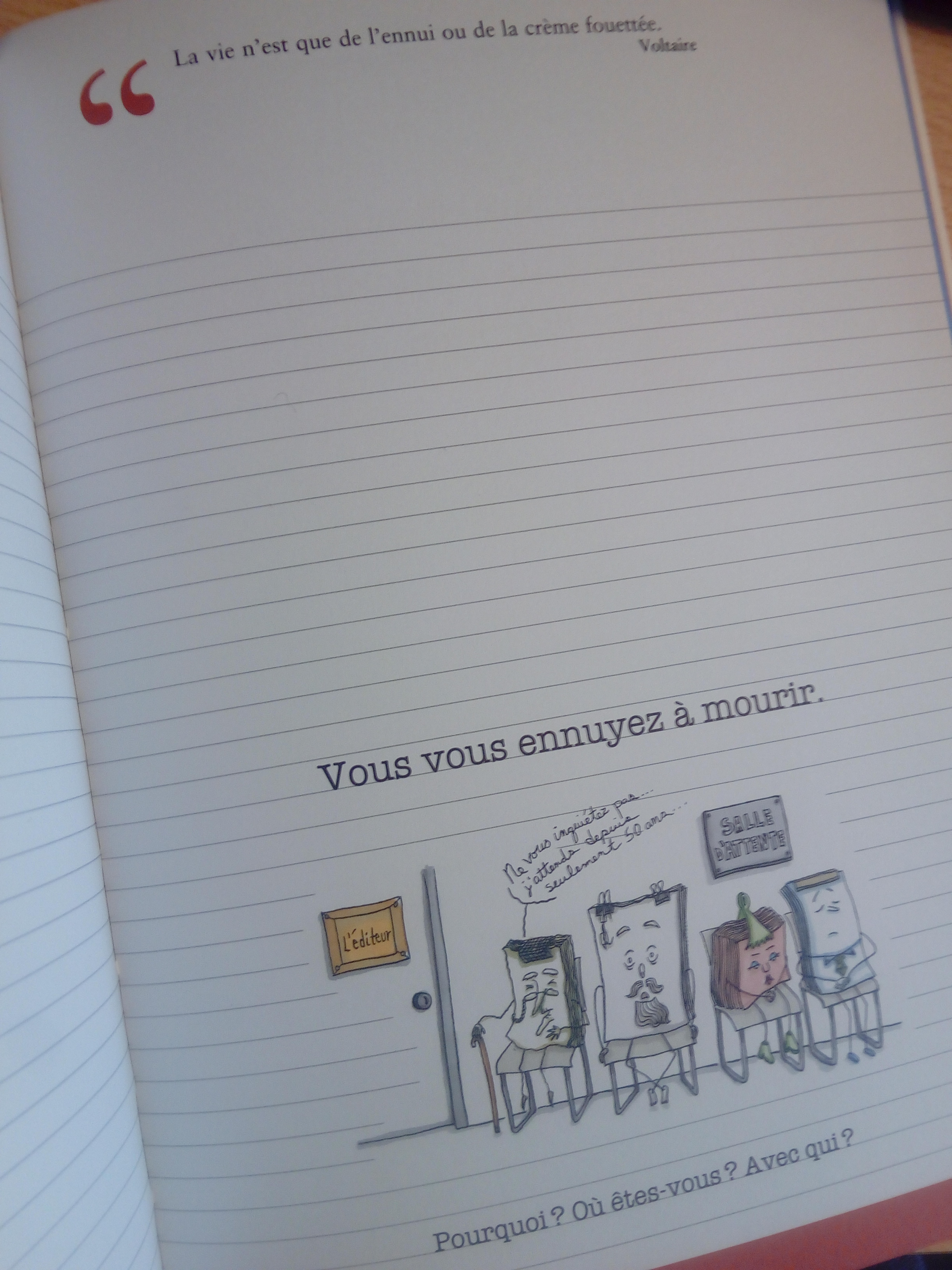
Those texts teach young writers how to structure a story, how to observe, how to feed their imagination with the situations and people they meet, and how not to be afraid of the blank page. Each page combines a quotation from a well-known writer with a writing or observation activity, so the child is never staring at an empty prompt.
The layout stays simple and airy: children write straight onto the page, on the blank lines left under the instructions, which are usually very short. That low-friction design matters, because a child who has to copy a prompt into a separate notebook often loses momentum before the first sentence. If you are building a small home writing corner, the same logic applies as when you choose reward toys: keep the materials within reach and the setup inviting. It also echoes the readiness questions parents ask when they prepare a child for a bigger step, and the reminder that parents are the mirror children reflect every morning.
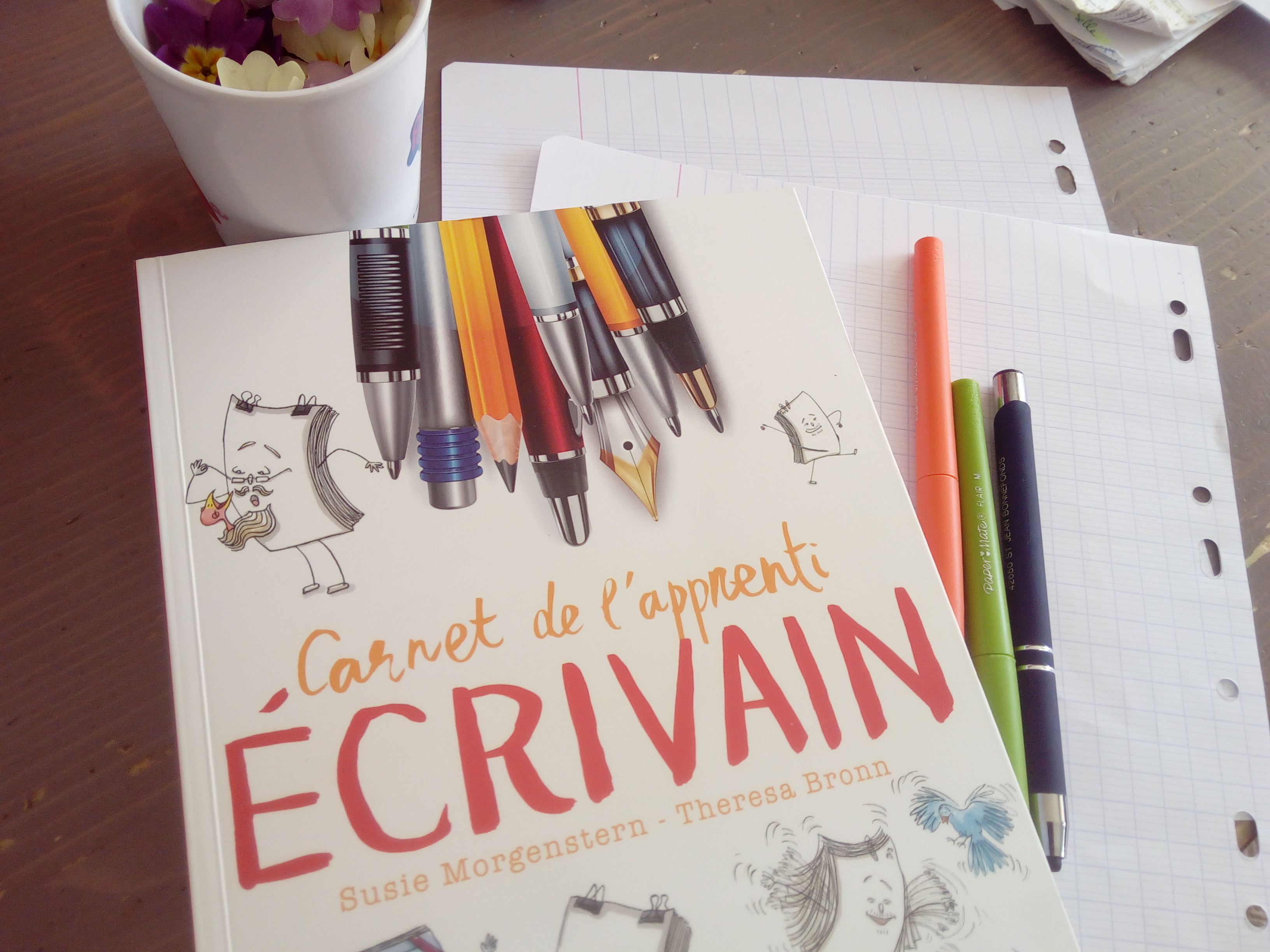
Who the author is and who the book is for
Susie Morgenstern was born in New Jersey in 1945 and quickly devoted herself to two essential tasks in her life: writing and following diets. She kept writing through many stays abroad, finished her doctoral thesis at the University of Nice, and taught English there until 2005. Her books have won a long list of prizes, notably Lettres d'amour de 0 à 10, which alone collected around twenty awards.
Although the publisher presents the notebook as a way to accompany teenagers in their wish to write, the preface makes clear it is not reserved for children. Morgenstern supports children, teenagers and even adults who want to write, which makes it a flexible family resource rather than a single-age workbook.
In practice it suits cycle 3 pupils working in free production, and it still gives plenty of ideas for writing prompts for middle school students. Teachers will find ready-made subjects for production écrite, including short timed writing sessions, and parents can simply leave it on the shelf for children to fill in as the mood takes them. The open-ended format also travels well, much like the car games you might pack for a long drive, and it pairs nicely with rest during pregnancy when a quiet activity helps everyone slow down.
| Setting | How to use it | What to watch for |
|---|---|---|
| Home, free choice | Child picks any page, any time | Keep it visible and low-pressure |
| Home, guided | Adult adds one small focus per page | Avoid turning it into a lesson |
| Primary classroom | Short daily writing warm-up | Keep sessions brief and regular |
| Middle school | Prompt bank for production écrite | Offer structure separately if needed |
| Family travel | Fill pages during quiet moments | Pack pencils and a flat surface |
How a typical page works
The originality of the notebook lies in its variety: every page offers a different activity, and the common thread is that each one rests on a quotation. You find Kafka, Flaubert, Gibran, extracts from writers such as Helen Keller, and proverbs from around the world, mixed together without obvious hierarchy.
The activities call on imagination, and most rest on questions with a philosophical bent. Morgenstern invites children to write what would happen if they arrived somewhere nobody spoke their language, to invent a story from a newspaper headline, or to put on paper everything the word "today" brings to mind.
Three sample prompts
One page quotes Christophe Ono-dit-Biot: "I accept, I want, I consent, I agree, I assent — in short, I say yes." The task is to list the yeses that call to you, such as saying yes to chocolate or yes to friendship. Another, from Ylipe — "I doubt what I know, I suspect the rest" — asks for a list of your doubts. A third, from Pierre-Simon Ballanche, has children complete open sentences: I remember, I don't remember, I have always, I have never, I see, I don't see, I know, I don't know, I want, I don't want.

What the book does not do
This is clearly not a book that explains writing rules. There is no instruction to write a description as richly as possible, no guidance on logical connectors or time and place markers for building a coherent story. The emphasis sits on desire and confidence rather than technique.
That is a deliberate choice, and it works best when the notebook is one tool among several. A child who already enjoys writing will thrive on the freedom; a child who needs structure may benefit from a parent or teacher adding a short focus, such as asking for one sensory detail or one linking word per page.
The philosophical prompts also open conversations that go well beyond the page. Some questions about identity, fear or doubt can feel big, so it helps to stay nearby and let the child decide how much to share. The same principle of staying close without hovering applies to many parenting moments, from awkward discoveries to homework routines.

Using it at home and in class
At home, the notebook can be used exactly as it is, with children and teenagers filling it in whenever they feel like it. There is no sequence to respect and no page order to follow, which removes the pressure of finishing a workbook from cover to cover.
Teachers, meanwhile, can mine it for production écrite subjects, especially for short daily writing warm-ups. A single quotation on the board plus one open prompt is often enough to get a whole class writing for ten minutes, and the variety keeps the exercise from feeling repetitive.
If you want to extend the writing habit beyond the page, pair a prompt with a hands-on project: a story about a favourite character, a poster, or a homemade T-shirt design. Craft sessions such as tie-dye t-shirts give children something concrete to describe afterwards, and describing a real object is often easier than inventing one. For younger siblings not yet ready to write, parallel activities like crawling toys keep them occupied while the older child works. You can also reinforce daily writing habits with books that teach routines.

My hands-on take
I have used this kind of quote-based notebook with children who claimed they hated writing, and the shift is usually quick. The quotation does the heavy lifting: instead of a blank page and a vague instruction, the child gets a line to react to, and reacting is much easier than inventing. The "I remember / I don't remember" page is the one I return to most, because it produces real, specific detail without any pressure to be clever.
What I appreciate is the honesty of the format. It does not pretend to teach structure, so I add that myself, asking for one linking word or one sensory detail per page. And I never assign pages in order; letting the child flip through and choose keeps the notebook feeling like a pleasure rather than homework.
Frequently asked questions
What age is this writing notebook for?
The publisher presents it for teenagers, but the preface and the short prompts make it usable from around eight years old, and adults can enjoy it too. It works well for free writing in primary school and as a prompt bank in middle school.
Does it teach grammar or writing rules?
No. There is no explicit instruction on descriptions, logical connectors or story structure. The book focuses on motivation, observation and imagination, so it pairs best with separate teaching of writing technique.
Can teachers use it for class?
Yes. The quotations and short prompts make convenient warm-ups or production écrite subjects. Many activities can be written on the board and completed in a notebook rather than in the book itself.
Can a reluctant writer use it?
Often, yes, because the prompts are short and personal rather than graded. Let the child choose the page and skip anything that feels too abstract, and stay nearby for the more philosophical questions.
Product Reviews
 Best Toys for Dogs With High Prey Drive |
Best Outdoor Toys for 3-4 Year Olds |
Best Outdoor Toys for 6 Year Olds |
Best Harness for Poodle |
Best LEGO Sets for Adults |
Best Travel Toys for 4 Year Olds on Airplane |
Best Toy Stores in Washington DC |
Best Potty Training Toys |
Best Toys for Tripod Dogs |
Maillot equipe de france







